 Ferndale Roofing
 Exterior Contracting for Blaine Homeowners
Blaine sits about as far northwest as you can go in Washington before you run out of country, and that location comes with a particular set of exterior challenges. Homes here deal with salt-laden air off the water, driving rain that comes in sideways more often than straight down, and a moss season that can stretch for most of the year. Ferndale Roofing Co has worked throughout Whatcom County long enough to know that a roof or siding system that holds up fine forty miles inland won't necessarily hold up the same way this close to the coast. We bring that local knowledge to every estimate we write for Blaine properties.
Our crews handle roofing, siding, windows, and decks, which matters more than it might seem for a coastal community like this one. Water intrusion rarely respects the boundary between trades — a failing roof edge can rot the fascia and siding beneath it, and a deck built without the right flashing details can send moisture straight into a wall assembly. Having one contractor who understands how all four systems interact means fewer surprises and fewer callbacks between separate specialists.
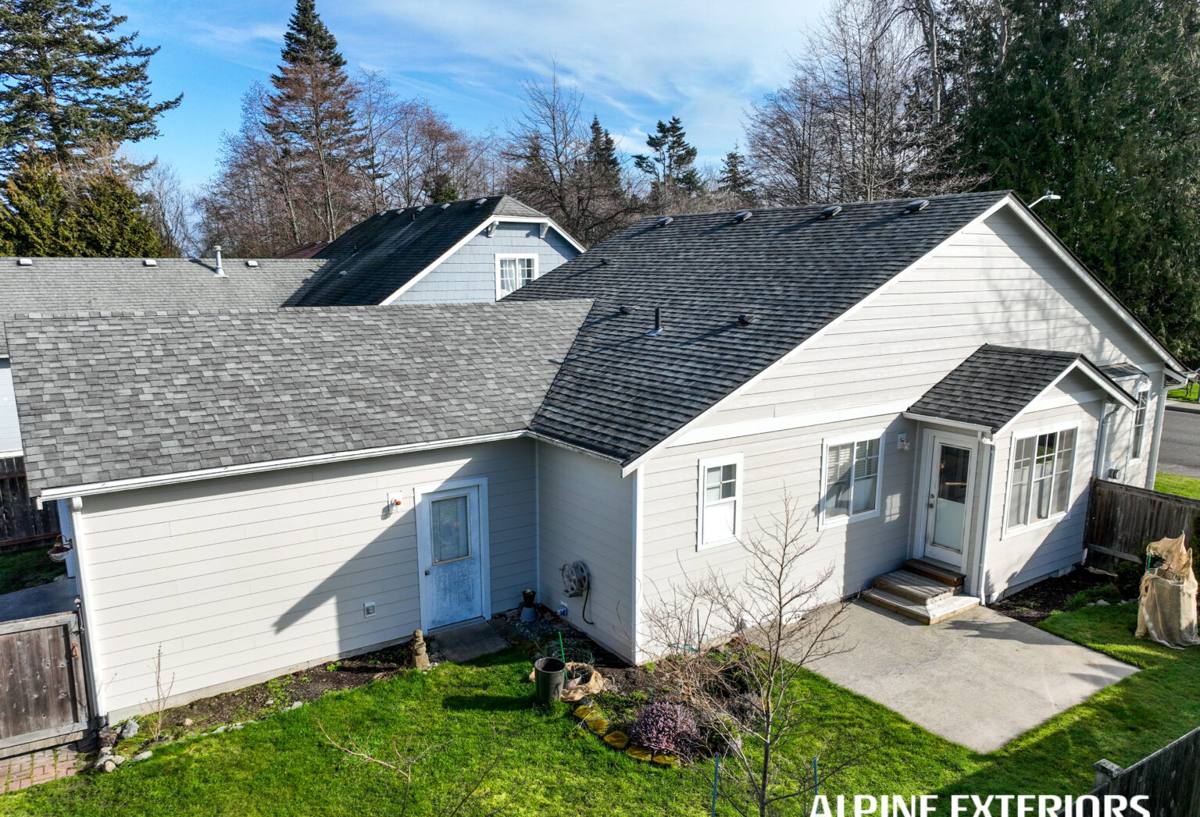
What Blaine's Climate Does to a Home
Salt Air and Corrosion
Proximity to Semiahmoo Bay and the Strait of Georgia means airborne salt is a constant, low-level presence on homes in and around Blaine. Salt accelerates corrosion on exposed metal — roof flashing, fasteners, gutter hardware, and hinges on doors and windows all wear faster here than they would in a drier, inland part of the county. We factor that into material choices, favoring corrosion-resistant fasteners and flashing details over standard-grade hardware that's fine for less exposed sites.
Driving Rain and Wind-Driven Moisture
This part of Whatcom County gets weather systems that come off the water with real force behind them, and that means rain doesn't just fall — it gets pushed sideways into wall assemblies, window frames, and roof edges. Standard flashing and sealant details that would be adequate in a calmer microclimate can fall short under sustained wind-driven rain. Roof valleys, wall-to-roof transitions, and window openings are where we pay closest attention, because those are the spots where wind-driven moisture finds its way in first.
Moss, Algae, and a Long Wet Season
Moss and algae growth is one of the most visible signs of the regional climate, and it's not just cosmetic. Moss holds moisture against roofing material long after a storm has passed, and over years that trapped moisture works into seams, nail heads, and shingle edges. On siding, algae streaking usually points to a spot that stays damp longer than it should — often a drainage or ventilation issue rather than a simple cleaning problem. We look at moss and algae patterns as diagnostic information, not just an appearance issue.
Roofing Services in Blaine
Roof work in a coastal, high-moisture area comes down to a few fundamentals done well: correct flashing at every penetration and transition, ventilation that actually moves air through the attic space, and materials matched to the exposure the roof will see. We install and repair asphalt shingle roofing, and we work on cedar and metal roofing as well, each with its own maintenance profile worth understanding before you choose.
- Full roof replacement, including tear-off, deck inspection, and underlayment upgrades
- Leak diagnosis and repair, with attention to valleys, chimney flashing, and roof-to-wall transitions
- Moss treatment and removal, plus ventilation adjustments to slow regrowth
- Gutter and drainage checks, since a roof only performs as well as the water management around it
- Storm damage assessment after high-wind events off the water
We don't push one roofing product as a universal answer. Asphalt shingles remain a solid, cost-effective choice for most Blaine homes when installed with the right underlayment and ventilation. Metal roofing holds up exceptionally well against wind-driven rain and has a long service life, but it comes with a higher upfront cost and specific installation requirements. Cedar shake has real aesthetic appeal, but it demands more upkeep in a wet, moss-prone climate than either alternative — we'll walk through that maintenance commitment honestly if you're considering it.
Siding: The First Line of Defense
Siding takes the brunt of wind-driven rain before it ever reaches a wall's structural components, which makes correct installation — not just the product itself — the difference between siding that lasts and siding that fails early. Lap siding, board-and-batten, and fiber cement all perform differently under sustained coastal moisture, and the house wrap, flashing tape, and drainage plane behind the visible siding matter as much as what you see from the street.
Common Siding Issues We See in Blaine
- Trapped moisture behind siding due to missing or damaged drainage planes
- Algae and moss staining on north-facing and shaded wall sections
- Caulk and sealant failure at trim and window junctions from repeated wet-dry cycling
- Corrosion on siding fasteners in older installations using standard-grade hardware
We repair damaged sections, re-flash problem areas, and handle full siding replacement when a wall assembly needs a fresh start. Fiber cement siding has become a common recommendation in wet coastal areas because it resists moisture damage and doesn't support rot the way some wood products can, but it's not the only reasonable option — the right choice depends on your home's exposure, budget, and how much upkeep you want to take on.
Windows That Hold Up to Coastal Exposure
Older windows in Blaine homes often show their age through fogged double-pane glass, drafts, and frame corrosion or rot at the sill. Window replacement isn't just about energy efficiency — proper flashing and sealing at the window opening is one of the most important moisture control points on the entire house. A window that's beautiful but poorly flashed can undo the benefit of good siding and roofing work around it.
We install vinyl and fiberglass window units suited to this climate, with careful attention to flashing integration with the surrounding wall assembly. That integration work — not the window brand — is usually what determines whether a replacement window performs well for the next twenty years or starts leaking within five.
Decks Built for a Wet Climate
A deck in Blaine spends a lot of the year wet, and the details that matter most are the ones you don't see once the project is finished: proper ledger board flashing where the deck meets the house, adequate spacing between boards for drainage and airflow, and joist protection that keeps standing water from working into structural lumber. We build and repair decks with composite and treated wood decking, and we're upfront that composite material generally requires less ongoing maintenance in a climate like this one, while treated wood costs less upfront but needs more regular attention to sealing and cleaning.
Comparing Materials for Coastal Whatcom County
| Material | Best For | Maintenance Consideration |
|---|---|---|
| Asphalt shingle roofing | Cost-effective, reliable coverage for most homes | Periodic moss treatment; standard inspection cycle |
| Metal roofing | Long-term durability against wind-driven rain | Higher upfront cost; less prone to moss buildup |
| Cedar shake roofing | Traditional appearance | More frequent upkeep needed in high-moisture areas |
| Fiber cement siding | Moisture and rot resistance | Low maintenance once properly installed |
| Composite decking | Reduced upkeep over the deck's life | Higher material cost, minimal sealing needs |
| Treated wood decking | Lower upfront cost | Requires regular sealing and cleaning |
Why a Local Crew Matters Here
Blaine's exposure to open water is different from what you'll find even a short drive inland, and contractors who don't work this stretch of coastline regularly can miss details that matter — the extra flashing lap needed on a windward wall, or how quickly moss reestablishes on a north-facing roof slope. We work throughout Whatcom County and see these patterns repeat across homes with similar exposure, which shapes how we approach every estimate, not just the ones close to home.
Being local also means being reachable. If a windstorm off the strait causes damage, or a leak shows up after a heavy rain event, you're working with a crew that's a short drive away rather than waiting on a company based somewhere across the region.
What to Check Before You Hire
- Confirm the contractor is licensed and insured to work in Washington State
- Ask how they detail flashing at roof valleys, wall transitions, and window openings — the answer tells you a lot about their attention to moisture control
- Get a written estimate that breaks out materials and labor, not just a lump sum
- Ask about warranty terms on both materials and workmanship, and get them in writing
- Ask whether they've worked on homes in similarly exposed coastal locations
Get an Estimate for Your Blaine Property
Whether you're dealing with a moss-covered roof, siding that's showing signs of trapped moisture, aging windows, or a deck that needs attention before it becomes a bigger problem, we're glad to take a look and give you a straight answer about what your home actually needs. Reach out for a free, no-pressure estimate using the form below.