 Ferndale Roofing
 Lynden Homes Face a Specific Kind of Weather
Lynden sits a little inland from the coast, out among Whatcom County's farmland along the Nooksack River, but that doesn't mean the roof over your head gets an easier ride than homes closer to the water. The same marine weather system that soaks Bellingham and Ferndale still rolls through Lynden most of the year — it just arrives with a little less salt air and a little more standing moisture off the fields. Add in driving rain that comes sideways during winter storms, long stretches of overcast humidity, and a moss season that can run eight or nine months out of the year, and you've got a climate that is genuinely hard on roofing, siding, and exterior wood.
None of this is dramatic. It's not hurricanes or hail. It's slow, steady, repetitive moisture exposure — and that's exactly the kind of weather that punishes shortcuts. A roof or a run of siding that's installed a little wrong, or a deck that's built without real drainage in mind, won't fail in a dramatic way here. It'll just quietly rot, curl, or grow moss for a few years until it turns into a much bigger repair than it needed to be.
What Driving Rain Actually Does
Wind-driven rain doesn't just fall straight down onto a roof — it gets pushed up under shingle laps, into siding seams, and around window flashing that isn't detailed correctly. In Lynden, where open farmland gives wind less to break against than in more built-up areas, that wind-driven component matters more than people expect. Flashing details, underlayment quality, and proper overlap at valleys and penetrations do more work here than the shingle brand on top of them.
Moss: The Slow Damage Nobody Notices Until It's Expensive
Moss doesn't just look bad. It holds moisture against the roofing surface, works its way under shingle tabs, and lifts them just enough to let water in. On north-facing slopes and anywhere shaded by trees — common around Lynden's more wooded properties — moss can take hold within a couple of seasons of a roof going unmaintained. Left long enough, it turns a simple cleaning into a full underlayment or decking repair.
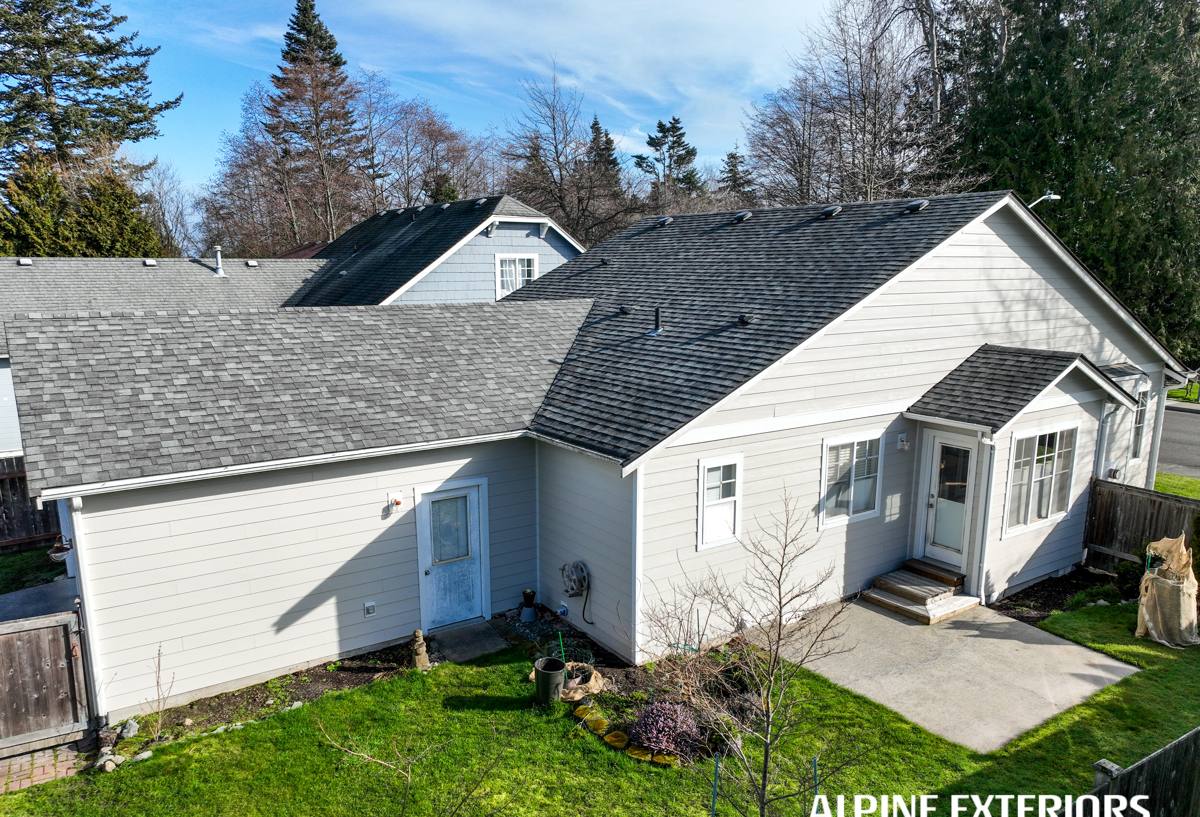
Roofing: Materials, Trade-Offs, and What We Recommend
There's no single "best" roofing material for Lynden — there's a best material for your budget, your roof's pitch and exposure, and how long you plan to stay in the home. We walk every homeowner through the real trade-offs instead of just pushing whichever product has the best margin.
| Material | Typical Lifespan | How It Handles This Climate | Cost Factor |
|---|---|---|---|
| Architectural asphalt shingle | 25–30 years | Good moss resistance with treated granules; needs proper ventilation to avoid trapped moisture | Moderate |
| Standard 3-tab asphalt | 15–20 years | Lower wind rating and less moss resistance; more maintenance over time | Lower |
| Metal (standing seam) | 40–50+ years | Sheds moisture fast, resists moss well, handles wind-driven rain better than laid shingle systems | Higher |
| Cedar shake | 20–30 years with upkeep | Natural look but needs regular treatment; more moisture-sensitive without diligent maintenance | Higher |
For most Lynden homes, we lean toward architectural shingles or metal, depending on the roof's pitch, how much shade the property gets, and the homeowner's long-term plans. We'll tell you honestly if a cheaper option is going to cost more in the long run — that's a conversation, not a sales pitch.
Repair or Replace?
A lot of roofs we look at in Lynden don't need a full tear-off — they need targeted repair, better ventilation, or a moss treatment plan. Here's a simple way to think about it before you call anyone:
- Shingles curling or cupping on more than one slope — usually points to age or ventilation issues, worth a full inspection
- Granules collecting in gutters — normal in small amounts, a warning sign if it's heavy and consistent
- Moss on the roof but the decking underneath still feels solid when checked — often a cleaning and maintenance fix, not a replacement
- Soft spots, sagging, or daylight visible from the attic — stop patching and get a real inspection
- Roof is 20+ years old and hasn't had a professional look in the last 5 — due for an assessment regardless of visible symptoms
Siding: The Other Line of Defense
Roofing gets the attention, but siding is doing just as much work keeping driving rain out of the wall assembly. In a climate like Whatcom County's, siding failures are rarely about the material looking bad — they're about water finding a way behind it through a bad seam, a missing flashing detail, or caulk that was never meant to be a long-term waterproofing solution.
What We Look At
We pay close attention to how siding terminates at windows, corners, and the foundation line — the places where water actually gets in. Fiber cement holds up well against moisture and doesn't feed moss the way some wood products can, which is part of why it's become a common choice for homes in this area. We'll also point out where certain lap or panel systems carry more maintenance burden than others, especially anything relying heavily on sealant rather than proper flashing and overlap.
Windows: Where Rot Usually Starts
Window replacement isn't just a comfort or energy upgrade in this climate — it's often the difference between a wall staying dry and a slow leak nobody notices until there's soft trim or a stained interior wall. Older single-pane windows and their original flashing were rarely built for the amount of wind-driven rain a Whatcom County winter delivers year after year. When we replace windows, the flashing and integration with the surrounding siding matters as much as the window unit itself — a great window installed with a poor moisture barrier will still leak.
Decks: Built for Standing Water and Shade
Decks in and around Lynden deal with two problems most other regions don't combine as often: long wet seasons and, on many properties, tree cover that keeps decking damp longer after a storm passes. That combination accelerates rot in untreated wood and speeds up moss and algae growth on any decking surface that doesn't drain well.
Composite vs. Wood
Composite decking has become popular locally because it doesn't absorb water the way wood does and resists moss and mildew better over time — it's a lower-maintenance option for a climate that doesn't give surfaces much chance to dry out. Pressure-treated wood is still a solid, less expensive choice, but it needs regular sealing and cleaning to hold up here — skipping that maintenance is the single biggest reason we see premature deck failures. We'll lay out both options honestly, including what upkeep each one actually requires, rather than assuming everyone wants the higher-cost material.
Why a Local Crew Matters More Than It Sounds Like It Should
A contractor based elsewhere can still do competent work, but there's real value in a crew that works Whatcom County roofs and siding week in and week out. We know what a roof deck looks like after a typical Lynden winter, what ventilation problems show up repeatedly in this area's home styles, and which details actually matter for driving rain versus what's overkill. That's not something you can fully replicate from a general playbook — it comes from doing the work here, on this kind of weather, over and over.
It also means we're not disappearing after the job. If something needs a follow-up look after the next big storm, we're local — not a crew that worked the area for one season and moved on.
What to Expect When You Call Us
- A straightforward inspection — roof, siding, windows, or deck, whatever's the concern
- An honest assessment of what's actually wrong, and what isn't
- A written estimate that separates must-do repairs from optional upgrades
- No pressure to sign same-day, and no inflated urgency tactics
We'd rather earn a Lynden homeowner's trust over the life of a roof than push a sale on a single visit. That's the same standard we hold for every property we work on across Ferndale and the rest of Whatcom County.
Get a Free, No-Pressure Estimate
If you're noticing moss buildup, a slow leak, aging siding, or a deck that's starting to feel soft in spots, it's worth having a local crew take an honest look before it turns into a bigger repair. Fill out the form below and we'll set up a time to come take a look — no obligation, no pressure, just a straight answer about what your home actually needs.