 Ferndale Roofing
 Exterior Work Built for Birch Bay's Coastline
Birch Bay sits right on the water in Whatcom County, and that location shapes everything about how a home ages here. Homes closer to the shoreline deal with salt-laden air moving in off the bay almost daily, while properties set back among the trees fight a different battle against shade, moisture, and moss. Wind-driven rain off the Strait of Georgia doesn't just fall straight down — it gets pushed sideways into siding seams, window frames, and roof edges that were never designed to shed water at an angle. We've worked on enough homes in this stretch of the county to know that a roof, siding job, or window install that holds up fine in a drier inland town can fail early out here if it isn't detailed for coastal exposure.
This page covers what we actually see on Birch Bay homes and how our roofing, siding, window, and deck work accounts for it. Nothing below is a sales pitch dressed up as advice — it's the same thing we'd tell a neighbor.
Roofing in a Salt Air, High-Moisture Environment
Two things drive most of the roofing problems we find in Birch Bay: salt exposure and moss. Salt air accelerates corrosion on any exposed metal — flashing, fasteners, vents, and valleys — faster than it would a few miles inland. Once corrosion starts eating at a fastener or a flashing seam, water finds its way in long before the shingles themselves show visible wear. On top of that, the combination of coastal humidity, shaded lots, and mild winters gives moss and algae a long growing season, and once moss takes hold on a roof it holds moisture against the surface, works its way under shingle edges, and shortens the life of the roofing material underneath it.
What We Look For
On a roof inspection out here, we're checking flashing and fastener condition first, not just shingle wear. We also look closely at how well the roof is ventilated, since trapped moisture under the deck accelerates both rot and moss growth from underneath. Gutters get extra attention too — a clogged gutter during a heavy Whatcom County rain event backs water up under the roof edge fast.
Repair vs. Replacement
Not every roof showing moss or a few compromised shingles needs full replacement. If the decking underneath is still sound and the damage is localized, targeted repair and a proper moss treatment can add years of service life. We'll always tell you honestly which situation you're in rather than defaulting to a full tear-off.
Siding That Can Actually Handle Wind-Driven Rain
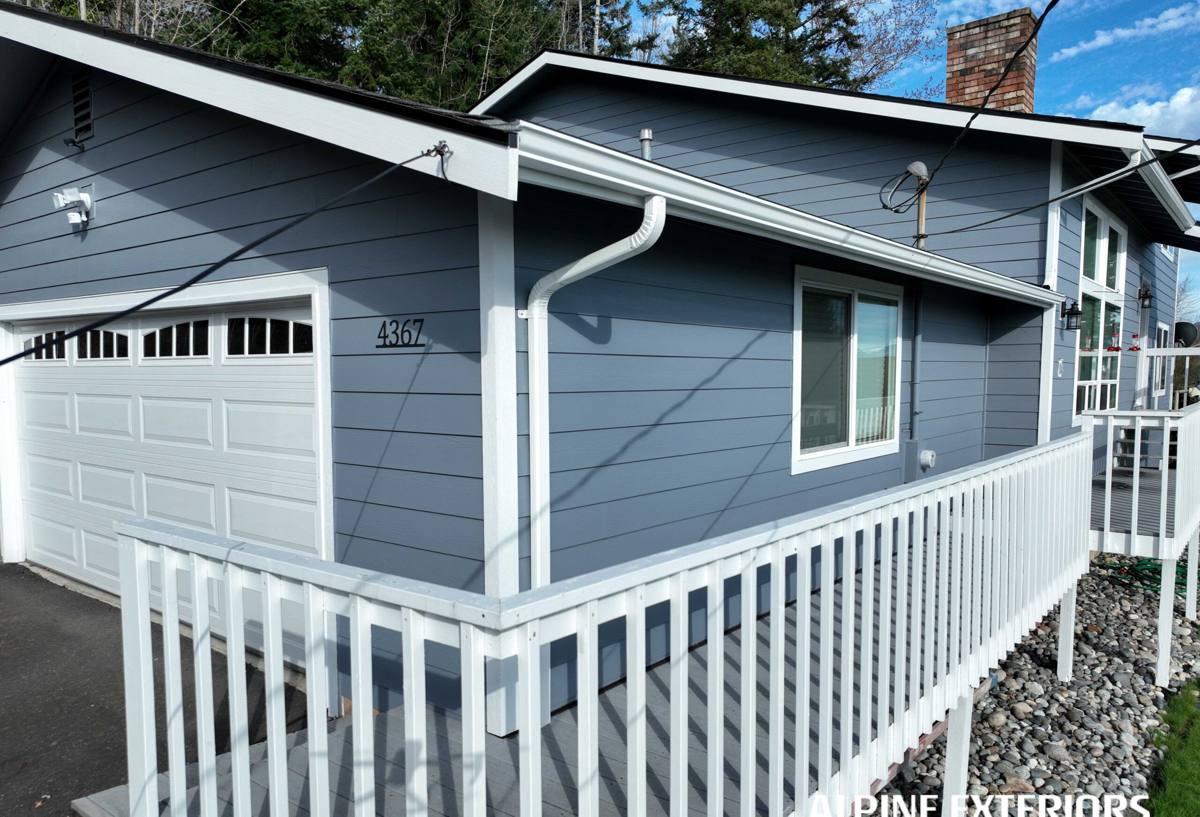
Siding failures near the water usually aren't about the material wearing out evenly — they're about water getting behind it at seams, corners, and penetrations where wind has pushed rain sideways. A siding job that isn't flashed and lapped correctly at those points will look fine for a couple of years and then start showing soft spots, staining, or bubbling paint as trapped moisture does its damage out of sight.
We pay close attention to house wrap continuity, proper flashing at windows and doors, and correct lap direction and fastening on every siding job, whether it's a full replacement or a repair to a section damaged by moisture or impact. Salt air also affects how quickly paint and finishes break down, which is part of why we talk through finish and maintenance expectations up front rather than after the fact.
Windows: Where Wind-Driven Rain Finds the Weak Point
Windows are one of the first places a coastal home shows water intrusion, because the same wind that pushes rain sideways into siding pushes it directly against window frames and seals. Older windows, or windows that were installed without proper flashing integration into the surrounding wall assembly, are especially prone to leaks during the driving rain events that come through this part of Whatcom County in fall and winter.
Condensation is the other issue we see often, particularly on older single-pane or early double-pane windows. In a humid coastal climate, condensation on interior glass isn't just an annoyance — over time it can contribute to sill rot and mold at the window frame if it's not addressed. When we replace or repair windows, we're as focused on the flashing and sealing detail as we are on the window unit itself, because a good window installed poorly will leak just as fast as a cheap one.
Decks in a Salt-Air Environment
Decks near Birch Bay's shoreline take a beating from a combination of salt air, UV exposure, and near-constant moisture cycling through the wet season. Metal fasteners and connectors corrode faster here, and that's a structural concern, not just a cosmetic one — a corroded ledger board connection or ageing joist hanger is a safety issue, not just a maintenance one. Wood decking, composite decking, and the substructure underneath all need to be matched to the exposure level of the specific site, whether that's a waterfront lot taking direct salt spray or a more sheltered inland yard.
We build and repair decks with corrosion-resistant fasteners and hardware appropriate for coastal exposure, and we'll walk you through the real differences between wood and composite decking for a home in this environment rather than pushing whichever is more profitable for us.
Comparing Roofing Materials for a Coastal Whatcom County Home
There's no single "best" roofing material for every Birch Bay property — it depends on your budget, how exposed the home is to wind and salt, and how much maintenance you want to take on. Here's how the common options generally compare for coastal exposure:
| Material | Typical Lifespan | Coastal Considerations | Maintenance Level |
|---|---|---|---|
| Asphalt composition shingle | 20–30 years | Algae-resistant shingle lines hold up better against moss and staining; fastener corrosion resistance matters | Moderate — periodic moss/algae treatment |
| Standing seam metal | 40–60 years | Sheds moss and moisture well; requires marine-grade or coated fasteners and finishes to resist salt corrosion | Low |
| Cedar shake/shingle | 20–30 years | Attractive but needs consistent upkeep in high-moisture, moss-prone settings; higher maintenance near the water | High |
Cost ranges vary widely by roof size, pitch, and access, so we'd rather walk your specific roof than quote a number that doesn't mean anything for your home.
Signs Your Birch Bay Home Needs Attention
Coastal wear often shows up as small signs before it becomes a bigger repair. Worth checking for, especially heading into or coming out of the wet season:
- Moss or dark streaking building up on roof slopes, especially shaded north-facing sections
- Rust staining around roof vents, flashing, or metal fasteners
- Soft, discolored, or bubbling siding near corners, window trim, or the bottom courses close to grade
- Fogging or persistent condensation between window panes, or drafts around window frames
- Gutters overflowing during heavy rain or pulling away from the fascia
- Corrosion or rust on deck fasteners, joist hangers, or railing hardware
- Any musty smell in an attic, crawlspace, or closet along an exterior wall
Why a Local Crew Matters Here
A contractor working across a wide, drier region doesn't always think about salt-rated fasteners, moss-specific roofing details, or wind-driven rain flashing as a default — because most of their jobs don't require it. We're based in Ferndale and work throughout Whatcom County, including Birch Bay, so this is the standard build for us, not an exception. That matters when it comes to material choice, fastener selection, and how a roof, siding, window, or deck job is detailed against the specific exposure of your property, whether you're a block from the water or further inland.
It also matters for warranty and follow-up. A local crew is here for the check-up visit next year, not just the install.
A Simple Maintenance Rhythm for Coastal Exteriors
Most of the problems described above are cheaper to prevent than to repair. A reasonable rhythm for a Birch Bay home includes a roof and gutter check before the fall rains ramp up, a moss treatment on shaded or north-facing roof sections as needed, and a walk-around of siding, window seals, and deck hardware once a year to catch corrosion or moisture intrusion early. Homes closer to the water or under heavy tree cover may need attention more often than that; more sheltered inland properties less so.
Get a Free, No-Pressure Estimate
If you're noticing moss buildup, staining, drafty windows, or just want an honest read on how your roof, siding, windows, or deck are holding up against Birch Bay's coastal conditions, we're happy to take a look. Use the form below to request a free estimate — no pressure, just a straight assessment of what your home actually needs.