 Ferndale Roofing
 Decks in Blaine Take a Different Kind of Beating
Homes in the Blaine area sit close enough to the water and open farmland that a deck out here works harder than one further inland. You get salt-laden air off the Strait moving through on a regular basis, driving rain that comes in sideways more often than straight down, and a moss season that can run from October clear through April. Individually, none of those is unusual for Whatcom County. Together, on an exterior deck surface with fasteners, ledger boards, and structural framing exposed to all of it year-round, they add up fast.
We're a Ferndale-based crew, and Blaine is part of our regular service area — not a stretch job we take once a season. That matters more with deck work than with almost anything else we do, because deck failures are rarely dramatic. They're slow. A soft spot near the stairs, a ledger board that's held moisture a season too long, fasteners that have started to weep rust into the boards around them. By the time it's obvious, the fix is usually bigger than it needed to be.
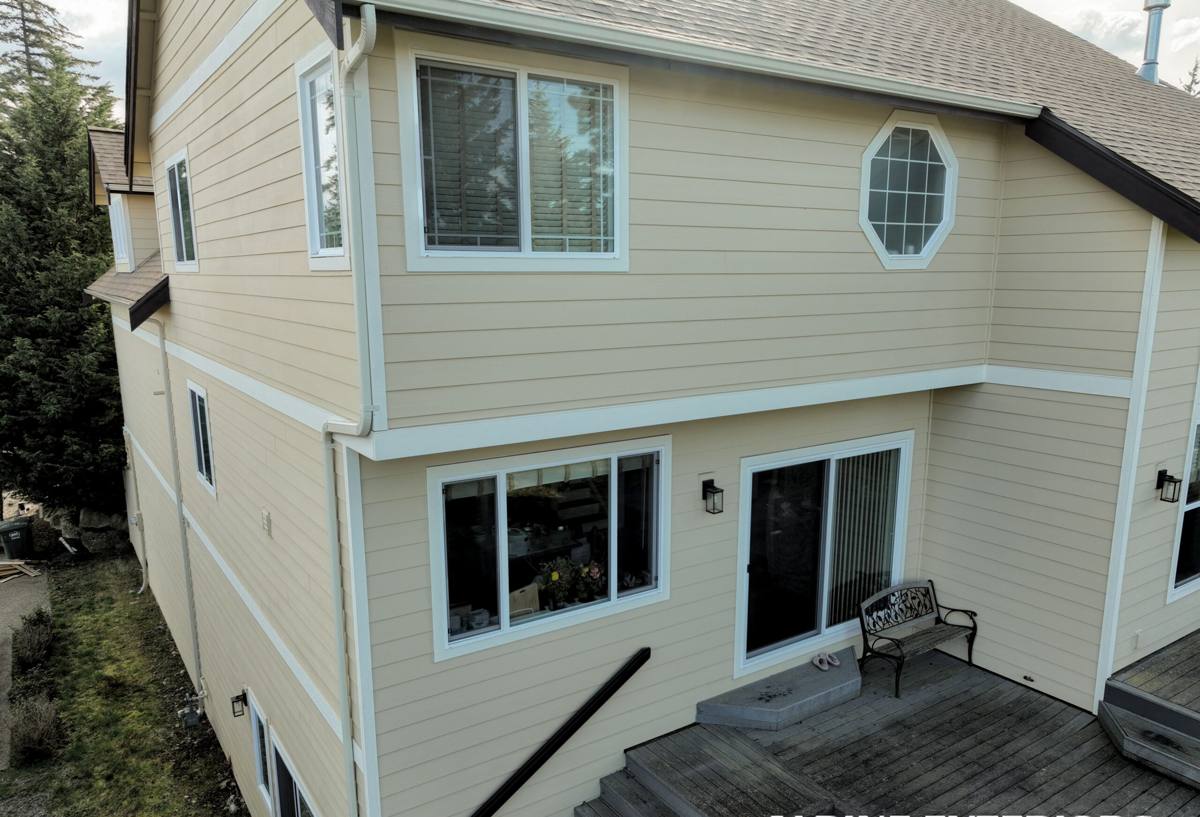
What the Local Climate Actually Does to a Deck
Salt Air and Metal Fasteners
Coastal air carries salt further inland than most homeowners expect, and it's hard on anything metal. Standard fasteners and connectors corrode faster near the water, and corroding hardware is one of the more common hidden causes of deck failure — the boards can look fine while the metal holding them together is quietly losing strength underneath.
Driving Rain and Ledger Rot
The ledger board — where the deck attaches to the house — is the single most safety-critical part of most deck structures, and it's also the part most exposed to wind-driven rain working its way behind the board if the flashing isn't right. Once moisture gets trapped there, it doesn't dry out on its own between storms the way a more exposed surface might.
Moss and Surface Moisture
A long moss season means extended stretches where deck surfaces stay damp, shaded, and slow to dry — especially on the north or west side of a house, or under overhangs. Moss and algae hold moisture against the decking material, which accelerates wood rot and can make composite surfaces slick and slippery underfoot.
Repair or Replace? Signs to Watch For
Not every aging deck needs a full replacement, but there's a point where patching individual boards stops being the honest answer. Here's what tells us a deck has crossed that line:
- Soft, spongy, or bouncy spots in the decking or framing underfoot
- Visible rot or rust at the ledger board connection to the house
- Posts or footings that have shifted, settled, or show cracking at the base
- Railings that wiggle or flex when pushed — a structural issue, not a cosmetic one
- Fastener heads that are rusted, popped up, or staining the wood around them
- Persistent moss or algae growth that keeps coming back no matter how often it's cleaned
- A deck more than 20-25 years old built to older code, especially around railing height and stair details
If what you're seeing is limited to a couple of boards or a railing section, repair may genuinely be the right call. If it's the framing, the ledger connection, or the footings, replacement is almost always the more honest recommendation — patching a structural problem just relocates the failure point.
What a Correct Deck Replacement Actually Involves
A deck replacement done right isn't just swapping old boards for new ones. The parts nobody sees are the parts that determine whether the new deck lasts.
Structure First
We start below the surface — footings, posts, beams, and joists. In this region, footings need to sit below frost depth and bear on stable, well-drained soil. Any framing member showing rot, insect damage, or undersized spans for current code gets replaced, not reinforced around.
Ledger Attachment and Flashing
Because the ledger board carries a significant share of the deck's load and sits directly against the house, correct flashing here is non-negotiable — a proper ledger flashing detail, with the flashing lapped correctly under the house's weather-resistive barrier, keeps water from tracking behind the board where it can't dry out.
Fasteners and Hardware
Given the salt exposure common in the Blaine area, we use fasteners and structural connectors rated for coastal or treated-lumber exposure rather than standard-grade hardware. It costs a bit more up front and saves the deck from the slow hardware corrosion that's a common cause of premature failure out here.
Drainage and Airflow
Proper spacing between boards, a slight slope away from the house, and clear airflow underneath the deck all help it shed water instead of holding it — especially important given how long surfaces can stay damp during moss season.
Permits and Code
Deck replacements involving structural work typically require a permit and inspection. We handle that process as part of the job rather than treating it as an afterthought, which also protects you if you ever sell the home.
Decking Material Options
Material choice matters more here than in a drier climate, because moisture exposure and moss growth are constant factors rather than occasional ones. There's no single right answer for every home — it depends on budget, maintenance appetite, and how much shade and moisture the deck sees.
| Material | Moisture & Moss Behavior | Maintenance | Typical Lifespan Here |
|---|---|---|---|
| Pressure-treated lumber | Resists rot when properly sealed; can trap moisture if finish is neglected | Needs re-sealing or staining every 1-2 years in this climate | 15-20 years with upkeep |
| Cedar | Naturally moisture- and insect-resistant, but surface graying and moss growth still occur without upkeep | Periodic cleaning and sealing recommended | 15-20 years with upkeep |
| Composite decking | Won't rot, but can develop surface algae/moss film in shaded, damp areas | Occasional cleaning; no staining or sealing | 25-30+ years, varies by brand |
| PVC decking | Fully moisture-resistant; least prone to moss staining of the common options | Lowest ongoing maintenance | 25-30+ years |
We install all of the above, based on what makes sense for the specific deck and budget. We do steer homeowners away from cutting corners on the substructure regardless of decking material chosen — a composite deck surface bolted to an undersized or poorly flashed frame doesn't actually solve the underlying problem, it just hides it longer.
How Our Deck Replacement Process Works
- On-site assessment — we inspect the existing structure, footings, and ledger connection to determine what's actually salvageable versus what needs to come out.
- Honest scope and estimate — you get a clear breakdown of what's structural, what's cosmetic, and what your material options cost relative to each other.
- Permitting — we pull the necessary permits for structural work before demolition begins.
- Demolition and disposal — old decking and any compromised framing is removed and hauled off.
- Structural rebuild — footings, posts, beams, joists, and ledger flashing are brought up to current code.
- Decking and railing installation — surface material and railings go in per the agreed spec, with attention to drainage and airflow underneath.
- Final walkthrough and inspection — we review the finished deck with you and coordinate any required final inspection.
What Affects the Cost
| Factor | Why It Matters |
|---|---|
| Deck size and shape | More square footage and multi-level or angled designs increase material and labor |
| Decking material | Composite and PVC cost more upfront than pressure-treated lumber but need far less maintenance |
| Structural condition | Rotted footings or a compromised ledger connection add rebuild cost beyond surface replacement |
| Railing style and height | Code-compliant railings, especially on elevated decks, add material and labor |
| Site access | Decks that are hard to reach with equipment or materials take longer to build |
| Permit requirements | Structural work typically requires permitting and inspection fees |
Most full deck replacements in this region run into the mid-to-high thousands for a standard-size residential deck, with the final number depending heavily on material choice and how much of the structure needs to be rebuilt. We give a firm, itemized number after the on-site assessment — not a phone-quote guess.
Why a Crew That Already Works Blaine Matters
Deck work isn't the same job everywhere in Whatcom County. A crew that mostly builds decks in drier, inland areas may not default to coastal-rated fasteners or think as carefully about moss-related drainage, because it's simply not the daily reality where they usually work. Since Ferndale and the surrounding coastal communities, including Blaine, are our regular service area, those decisions are standard practice for us, not an adjustment.
There's also a practical scheduling benefit. Because we're already working in and around Blaine regularly, we're not routing a crew a long distance for a single job, which tends to mean more realistic timelines and fewer scheduling conflicts once your project starts.
Maintaining Your New Deck
A correctly built deck still needs some seasonal attention, especially with a moss season as long as ours. A short annual routine keeps a new deck performing the way it should for its full lifespan:
- Sweep debris and standing leaves off the surface regularly, especially in fall
- Rinse off moss and algae before it gets a foothold, particularly on shaded sections
- Check railings and stairs for any looseness once or twice a year
- Inspect the ledger area and any visible fasteners for early rust or staining
- Re-seal or re-stain wood decking on the schedule appropriate to the product used
- Keep gutters and downspouts near the deck clear so runoff isn't draining onto the surface or framing
If you're weighing whether your Blaine-area deck needs a repair or a full replacement, we're happy to take a look and give you a straight answer — no pressure, no upsell. Use the form below to request a free estimate and we'll get back to you to schedule a time to come out.