 Ferndale Roofing
 Roof Repair Built for Blaine's Coastal Conditions
Blaine sits about as close to the water and the border as a Washington roof can get, and that location comes with a specific set of problems. Homes here take salt-laden air off the Strait of Georgia, long stretches of driving rain pushed in by winter storms, and a moss season that can run most of the year in the shaded, damp spots on a roofline. None of that is exotic — it's just Whatcom County weather doing what it does, day after day, year after year. But it means a roof repair done for Blaine has to account for things a drier inland job never has to think about.
Ferndale Roofing Co works this stretch of coastline regularly, not as an occasional trip out of our normal service area. That matters for repair work specifically, because so much of getting a roof repair right depends on recognizing what the local climate has already done to the roof before you ever pull the first shingle.
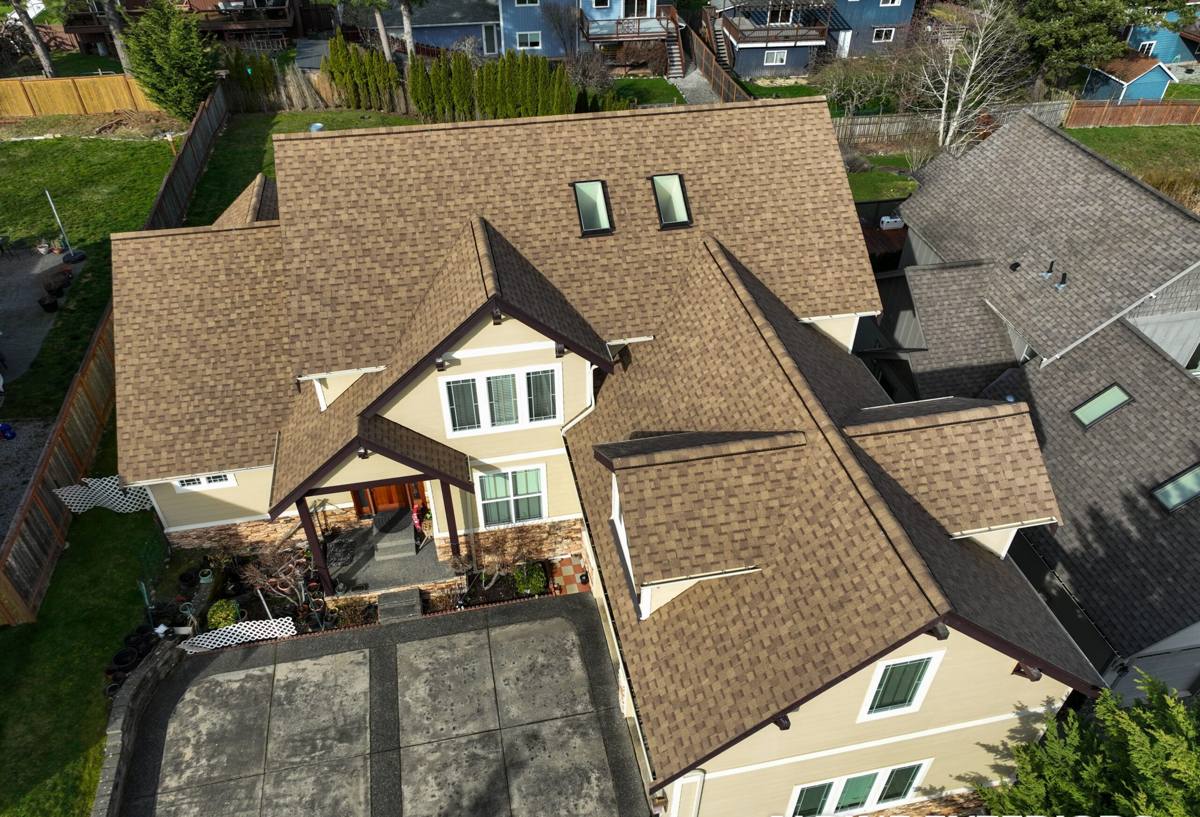
What Salt Air, Rain, and Moss Actually Do to a Roof
Salt Air and Metal Components
Salt in the air accelerates corrosion on anything metal — flashing, fasteners, gutter hardware, and exposed roofing nails. A fastener that would last decades inland can start rusting and losing grip years earlier this close to the water. When we're repairing a roof in Blaine, we're always checking whether the actual leak is a shingle problem or a corroded-fastener problem, because those get fixed differently.
Wind-Driven Rain
Rain that comes in sideways during a coastal storm doesn't behave like rain falling straight down. It gets pushed up under shingle edges, into vent flashing, and along valleys and roof-to-wall transitions that would stay dry in a calmer rain event. A lot of the leaks we find in this area trace back to flashing details that were adequate for average rain but not for wind-driven rain off the Strait.
Moss and Trapped Moisture
Whatcom County's damp, mild climate is close to ideal for moss growth, especially on north-facing slopes and anywhere tree cover keeps a roof section shaded and slow to dry. Moss doesn't just sit on top of shingles — its root structure holds moisture against the roofing material and can lift shingle edges over time, which is exactly the kind of thing that turns a small leak into a bigger one if it's left alone.
Signs a Blaine Roof Needs Repair, Not Just a Cleaning
- Water stains on interior ceilings or the top of exterior walls, especially after a wind-driven rain event
- Shingles that look lifted, curled, or cracked, particularly on the side of the roof facing prevailing weather
- Rust streaks below metal flashing or exposed fastener heads
- Thick moss growth on shaded slopes, especially where it's built up along the shingle edges rather than just sitting on the surface
- Granules collecting in gutters or downspouts, which signals shingle wear
- Soft or spongy spots when walking the roof during an inspection
- Daylight visible through the attic roof deck
- Recurring leaks in the same spot after a previous patch
Any one of these on its own isn't necessarily an emergency, but ignoring them in this climate tends to cost more later than addressing them now.
What a Correct Repair Actually Involves
A roof repair that holds up in Blaine's conditions isn't just about covering the visible damage. It starts with figuring out the actual path water is taking, which is often not directly above the stain or leak point — water can travel along the roof deck or down a rafter before it shows up inside. From there, a proper repair means:
- Removing damaged or compromised shingles and underlayment in the affected area, not just the section that looks bad from the ground
- Inspecting the roof deck underneath for soft spots or rot before covering anything back up
- Replacing corroded flashing rather than caulking over it, since caulk is a short-term patch on a metal problem
- Matching shingle material and, where possible, color so the repair doesn't stand out or age differently than the surrounding roof
- Re-securing with fasteners suited to coastal exposure so the repair doesn't just fail again in a few years
- Checking adjacent roof-to-wall and valley details, since a leak in one spot is sometimes evidence of a flashing issue that affects more than one area
Skipping any of those steps is how a homeowner ends up paying for the same repair twice.
Moss Removal and Prevention as Part of Repair Work
Because moss is such a consistent issue in this area, we treat it as part of the repair conversation rather than a separate service. If moss has been holding moisture against shingles long enough to cause damage, removing it carefully — without tearing up the shingle surface in the process — is part of getting the roof back to a sound condition. Where it makes sense, we'll also talk through options like zinc or copper strips near the ridge, which use rainwater runoff to discourage regrowth over time. It's not a permanent fix in a climate this favorable to moss, but it extends the time between cleanings and reduces how hard the moss has to be scraped off next time.
Repair Cost Factors for Blaine Homes
Every roof and every leak is different, so we don't quote pricing sight unseen. What we can do is explain what tends to move the cost of a repair up or down in this area:
| Factor | Why It Matters Here |
|---|---|
| Extent of moisture intrusion | A repair caught early is contained; one that's been leaking through a wet winter often means deck repair, not just shingle work |
| Flashing condition | Salt-air corrosion means flashing replacement is more common here than in drier inland areas |
| Roof pitch and access | Steeper slopes and limited access add labor time and safety setup |
| Shingle age and availability | Matching older or discontinued shingle products can affect material cost and appearance |
| Moss buildup | Heavy moss adds removal time before the actual repair can even begin |
| Number of affected areas | One isolated leak repairs faster and cheaper than multiple problem spots found during inspection |
As a general rule, simple, isolated repairs run in the low hundreds of dollars; repairs involving deck replacement, extensive flashing work, or multiple problem areas run higher. We'll always walk you through the specific factors on your roof before any work starts.
Why a Ferndale-Based Crew Matters for Blaine Repairs
Roofing companies that work Blaine occasionally tend to treat it like any other job. A crew that works this stretch of Whatcom County regularly sees the same failure patterns often enough to recognize them quickly — which shingle exposures fail first on north-facing coastal slopes, which flashing details tend to corrode ahead of schedule, which roofs in this area are more prone to moss buildup because of tree cover or shading. That familiarity shortens the diagnostic part of a repair and means less guessing.
Being based in Ferndale also means we're not adding a long drive to every repair visit or follow-up check. For something like a roof leak, where timing matters and a small problem can turn into a bigger one over a single storm system, being close by is a practical advantage, not just a convenience.
Our Repair Process
When you call us for a roof repair in Blaine, here's what to expect:
- An on-site inspection, both on the roof and in the attic where accessible, to trace the actual source of the problem
- A plain-English explanation of what we found, including whether it's an isolated repair or a sign of a broader issue
- A written estimate before any work begins, with the cost factors specific to your roof explained
- Repair work using materials suited to coastal exposure, not just whatever's cheapest
- A final check of surrounding flashing and roof details so we're not leaving a related problem for you to discover next winter
We'd rather tell a homeowner honestly that a roof needs a full replacement soon than sell an unnecessary repair, and we'd rather recommend a targeted repair than push a replacement a roof doesn't need yet. Either way, the recommendation is based on what we actually find on your roof.
If you're dealing with a leak, visible moss, or storm damage on a Blaine roof, we're glad to come take a look. Fill out the form below for a free, no-pressure estimate, and we'll give you a straight answer about what your roof actually needs.