 Ferndale Roofing
 Why Blaine's Marine Climate Is Hard on Siding
Blaine sits about as close to the water and the wind as a home in Whatcom County can get. That location is part of what makes it a great place to live, but it also means exterior surfaces take a beating that inland homes never see. Salt-laden air moves in off the water almost daily, driving rain comes in sideways during winter storms, and the combination of shade, moisture, and mild temperatures keeps moss and algae active for most of the year instead of just a few wet months.
Siding in this environment has three jobs at once: it has to shed wind-driven rain before it finds a seam, resist the slow corrosion that salt air causes in fasteners and metal trim, and hold its finish without chalking, staining, or growing a green film on the shaded side of the house. Ask most siding to do all three for twenty-plus years and something usually gives first — often the paint, sometimes the substrate underneath it.
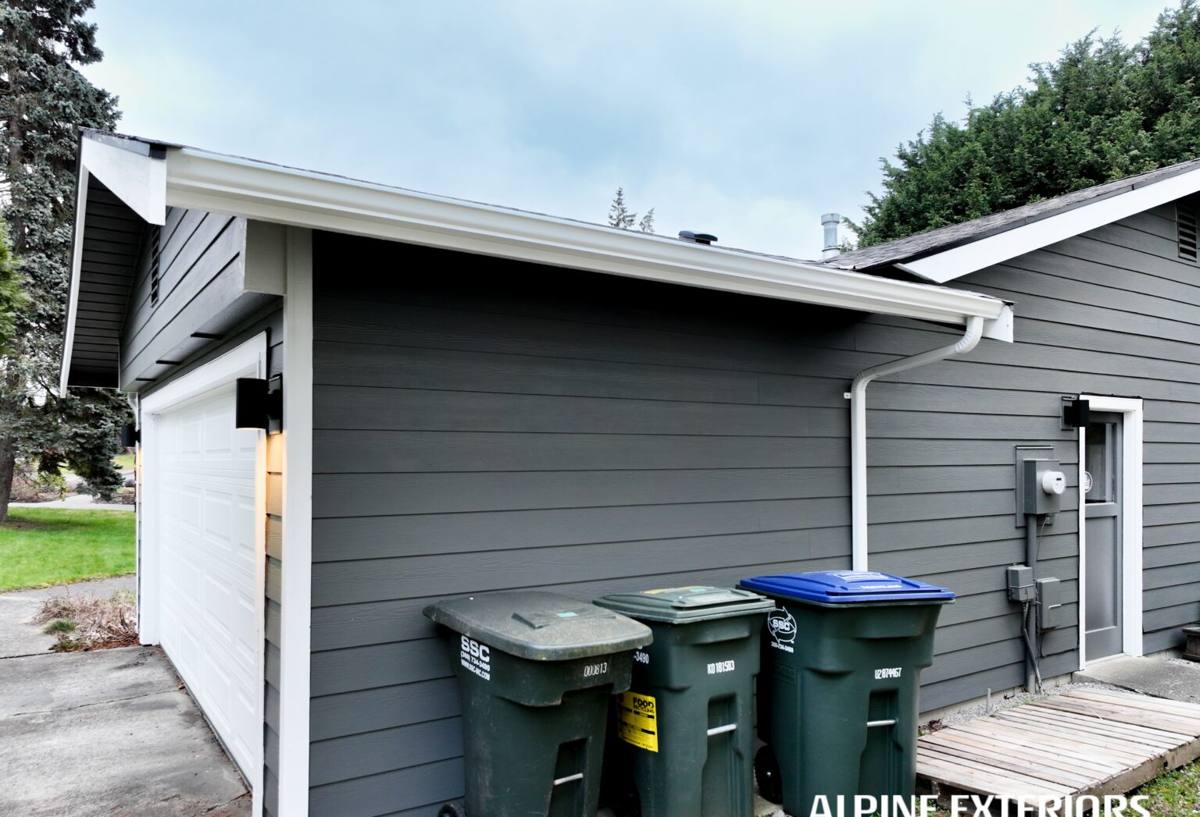
What James Hardie Siding Brings to a Blaine Home
We install James Hardie fiber cement siding exclusively, and Blaine is a good example of why. Fiber cement doesn't rot, doesn't attract insects, and won't swell or delaminate the way engineered wood products can when moisture gets behind them. It's also non-combustible, which matters more each year as wildfire smoke and ember exposure become a regional concern even on the wet side of the state.
The bigger advantage for a coastal town like Blaine is Hardie's ColorPlus factory finish. Instead of field-applied paint that starts breaking down against salt spray and UV within a handful of years, ColorPlus is baked on at the factory in multiple coats, backed by its own finish warranty, and formulated to resist fading and cracking in exactly the kind of marine exposure Blaine homes deal with. It won't stop moss from landing on a north-facing wall, but it holds up to the washing and gentle scrubbing that moss removal requires far better than a standard paint job does.
Where Homes Take the Most Damage
- West- and southwest-facing walls that catch the brunt of wind-driven rain
- North-facing walls and anything shaded by trees or fences, where moss and algae get a head start
- Corner boards, trim, and butt joints where two pieces of siding meet and water looks for a way in
- Anywhere fasteners or flashing are exposed to salt air without adequate coating or cover
Choosing the Right Hardie Product Line for This Climate
James Hardie engineers its siding by climate zone, and that distinction actually matters in a place like Blaine. The HZ5 product line is formulated for wetter, more humid climates — it resists moisture absorption and freeze-thaw stress better than the HZ10 line built for hot, dry regions. For Whatcom County's marine climate, HZ5 is the correct choice, and it's what we install on Blaine homes as a default rather than an upgrade.
Beyond the climate engineering, homeowners typically choose between a few Hardie product styles for the visible look of the house:
- HardiePlank lap siding — the most common choice, available in several plank widths and both smooth and cedar-textured finishes
- HardiePanel vertical siding — often used as an accent on gables, entries, or modern-style homes
- HardieTrim boards — matched trim for corners, window and door surrounds, and fascia
All three come with the ColorPlus finish option in a range of factory colors, which keeps the whole exterior consistent and eliminates the need for repainting on the schedule that field-painted siding demands.
What a Correct Installation Involves
Fiber cement siding performs the way it's engineered to only when it's installed the way Hardie specifies — and that spec is more detailed than most homeowners realize. In a high-exposure area like Blaine, skipping steps shows up faster than it would somewhere drier.
The details that matter most here
- Rain screen or drainage gap — a small air gap behind the siding lets any moisture that does get past the surface drain and dry out instead of sitting against the wall sheathing
- Correct fastener type and placement — stainless or hot-dipped galvanized fasteners driven at the manufacturer's specified location, not just "close enough," to avoid pull-through in wind and corrosion over time
- Proper flashing at every horizontal joint, window, and door — this is the single biggest factor in whether wind-driven rain stays out
- Factory-primed cut edges sealed in the field — any edge cut on site needs to be primed and caulked per spec before it's exposed to weather
- Correct clearance from grade, decks, and roof lines — siding installed too close to the ground or a roof surface traps moisture against the bottom edge
None of this is exotic, but it's the difference between siding that looks right for a season and siding that performs for its full service life in a marine climate.
Siding Material Comparison for Coastal Whatcom County
| Material | Salt Air / Moisture Resistance | Maintenance | Typical Lifespan |
|---|---|---|---|
| James Hardie fiber cement | High — non-combustible, won't rot or swell | Occasional wash; no repainting with ColorPlus | 30+ years with correct install |
| Vinyl siding | Moderate — can warp or fade with sun and salt exposure | Low, but panels can crack or become brittle over time | 15–25 years |
| LP SmartSide (engineered wood) | Lower — wood-based core is more moisture-sensitive | Requires diligent caulk and paint upkeep | 20–30 years, shorter if moisture gets in |
| Cedar siding | Lower — natural wood absorbs moisture, prone to moss/rot | High — regular staining, sealing, and moss treatment | 15–25 years with upkeep |
This is why we standardized on Hardie rather than offering a menu of products. Coastal exposure like Blaine's is exactly the condition where the gap between fiber cement and the alternatives shows up soonest.
Our Process, Start to Finish
- On-site inspection — we look at every elevation, note moss buildup, existing moisture damage, and flashing condition before quoting anything
- Removal of old siding — including a check of the sheathing underneath for hidden rot or water damage that needs addressing before new siding goes on
- Weather barrier and rain screen installation — the layer that does the real work of keeping Blaine's driving rain out of the wall assembly
- Hardie siding installation to manufacturer spec — correct fasteners, flashing, and clearances at every joint, window, and corner
- Trim, caulking, and touch-up — cut edges sealed, ColorPlus touch-up applied where needed so the finish is uniform
- Final walkthrough — we go over the finished job with the homeowner before calling it done
Signs Your Blaine Home's Siding Needs Attention
- Persistent moss or dark streaking on north-facing or shaded walls that comes back quickly after cleaning
- Soft spots, bubbling, or visible swelling, especially near the bottom edge or around windows
- Paint that's chalking, peeling, or fading unevenly across different elevations
- Gaps opening up at butt joints, corners, or trim where caulking has failed
- Visible rust streaking from fasteners or metal flashing
- Any musty smell or interior wall staining that could point to moisture getting behind the siding
Why a Crew That Already Works Blaine Matters
Installing Hardie siding correctly requires following the same written spec anywhere in the country — but knowing how to apply that spec to a specific house depends on understanding the site. A crew that regularly works Blaine and the surrounding Whatcom County coastline already knows which elevations tend to take the worst wind-driven rain, where moss problems show up first, and how much additional attention flashing and fastener choice deserve in this kind of salt-air exposure. That local pattern recognition is what keeps small installation shortcuts from turning into callbacks a few winters later.
As Ferndale Roofing Co, we work siding and roofing throughout Whatcom County, including Blaine, and we bring the same standard to every job: Hardie siding, installed to spec, matched to the right product line for this climate.
Warranty and Long-Term Care
James Hardie backs its products with a transferable limited warranty on the siding itself, and a separate finish warranty on ColorPlus-coated products covering fading and cracking. Both are structured around correct installation — which is another reason installation quality isn't optional. On our end, once the siding is up, upkeep for a Blaine home is mostly about staying ahead of moss: periodic gentle washing, keeping nearby trees and shrubs trimmed back from shaded walls, and an occasional visual check of caulking and trim.
If your Blaine home's siding is showing its age or you're planning ahead for a replacement, we're glad to take a look and walk you through what your house specifically needs. Reach out for a free, no-pressure estimate — there's a form just below.