 Ferndale Roofing
 Windows Built for Blaine's Coastal Conditions
Blaine sits right on the water, close enough to Semiahmoo Bay and the Strait of Georgia that salt-laden air is simply part of daily life. That's a different environment than windows a few miles inland in Ferndale or Lynden face. Salt air accelerates corrosion on hardware, fasteners, and lesser-grade metal components. Combine that with the wind-driven rain that comes off the water during fall and winter storms, and you've got a climate that finds every weak point in a window's flashing, sealant, and frame material faster than most parts of the country.
Then there's moss season, which in this part of Whatcom County runs long — often eight months or more of damp, low-sun conditions where anything that holds moisture stays wet. Window sills, frame corners, and the wood trim around older windows are prime real estate for moss, algae, and eventually rot if they're not detailed correctly. A window that's a perfectly fine product in a dry climate can underperform in Blaine if it wasn't installed with this specific combination of salt, wind, and moisture in mind.
What "Custom" Actually Means Here
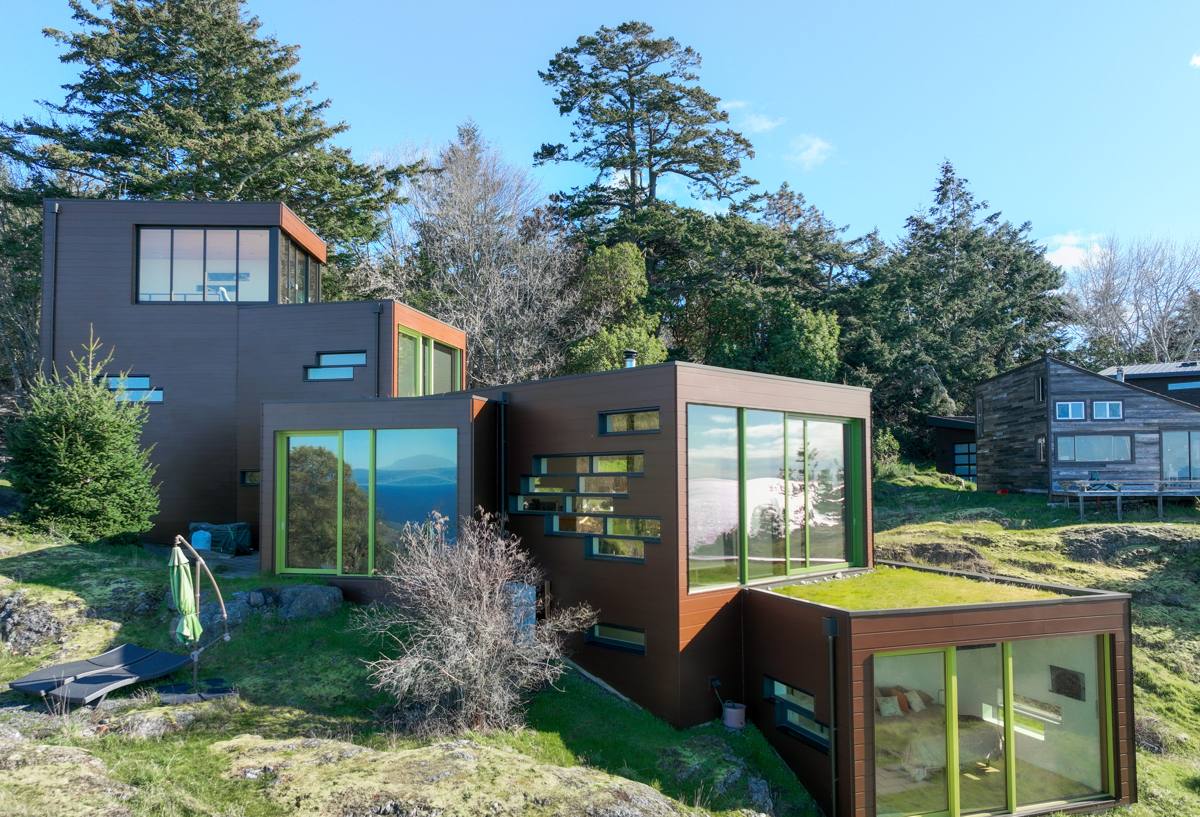
Custom windows aren't about fancy shapes or luxury upgrades — for most Blaine homeowners it means the window is built to fit an opening that isn't standard size, matches an architectural detail on an older home, or replaces a window in a wall assembly that needs specific flashing and trim work to seal correctly. A lot of homes in this area, especially older ones near the waterfront or in established neighborhoods, have settled or been modified over the years, so a stock window size often doesn't drop in cleanly. Custom sizing avoids the shim-and-caulk shortcuts that cause leaks two or three years down the road.
Custom also covers material and glazing choices matched to a specific exposure. A window on the west or south side of a Blaine home catching direct weather off the water needs different hardware, sealant, and sometimes frame material than a sheltered window on the lee side of the same house.
Common Reasons Blaine Homeowners Call Us
- Original windows are 20-30+ years old and the seals have failed, letting moisture and fog build up between panes
- Wood frames near the exterior are soft, discolored, or showing rot at the sill or corners
- Hardware (locks, cranks, hinges) is corroded or seized from salt exposure
- Drafts or condensation on the inside of the glass during cold, wet weather
- A remodel or addition needs windows that don't match standard retail sizes
- Old aluminum-frame windows are cold to the touch and driving up heating bills
Signs Your Current Windows Are Losing the Fight
Salt air and moisture damage don't usually show up as a sudden failure — it's gradual, and homeowners often don't notice until the problem is expensive. Here's what we look for during an inspection:
- Fogging or moisture between panes — means the seal on a double or triple-pane unit has failed and the gas fill (or just dry air) has been replaced by ambient moisture
- Chalky or pitted hardware — a sign of corrosion from salt air, common on windows facing the water or prevailing wind
- Soft wood or paint bubbling at the sill — usually means water has been getting behind the trim, often from a flashing detail that was never right
- Visible moss or dark streaking below the window — points to water running down the face of the wall instead of being properly shed away from the siding
- Drafts you can feel with your hand near the frame — the seal or weatherstripping has given up
None of these mean you need to replace every window in the house immediately. Sometimes a single failing unit or a bad flashing detail is the actual problem, and that's worth being honest about rather than upselling a whole-house job you don't need.
Frame Material: What Holds Up Near the Water
There's no single "best" window material for every home — it depends on your home's style, budget, and how exposed the specific opening is to wind and salt spray. Here's how the common options compare for a marine-exposure area like Blaine:
| Material | Salt Air / Moisture Resistance | Maintenance | Notes for Blaine Homes |
|---|---|---|---|
| Vinyl | Good — won't corrode or rot | Low; occasional cleaning | Most cost-effective option; good all-around choice for direct coastal exposure |
| Fiberglass | Very good — dimensionally stable, resists warping | Low | Handles temperature and moisture swings well; higher upfront cost |
| Wood (unclad) | Poor without diligent upkeep | High — repainting, sealing | Classic look but needs real commitment in this climate; we're honest about this trade-off upfront |
| Wood-clad (exterior aluminum or fiberglass shell) | Good on exterior face; interior wood still needs care | Moderate | Popular for matching older Blaine homes while protecting the exterior face from salt and rain |
| Aluminum | Fair — prone to corrosion and condensation unless thermally broken | Moderate | Cold to the touch and can sweat in our damp winters unless it's a modern thermally-broken profile |
Our default recommendation for most direct-exposure openings in Blaine is vinyl or fiberglass with stainless or corrosion-resistant hardware. We'll still install wood or wood-clad units when that's the right look for the home — we just make sure you understand the maintenance commitment before you commit to it, rather than finding out the hard way in year three.
Glass and Glazing Considerations
For this climate, we typically recommend dual-pane, low-E glass as the baseline, with argon fill for added thermal performance. On homes facing open water or prevailing wind, we also look at:
- Impact-rated or heavier-gauge glass for wind-driven debris resistance
- Warm-edge spacer systems, which resist seal failure better over time than older aluminum spacers
- Tinted or low-E coatings to cut glare off the water without darkening the room too much
The Part That Actually Determines Whether a Window Leaks: Installation
Most window failures we get called out to fix aren't a bad product — they're a flashing or sealing detail that was skipped or done wrong. In a driving-rain environment like Blaine, the installation has to assume water will hit the window directly and account for where that water goes. Our process on every custom window install includes:
- Removing the old unit carefully and inspecting the rough opening, sill, and surrounding framing for hidden rot or moisture damage before anything new goes in
- Repairing any compromised framing or sheathing we find — installing a new window into a soft or wet opening just hides the problem
- Installing a proper sill pan flashing so any water that gets past the window has a path back out, not into the wall
- Correctly layering house wrap, flashing tape, and trim in the right shingle-lap order so water sheds downward and outward, never trapped behind a layer
- Setting the window plumb, level, and square with proper shimming, not just caulked into place
- Sealing with exterior-grade sealant rated for our climate, and finishing interior air-sealing so conditioned air doesn't leak out around the frame
- Final check — operation, locks, weatherstripping, and a walkthrough with you before we call it done
Skipping any one of those steps is how you end up with a window that looks fine for a year or two and then starts leaking, fogging, or growing moss at the sill.
Why a Crew That Already Works Blaine Matters
General contractors and traveling install crews can put in a window competently in a dry, sheltered location and still get it wrong here, because Blaine's exposure to wind and salt off the water isn't something you compensate for with a standard install checklist — it takes knowing which openings on a given home need extra flashing attention, which hardware grade actually holds up, and how long moss season really runs so maintenance recommendations aren't just generic advice. We work throughout Ferndale and the surrounding Whatcom County communities, including Blaine, so we're not guessing at what the local weather does to a window over five or ten years — we're the ones who get called back if it's not done right, so we build every job to hold up the first time.
We're also familiar with the local permitting and code requirements that apply to window replacement in Whatcom County, which matters for egress sizing on bedroom windows, energy code compliance, and anything tied to a home's original construction.
What to Expect From Our Process
- On-site assessment — we look at each window individually rather than assuming a whole-house replacement is needed
- Honest recommendation — repair versus replace, and which material actually fits your home and budget
- Accurate custom measurements — especially important on older homes where openings have shifted over time
- Clear timeline and scope before work starts, no surprise change orders
- Clean, weather-tight installation following the flashing and sealing sequence above
- Walkthrough and cleanup when the job is done
Maintaining Your Investment After Install
A well-installed window in a marine climate still benefits from basic seasonal upkeep. This short checklist keeps custom windows performing for the long haul in Blaine's conditions:
- Rinse salt residue off frames and glass a couple times a year, especially on water-facing sides
- Check and clear weep holes at the base of the frame so water can drain out instead of pooling
- Lubricate hardware (locks, cranks, hinges) annually to fight corrosion before it sets in
- Inspect exterior caulking and trim each fall before the wet season ramps up
- Clear moss or algae buildup from sills and nearby trim promptly rather than letting it sit
If your windows in Blaine are fogging, drafty, corroded, or just original to a home that's due for an upgrade, we're happy to take a look and give you a straight answer on what's actually needed. Reach out for a free, no-pressure estimate using the form below.