 Ferndale Roofing
 Roofing in Cordata: A Climate That Doesn't Let a Roof Coast
Cordata sits inland enough from the water to avoid the worst of it, but not far enough to escape the moisture pattern that defines roofing work across Whatcom County. Between the salt-tinged air moving in off Bellingham Bay and the Strait of Georgia, the long stretches of driving rain that show up every fall and winter, and a moss season that can run eight or nine months out of the year in shaded yards, roofs in this area age differently than roofs in drier parts of the state. It's not that the materials are bad or the workmanship in this region is worse — it's that the climate simply asks more of a roof here, year after year, and the roofs that hold up longest are the ones that were built and maintained with that reality in mind.
Ferndale Roofing Co works throughout Whatcom County, and Cordata comes up often because it shares the same mix of tree cover, moisture exposure, and older housing stock that we see across the county's residential neighborhoods. We're not describing a single street or subdivision here — we're describing a pattern we see on roof after roof in this part of the county, and it's worth understanding before you decide whether your roof needs a repair, a partial re-roof, or nothing more than a good cleaning this year.
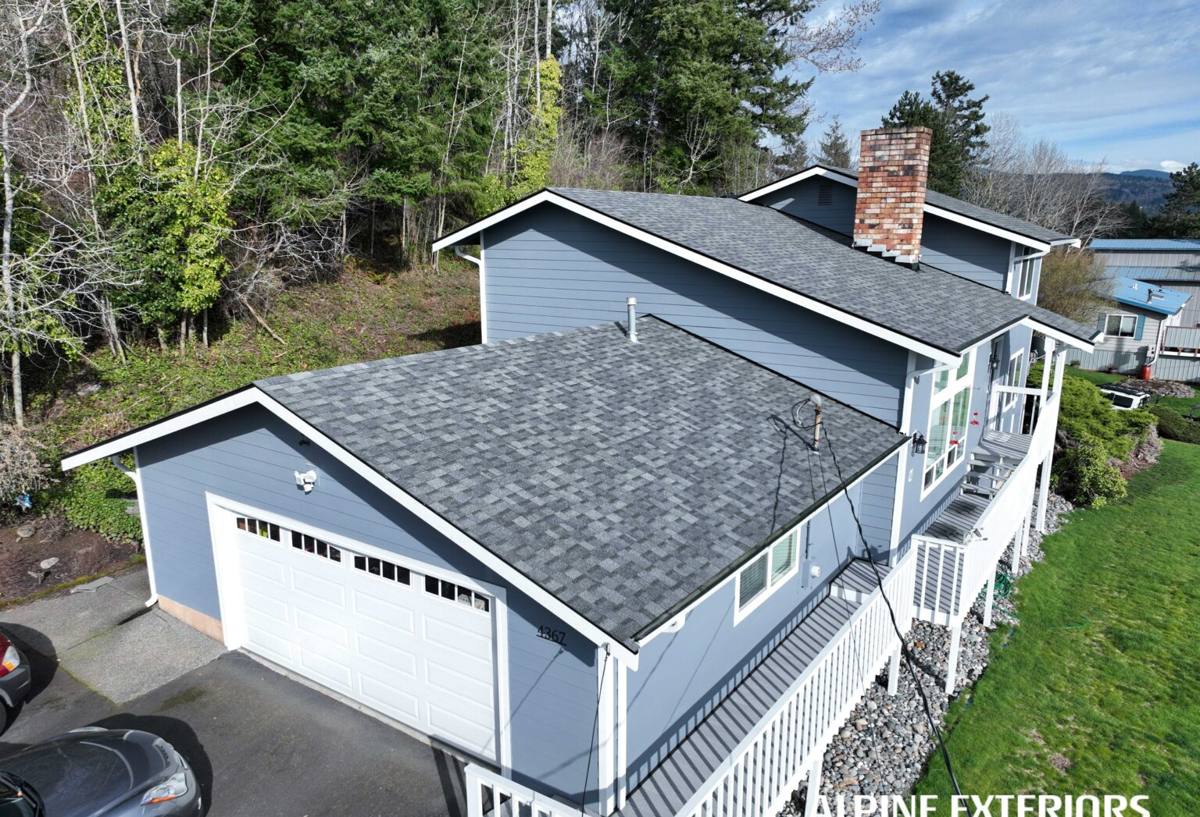
What Actually Wears Out a Roof Around Here
Moss, Algae, and Shaded Roof Sections
Any roof section that sits under tree cover or faces north loses sunlight for long stretches, and in a climate this damp, that shade turns into a moss and algae problem fast. Moss doesn't just look bad — it holds water against the roofing material, works its way under shingle tabs and shake edges, and over a few seasons can lift material enough that wind and rain get underneath it. Left unaddressed, a moss problem on one side of a roof can shorten that section's life by years compared to a sunnier, drier-facing slope on the same house.
Wind-Driven Rain and Flashing
Straight-down rain is rarely the problem. It's the combination of wind and rain — common during winter storm systems moving through this part of Washington — that pushes water sideways under shingle laps, around chimney flashing, and into valleys that weren't detailed tightly enough the first time. Most of the "mystery leaks" we get called out for aren't a failed roofing material at all; they're a flashing detail around a vent, skylight, or wall intersection that was never quite sealed for this climate's sideways rain.
Gutter and Drainage Overload
A roof only performs as well as its drainage. With the volume of rain this region sees, gutters clogged with needles and leaf litter back water up under the roof edge, which rots fascia boards and can force water back up under the first course of shingles. We see this on well-built roofs that are otherwise in decent shape — the roofing itself isn't the failure point, the drainage is.
Roofing Materials: What Holds Up and What Trade-Offs Come With Each
There's no single "best" roofing material for Whatcom County — there's a best material for your budget, your roof's exposure, and how much maintenance you're willing to keep up with. Here's how the common options compare for this climate specifically.
| Material | Typical Lifespan Here | Moss/Moisture Behavior | Maintenance Needs |
|---|---|---|---|
| Asphalt composition shingle | 20–30 years | Moderate moss resistance; algae-resistant shingles help on shaded slopes | Periodic moss removal, gutter clearing |
| Metal (standing seam) | 40–50+ years | Sheds moisture fast, very moss-resistant on steeper pitches | Low; occasional fastener/seam check |
| Cedar shake | 20–30 years with upkeep | Attractive but moisture-sensitive; needs consistent airflow and treatment | Higher; regular treatment and inspection |
| Synthetic composite shake/slate | 30–50 years | Good moisture resistance, doesn't absorb water like wood | Low to moderate |
We install and repair most of these, and we'll tell you honestly which one fits your situation rather than pushing whatever has the best margin. For a shaded, low-slope section that's fought moss for years, we'll often recommend a change in material or a redesign of that section's ventilation rather than just re-covering the same problem. For a steep, sun-exposed roof with good airflow, standard architectural asphalt shingles do just fine and are the most cost-effective choice.
Repair or Replace? How We Actually Make That Call
Homeowners in Cordata and the surrounding area usually call us with one of two questions: "can this be fixed" or "is it time." We don't default to replacement just because a roof has some age on it. What we look at:
- How much of the roof's usable life is actually gone versus how much is cosmetic wear
- Whether the damage is isolated (a flashing detail, a section of missing shingles) or spread across multiple slopes
- What's happening under the surface — decking condition, underlayment, insulation and ventilation
- How many repairs you've already paid for in the last few years, and whether another one is a real fix or a stall
Sometimes a targeted repair buys a roof another five or ten years for a fraction of replacement cost. Sometimes a roof has enough underlying issues — soft decking, chronic moss damage, multiple past patch jobs — that another repair is just delaying an expense that will be bigger later. We'll walk you through what we see and let you make the call with real information, not pressure.
Our Process for Cordata Homeowners
The work itself follows the same steps whether it's a repair or a full replacement, and we keep it straightforward:
- An on-site inspection where we get on the roof (not just a look from the ground) and check decking, flashing, ventilation, and drainage, not just the shingle surface
- A written estimate that spells out material options, scope, and price — no vague allowances
- Scheduling that accounts for our wet-season window, since roofing work here has to work around rain days more than it would in a drier climate
- Daily cleanup and site protection, especially around landscaping and gutters, since we're often working close to established yards in these neighborhoods
- A final walkthrough so you know exactly what was done and what to watch for going forward
Roofing Doesn't Work Alone: Siding, Windows, and Decks
A roof is one piece of how a house sheds water, and in a climate with this much sustained rain and salt-tinged air, the roof, siding, windows, and any deck or exterior structure all need to work together. We handle all four because we see how often a problem in one area is actually caused by another — a leaking window that's been misdiagnosed as a roof leak, siding that's trapping moisture against a wall because the roof's drip edge was never extended properly, or a deck ledger board rotting from water the gutter system should have carried away. When one crew handles the whole exterior, those connections don't get missed or blamed on "somebody else's work."
Why It Matters That We're Local
Whatcom County's roofing needs aren't generic. A crew that works this specific stretch of Washington — with its combination of coastal moisture, tree cover, and a wet season that runs long — learns which flashing details actually hold up here, which materials fight moss and which don't, and which roof designs drain well versus which ones pond water in a valley after a hard rain. That's knowledge you build by working the same climate and the same kinds of houses repeatedly, not from a general contracting playbook. It also means when you call about a warranty question or a storm-damage concern two years after the job, you're calling a crew that's still in the area and still stands behind the work.
A Simple Maintenance Checklist
Whether your roof is five years old or twenty-five, a little regular attention goes a long way in this climate. Here's what we recommend homeowners keep an eye on between professional inspections:
- Clear gutters and downspouts at least twice a year, more often if you have overhanging trees
- Look for moss buildup on shaded or north-facing slopes and address it before it thickens
- Check attic ventilation — poor airflow accelerates both moss growth and moisture damage from the inside
- After any major windstorm, do a visual check from the ground for lifted or missing shingles
- Watch for water stains on interior ceilings near chimneys, skylights, and roof valleys — early signs of a flashing issue
- Have a professional inspection every few years even if nothing looks obviously wrong
If you're in Cordata or anywhere else around Ferndale and Whatcom County and want an honest read on where your roof actually stands, we're happy to take a look. Use the form below to request a free, no-pressure estimate, and we'll give you a straight answer about what your roof needs and what it doesn't.