 Ferndale Roofing
 Why the Number on the Shingle Wrapper Isn't the Whole Story
Every roofing product comes with a lifespan number attached to it — "30-year shingles," "50-year metal," and so on. Those numbers come from manufacturer testing done under controlled, generic conditions. They're not wrong, exactly, but they're not a promise about your specific roof in Ferndale, either. A roof's actual service life depends on the material, the installation quality, the roof's slope and exposure, and — a factor a lot of homeowners underestimate — the climate it's sitting in day after day for decades.
Whatcom County's marine climate is a mixed bag for roofing. We don't get the extreme heat cycling or hail that shortens roof life in a lot of the country. But we get something else: near-constant moisture, salt-tinged air drifting in off the water, wind-driven rain that gets up under things a straight-down rain wouldn't touch, and a moss season that can run most of the year on shaded roof slopes. None of that shows up on a manufacturer's warranty chart, but all of it shows up on the roofs we inspect.
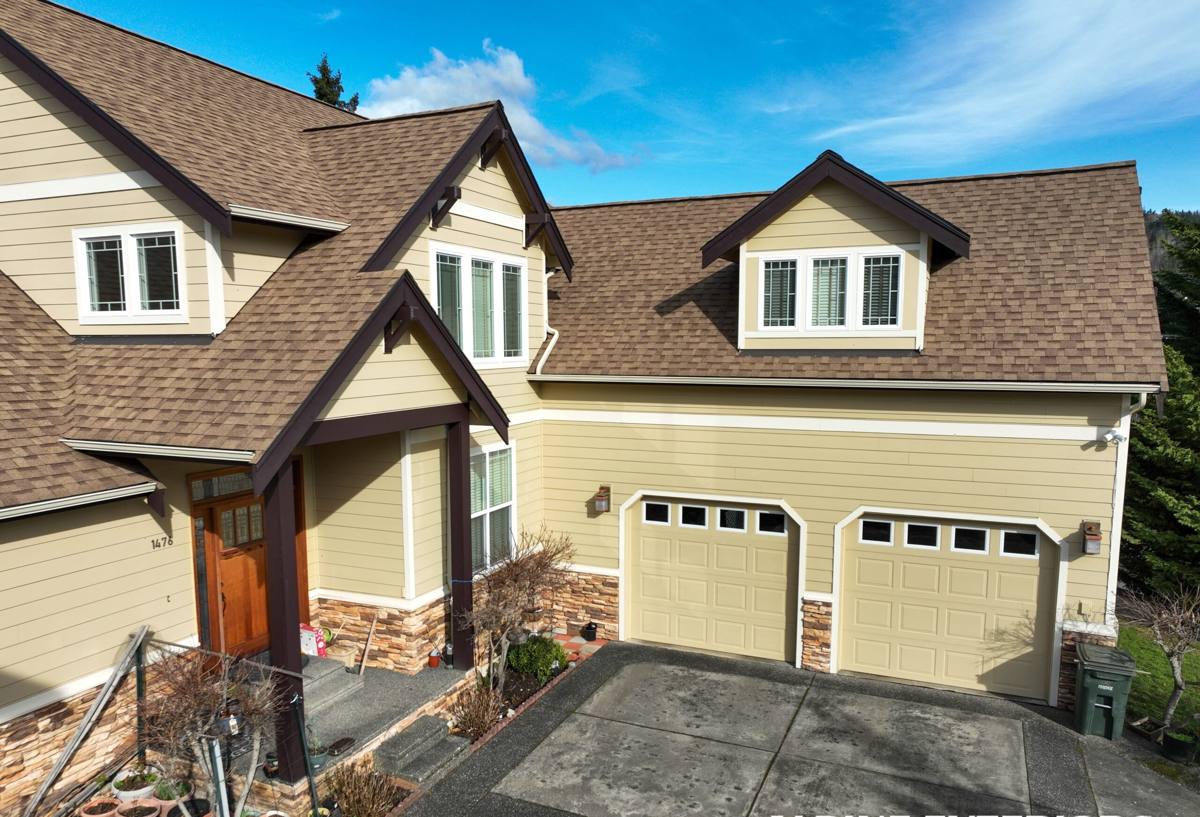
What Actually Shortens Roof Life Here in Whatcom County
Salt Air
Ferndale sits close enough to the coast that homes here get a steady dose of salt-laden air, even on properties set back from the water. Salt accelerates corrosion in exposed metal — flashing, fasteners, vent stacks, and gutter hardware all age faster under that exposure than they would inland. A roof can look intact from the ground while its metal components are quietly corroding underneath.
Driving Rain
Rain in this part of Washington rarely falls straight down. Wind pushes it sideways into laps, valleys, and flashing details, which is a tougher test than a simple annual rainfall total suggests. Roofing systems and details that would be fine in a calmer, drier climate can fail here specifically because water is finding its way in sideways, not just from above.
A Long Moss Season
Mild temperatures, plenty of shade from mature trees, and near-constant moisture add up to a moss and lichen season that can run most of the year on north-facing or tree-shaded slopes. Moss isn't just cosmetic. It holds moisture against roofing material, works its way under shingle tabs and shakes, and can lift roofing material enough to let water track underneath — which is one of the more common ways a roof in this area fails years before its rated lifespan.
Roof Lifespan by Material, Realistically
The table below reflects the honest range we see in this climate, not the best-case number from a manufacturer's marketing sheet.
| Roofing Material | Typical Manufacturer Rating | Realistic Range in Ferndale's Climate |
|---|---|---|
| 3-tab asphalt shingles | 20-25 years | 15-20 years, less on shaded or moss-prone slopes |
| Architectural (laminate) asphalt shingles | 30 years | 20-28 years with routine moss and gutter maintenance |
| Standing seam metal | 40-50+ years | 35-50 years; corrosion resistance depends on coating quality |
| Cedar shake / shingle | 25-30 years | 15-25 years, heavily dependent on ongoing maintenance and airflow |
| Synthetic/composite shingle | 40-50 years | Still relatively new to this market; early data looks promising for moss and moisture resistance |
| Torch-down / TPO (low-slope) | 15-20 years | 12-20 years depending on ponding water and seam quality |
Asphalt Shingles: The Most Common Roof in Ferndale
Most homes in Ferndale and across Whatcom County are roofed in asphalt shingles, and for good reason — they're a proven, cost-effective product when installed correctly. The gap between a 15-year shingle roof and a 28-year shingle roof usually comes down to a handful of factors: proper ventilation in the attic (heat and trapped moisture bake shingles from underneath), correct nailing patterns, quality underlayment, and how quickly moss and debris get cleared before they start holding moisture against the shingle surface. A cheap install with the right material can underperform a careful install with a mid-grade material.
Ventilation Matters More Than Most Homeowners Realize
A roof deck that can't breathe traps heat in summer and moisture year-round. In a climate as wet as ours, poor attic ventilation shows up as premature shingle curling, granule loss, and sheathing rot — often well before the shingles themselves would have failed on their own.
Metal Roofing
Standing seam metal is the longest-lived option we install, and it handles wind-driven rain about as well as anything on the market — there are far fewer laps and edges for water to find its way under. The trade-off in a coastal climate is corrosion resistance at fasteners and cut edges. A quality factory finish and correctly detailed flashing matter more here than in a drier inland climate, because salt air will find any weak point in a coating over enough years. Done right, it's genuinely a multi-decade roof.
Cedar Shake and Shingle
Cedar has a long history in this region and still shows up on older Ferndale homes, often for its look. Its honest weak point in our climate is moisture and organic growth — cedar is more prone to moss and mildew than composite materials, and it needs real airflow underneath to shed the moisture it absorbs. A cedar roof that gets regular moss treatment and has good ventilation can hold up reasonably well; one that doesn't can show significant wear well ahead of its rated lifespan. We're upfront with homeowners about that maintenance commitment rather than downplaying it to close a sale.
Low-Slope and Flat Roofing
Additions, porches, and some garage roofs in Ferndale use low-slope systems like torch-down modified bitumen or TPO membrane rather than shingles. These systems live or die on two things: seam quality and drainage. A flat roof with poor slope that lets water pond will fail its membrane seams years before a properly sloped, well-drained one does. This is an area where installation detail matters as much as the material spec itself.
Signs Your Ferndale Roof Is Nearing the End
- Granules collecting in gutters or at downspout outlets in noticeably larger amounts
- Shingles that are curling, cupping, or losing their flat profile
- Moss or dark streaking that returns quickly after cleaning, especially on shaded slopes
- Daylight visible through the roof deck from inside the attic
- Soft or spongy spots when walked, or sagging visible from the ground
- Water stains on interior ceilings or in the attic near valleys, chimneys, or vent penetrations
- Rusting, lifting, or missing flashing around chimneys, skylights, and roof-to-wall transitions
- An age that's approaching or past the realistic range for that material in this climate
What Actually Extends Roof Life Here
None of this requires exotic maintenance, but it does require consistency in a climate that doesn't give a roof much of a break between wet seasons.
- Keep moss under control. Regular treatment and gentle removal on shaded slopes prevents the moisture-holding buildup that lifts roofing material and works its way underneath.
- Clear gutters and valleys before the wet season. Debris that dams water in a valley or against a gutter line forces water to find another way off the roof, which is rarely a good path.
- Check and maintain flashing. Chimneys, skylights, and roof-to-wall transitions are where most leaks actually start, and salt-air corrosion makes flashing inspection more important here than in a drier climate.
- Make sure attic ventilation is adequate. Proper intake and exhaust airflow keeps heat and moisture from shortening shingle life from underneath.
- Address small problems promptly. A handful of lifted shingles or a small flashing gap is a quick repair; left through a couple of wet seasons, it becomes sheathing and framing damage.
When Repair Makes Sense vs. When It Doesn't
Not every issue calls for a full replacement. Localized damage — a section that took wind or storm impact, a flashing detail that's failed around one penetration — can often be repaired without touching the rest of the roof. But once a roof is past its realistic lifespan for its material, or once moisture has been tracking into the deck for a while, patching tends to just delay a bigger job while the underlying deck and framing keep absorbing damage. We'll give you a straight answer about which situation you're actually in, including when a repair is genuinely the right call rather than defaulting to whichever option costs more.
Getting an Honest Read on Your Roof
The only way to know where your specific roof actually stands — not a generic average, but your roof, on your slope, with your tree cover and sun exposure — is to have it looked at in person. If you're wondering whether your Ferndale roof has a few good years left or is quietly heading toward bigger problems, we're happy to take a look and give you a straightforward, no-pressure estimate with our honest assessment, no obligation attached.