 Ferndale Roofing
 Lummi Nation sits close enough to the water that the air itself becomes part of the maintenance conversation for anyone who owns a home there. Between the salt-laden breeze off the bay, the long stretch of wet months that define a Pacific Northwest winter, and the shade cover that keeps roofs damp long after a storm has passed, homes in this part of Whatcom County take on a specific kind of wear. Ferndale Roofing Co has worked on roofs, siding, windows, and decks throughout this area, and we've built our approach around what actually happens to a building here over the years, not a generic checklist written for a drier climate.
What the Climate Actually Does to a Home Here
It's worth being specific about the mechanisms, because "it rains a lot" undersells what's going on. Three factors compound on each other in this part of the county:
- Salt air corrosion: Proximity to saltwater accelerates the breakdown of exposed metal — flashing, fasteners, gutter hardware, and any unprotected steel components on a roof or deck. Corrosion that would take a decade inland can show up much sooner here.
- Driving rain: Wind-driven rain doesn't just fall straight down — it gets pushed sideways into seams, laps, and transitions that were designed for vertical water flow. Roofs and siding systems that aren't detailed carefully at those transitions are the ones that leak first.
- Extended moss and moisture season: Shade, humidity, and mild temperatures create ideal conditions for moss, algae, and lichen growth on roofing surfaces for a large part of the year, not just a few weeks in spring.
None of these factors are dramatic on their own. The damage they cause is cumulative — a few years of moss holding moisture against shingles, a little more corrosion on fasteners each season, water finding its way past a marginal seal during one bad wind event. That's why maintenance timing and material choice matter more here than in a lot of other parts of the state.
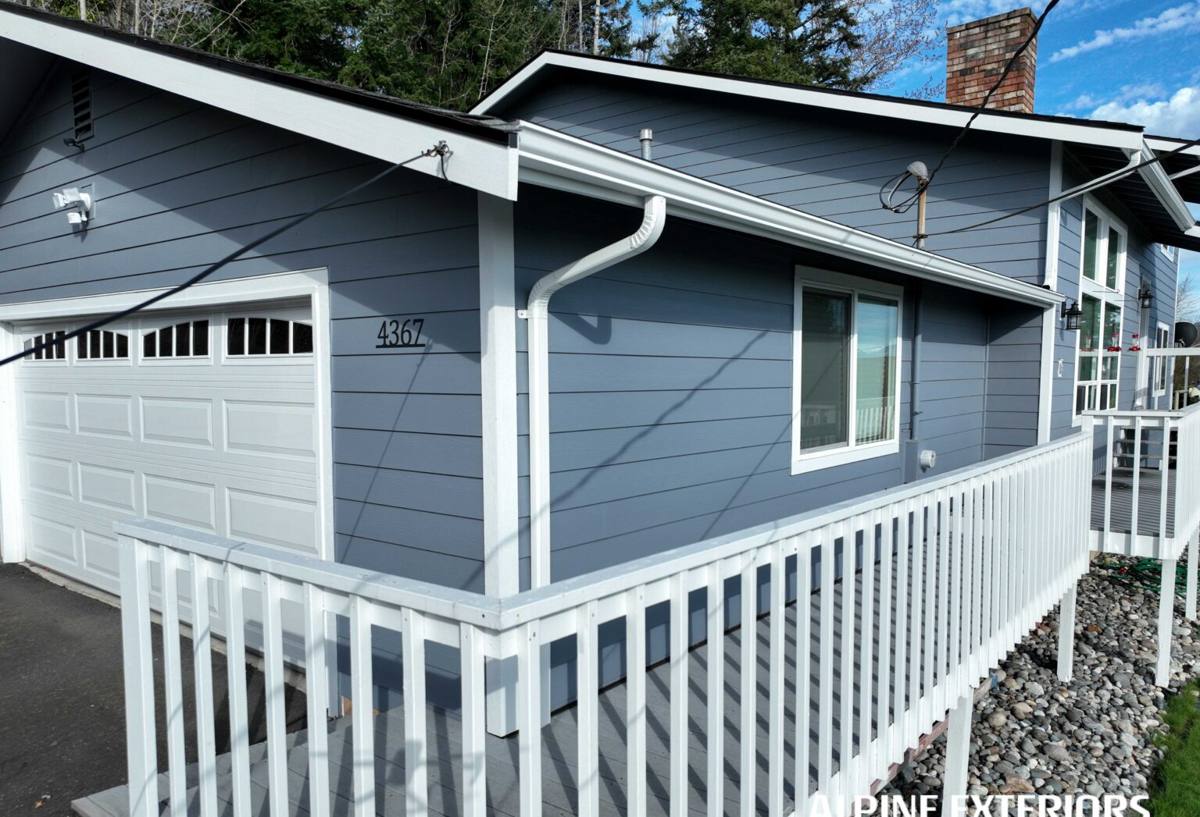
Roofing for Salt Air and Moss Pressure
Moss Is a Moisture Problem, Not a Cosmetic One
Moss on a roof looks like a surface issue, but it's really a water management issue. Moss holds moisture against the roofing material long after the rest of the roof has dried, which softens shingle mat over time, promotes granule loss on asphalt roofing, and can work its way under lapped edges. Left unaddressed for several seasons, moss growth shortens the usable life of a roof measurably. Regular removal — done correctly, without pressure-washing that strips granules — is one of the cheapest things a homeowner here can do to protect their investment.
Fasteners and Flashing Matter More Near Salt Water
We pay close attention to fastener and flashing material selection on homes closer to the water. Standard galvanized components can start showing rust streaks and pitting well before a roof's expected lifespan is up in a high-salt environment. Where it makes sense, we spec corrosion-resistant fasteners and flashing details built for coastal exposure rather than defaulting to whatever is cheapest, because the callback on a rusted-through flashing seam is far more expensive than the upgrade would have been.
Ventilation Keeps Moisture From Working Both Directions
A roof here fights moisture from two sides — rain and condensation from the outside, and trapped attic humidity from the inside. Proper ridge and soffit ventilation lets an attic breathe and dry between weather events. Roofs with inadequate ventilation tend to show sheathing rot and premature shingle failure from the underside, which isn't something you can spot from the ground.
Siding: The First Line of Defense Against Driving Rain
Siding takes the brunt of wind-driven rain, and the failure points are rarely the field of the siding itself — they're the transitions. Window and door trim, corner boards, butt joints, and the bottom termination near grade are where water intrusion actually starts. We detail these areas with attention to water shedding, not just appearance, because a siding job that looks good from the curb but wasn't flashed correctly at the openings will show problems within a few wet seasons.
Material Trade-Offs Worth Understanding
| Siding Type | Behavior in This Climate | Maintenance Load |
|---|---|---|
| Fiber cement | Handles moisture and salt exposure well; holds paint longer than wood | Low to moderate — periodic caulking and paint checks |
| Vinyl | Resists rot and doesn't need painting, but can become brittle over many years of UV and temperature cycling | Low — occasional cleaning |
| Wood siding | Classic look, but requires diligent sealing and repainting to resist rot in a wet, shaded climate | High — regular inspection and refinishing |
| Engineered wood | More moisture-resistant than solid wood but installation detail quality is critical to long-term performance | Moderate |
We don't push one material on every home. The right call depends on sun exposure, how close the home sits to the water, the homeowner's appetite for maintenance, and budget. What we won't do is install a product in a way that ignores how water actually moves across a wall assembly in this climate — that's a professional standard we hold regardless of which siding a homeowner chooses.
Windows: Sealing Against Wind-Driven Moisture
Older or poorly installed windows are a common source of slow leaks in this area, and the cause is usually flashing and sealant failure rather than the window unit itself. Wind-driven rain finds gaps at the sill and jamb that a straight-down rainstorm would never reach. When we replace or install windows, we treat the flashing integration with the surrounding wall as equally important as the window unit itself — a premium window installed with poor flashing will still leak, and a mid-range window installed correctly will hold up for years.
Energy performance is a secondary but real benefit. Whatcom County winters aren't extreme, but consistent damp cold means drafty windows show up as real discomfort and real heating costs over a season.
Decks: Built to Handle Standing Moisture
Decks in this area deal with the same moss and moisture pressure as roofs, plus the added stress of foot traffic and structural loading at ground level. A few things matter more here than in drier climates:
- Proper spacing between boards to allow drainage and airflow underneath, reducing trapped moisture
- Ledger board flashing where the deck attaches to the house — a common point of hidden rot if not detailed correctly
- Fastener selection resistant to corrosion, especially for decks closer to the water
- Regular clearing of leaves and debris from between boards, since trapped organic material holds moisture against the wood or composite surface
Composite decking has become popular here specifically because it resists the rot and moss staining that wood decking is prone to in a shaded, wet yard. It's not maintenance-free, but it shifts the maintenance burden from structural concern to surface cleaning.
Why a Local Crew Matters for This Kind of Work
A roofing or siding contractor who mostly works inland can miss the details that matter here — under-specified fasteners that corrode early, flashing details that work fine in a light rain but fail under sideways wind, or a maintenance schedule that doesn't account for how long moss actually has to grow in a shaded coastal lot. We work throughout Ferndale and the surrounding Whatcom County area regularly enough to know which failure points show up again and again on homes near the water, and we build our installations and our maintenance recommendations around that pattern rather than a one-size-fits-all standard.
Being local also means we're a short drive away if something needs a follow-up look after a storm, not a multi-day wait for a crew to travel in from elsewhere.
A Practical Seasonal Checklist
For homeowners who want to stay ahead of the climate here rather than react to it, this is a reasonable rhythm:
- Inspect and clear roof moss buildup at least once a year, ideally before the wettest months set in
- Check gutters and downspouts for debris, especially after fall leaf drop
- Look at exposed metal flashing and fasteners for early rust or pitting, particularly on homes closer to the water
- Walk the exterior siding for caulking gaps or discoloration around window and door trim
- Clear debris from between deck boards and check ledger board areas for soft spots
- Have a professional inspection every few years even if nothing looks obviously wrong — the issues that matter most are often the ones you can't see from the ground
What to Expect From an Estimate
When we look at a home in this area, we're not just quoting a like-for-like replacement. We're assessing how the existing roof, siding, windows, or deck have held up against the specific conditions of that lot — sun exposure, tree cover, proximity to the water, and drainage — and recommending work that matches those conditions rather than a generic package. That might mean upgrading a fastener spec, adjusting ventilation, or simply confirming that what's there is holding up fine and doesn't need replacement yet.
If you're noticing moss buildup, a slow leak, aging siding, or a deck that's starting to show soft spots, we're happy to take a look and give you an honest read on what's going on and what your options are. Reach out for a free, no-pressure estimate using the form below.