 Ferndale Roofing
 Lummi Island sits out in Whatcom County's marine air, reachable only by ferry, which means every exterior project here comes with its own logistics and its own climate math. Homes on the island face a steadier dose of salt-laden wind, wind-driven rain, and shade-grown moss than most inland Ferndale properties, and the building materials that hold up best reflect that. We've worked exteriors across Whatcom County long enough to know the difference between a roof that's built for a typical Ferndale lot and one that needs to be built for an island shoreline, and we plan every Lummi Island job around that difference from the first estimate.
Why Lummi Island's Climate Is Harder on a House
The Puget Sound marine environment around Lummi Island isn't just "rainy" — it's a combination of moisture, salt, and wind that attacks exteriors from several directions at once. Understanding each factor helps explain why some materials and installation choices matter more here than they would on a drier, inland lot.
Salt Air and Corrosion
Homes closer to the shoreline are exposed to airborne salt that accelerates corrosion on exposed metal — fasteners, flashing, gutters, and hardware. Standard galvanized fasteners can start showing rust streaks years before they would inland, which is why fastener and flashing selection matters more on island and near-water properties than the roofing material choice alone.
Driving Rain and Wind-Driven Moisture
Lummi Island gets exposed to wind coming off open water, and wind-driven rain doesn't behave like a straight downpour. It can push moisture sideways under poorly lapped siding, around loose trim, and into roof penetrations that would shed water fine in calmer conditions. Detailing around windows, deck ledgers, and roof valleys has to account for wind direction, not just gravity.
Moss, Shade, and a Long Wet Season
Between the tree cover common on many island lots and Whatcom County's extended damp season, north-facing roof slopes and shaded siding can stay wet for long stretches at a time. That's the environment moss and algae thrive in, and left unchecked, moss holds moisture against roofing material and lifts shingles at the edges over time.
Roofing for Lummi Island Homes
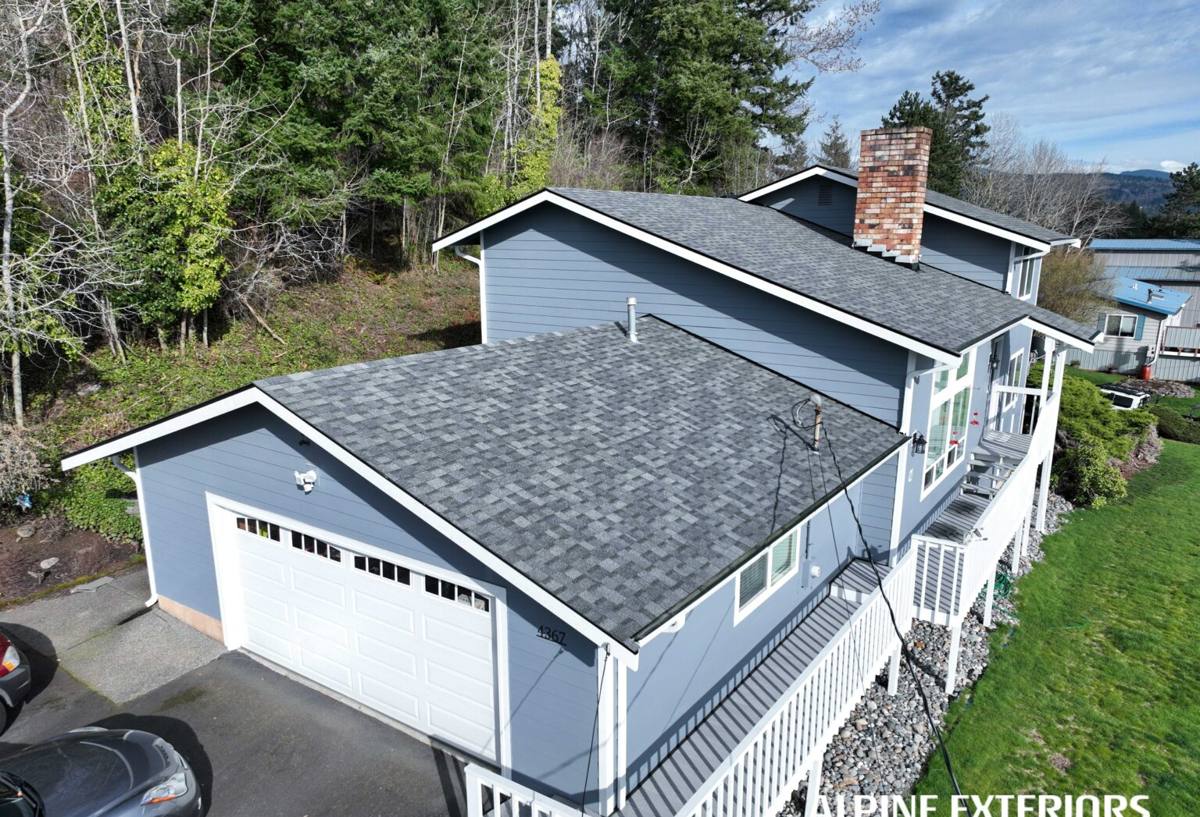
Roof replacement and repair work on the island generally centers on a few recurring issues: moss buildup on shaded slopes, flashing that's corroded faster than the shingles around it, and ventilation that hasn't kept pace with the moisture load. We inspect all three on every roof call, not just the obvious leak point, because a roof that's failing in one spot is often stressed the same way elsewhere.
What We Look At First
- Moss and algae growth on north- and east-facing slopes, and whether it's already lifted shingle edges
- Condition of flashing around chimneys, valleys, and roof-to-wall transitions, especially for corrosion
- Attic ventilation and whether trapped moisture is contributing to premature aging from underneath
- Gutter and downspout condition, since clogged or corroded gutters push water back under the roof edge
- Fastener condition on older roofs, particularly on shoreline-facing sections
For most island homes we install architectural asphalt shingle systems with corrosion-resistant flashing and fasteners rated for coastal exposure, paired with proper ridge and soffit ventilation. That combination addresses the moss, salt, and moisture issues together rather than treating them as separate problems.
Siding That Holds Up to Salt and Wind
Siding failures on Lummi Island tend to show up first at the joints and edges — places where wind-driven rain finds a way in. We see this most often on older wood or lower-grade vinyl siding that wasn't detailed with wind exposure in mind.
Our Standard for This Environment
We install fiber cement siding as our standard for salt-air and high-moisture exposure. It resists moisture absorption better than wood over the long run, doesn't feed moss and mildew the way wood siding can, and holds paint and color better in sustained damp conditions. It's more labor-intensive to install correctly — proper fastening, caulking, and flashing detail matter more with fiber cement than with a simpler product — which is part of why installation quality affects its performance as much as the material itself.
We don't recommend cheaper vinyl siding for shoreline-exposed walls on the island. It's not that vinyl is a bad product everywhere — it performs fine in a lot of settings — but in sustained wind-driven rain and salt exposure, its panel joints and lower impact resistance make it a weaker long-term fit than fiber cement, and we'd rather tell a homeowner that up front than sell a product we don't think will hold up.
Windows: Sealing Out Wind-Driven Rain
Window failures on the island are rarely about the glass — they're about the seal around the frame. Wind-driven rain finds gaps in old caulking, worn weatherstripping, or flashing that was never properly integrated with the siding. We check window flashing integration as part of any siding or exterior repair job on the island, not just when a window itself is failing, because a leak at a window frame can look like a siding problem or a roof problem depending on where the water travels once it's inside the wall.
When we do replace windows, we prioritize proper flashing tie-in and drainage over any single brand feature, since a well-flashed window in a mid-tier product will outperform a premium window installed with shortcuts on wind exposure like this.
Decks: Built for Weather-Exposed Living
Outdoor living space matters on the island, and deck problems here usually trace back to two things: ledger board attachment to the house, and moisture trapped between deck boards and framing. A ledger board that isn't properly flashed becomes a hidden entry point for water into the house structure itself — one of the more serious issues we find on older decks, since the damage is often invisible until siding or framing is already compromised.
What We Check on Existing Decks
- Ledger board flashing and its connection point to the house wall
- Fastener corrosion, especially on older decks using standard hardware
- Moisture trapped between boards or at post bases, a common driver of rot in shaded, damp yards
- Railing and structural connections for looseness that often signals wood movement from repeated wetting and drying
For new decks and rebuilds, we favor composite decking or properly treated and sealed wood, matched with corrosion-resistant fasteners and correctly flashed ledger connections. Composite reduces the ongoing maintenance burden in a climate that keeps surfaces damp for long stretches, though it comes at a higher upfront cost than wood — a tradeoff worth discussing against your budget and how you use the space.
Material and Cost Factors for Island Homes
Costs for exterior work on Lummi Island can run somewhat higher than comparable jobs closer to central Ferndale, mainly due to ferry scheduling and material transport logistics rather than the labor itself. We build that into estimates upfront so there are no surprises.
| Project Type | Key Cost Factors | What Affects Price Most |
|---|---|---|
| Roof replacement | Roof size, pitch, layers to remove, flashing complexity | Corrosion-resistant flashing and fastener upgrades for shoreline exposure |
| Siding replacement | Wall square footage, trim detail, number of openings | Fiber cement material cost vs. labor-intensive proper installation |
| Window replacement | Number and size of openings, frame material | Flashing integration quality, not just window brand |
| Deck rebuild | Deck size, framing condition, ledger repair needs | Composite vs. wood decking, and hidden ledger/framing damage |
Ferry logistics also affect scheduling more than pricing directly — we plan material deliveries and crew trips around the ferry schedule so a project doesn't stall waiting on a load that missed a sailing.
Why a Local, Ferry-Experienced Crew Matters
Working on Lummi Island isn't the same as working a job a few miles outside Ferndale. Scheduling has to account for ferry departures, material orders need to be planned further ahead, and the exterior work itself needs to reflect the island's heavier salt and moisture exposure rather than a generic Whatcom County spec. A crew that's done this before plans around the ferry instead of getting caught by it, and specs materials for the island's conditions instead of applying the same approach used on a sheltered inland lot.
Maintenance Between Projects
A lot of exterior damage on the island is preventable with basic seasonal upkeep rather than full replacement. Homeowners can catch a meaningful share of problems early with a short seasonal checklist.
- Clear moss from shaded roof slopes before it lifts shingle edges — done carefully, without pressure-washing that can strip granules
- Keep gutters and downspouts clear so water isn't backing up under roof edges
- Check caulking around windows and trim annually, since it's often the first seal to fail in wind-driven rain
- Inspect deck ledger boards and fasteners for rust or looseness each year
- Watch for peeling paint or soft spots on siding, which usually signal moisture getting in behind the surface
Catching these early is almost always cheaper than the repair that follows if they're ignored through another wet season.
Get a Free, No-Pressure Estimate
If you own a home on Lummi Island and have questions about your roof, siding, windows, or deck, we're happy to take a look and give you an honest read on where things stand. There's no pressure and no obligation — just a straightforward assessment from a crew that knows what this climate does to a house. Use the form below to request your free estimate.