 Ferndale Roofing
 Roofing and Exterior Work for Kendall Homes
Kendall sits inland from the Salish Sea but still gets plenty of the same weather that shapes exterior work across Whatcom County — long stretches of wet fall and winter months, a cool damp spring, and enough humidity most of the year to keep moss and algae in business on any roof or siding surface that doesn't get sun exposure. Homes out this way tend to sit closer to tree lines and open fields than in-town Ferndale properties, which changes what a roof, siding job, or deck actually has to deal with day to day. We work throughout the Ferndale area, and Kendall is part of that regular route — not a special trip.
Being a local crew matters here in a practical way. We know which roof pitches in this area collect needle litter under a canopy of firs, which sides of a house catch the worst of the wind-driven rain, and how a slower-draining lot changes what we recommend for foundation-level siding details or deck footings. That's knowledge you build by working the same county for years, not something you get from a national franchise dispatching whoever's available.
What the Local Climate Does to a Roof
Whatcom County's climate is mild compared to a lot of the country, but "mild" doesn't mean easy on a roof. The combination that does the damage here is moisture plus time: long moss season, driving rain that gets pushed sideways during winter storms, and enough humidity to keep organic growth going on shaded roof sections nearly year-round.
Moss and Algae
Moss doesn't just look bad — it holds water against shingles, lifts tabs as it grows under the edges, and shortens the life of the roofing material underneath it. North-facing slopes and anything shaded by trees are the most common trouble spots we see on Kendall-area homes, especially properties with mature conifers nearby. Left unchecked over several seasons, moss growth can work its way under shingle edges and contribute to leaks that show up as ceiling stains long after the moss itself is visible.
Driving Rain and Wind
Winter storms in this part of Washington often bring rain sideways rather than straight down, which puts stress on flashing, ridge caps, and any place where two roof planes or a roof and a wall meet. Those transition points are where most leaks actually start — not in the open field of shingles, but at the details.
Salt Air Exposure
While Kendall is set back from the water, the broader region's salt-tinged air still plays a role in how fasteners, flashing, and metal components age over time. It's a slower effect than what you'd see on a waterfront property, but it's part of why we favor corrosion-resistant fastener and flashing choices as standard practice rather than an upgrade.
Roof Replacement and Repair
Not every roof problem calls for full replacement, and we'd rather tell a homeowner honestly that a repair will hold for several more years than sell a replacement they don't need yet. Here's generally how we approach it:
- Inspect the roof from the attic side first when possible — interior signs of moisture often tell us more than what's visible from the ground.
- Check flashing at chimneys, skylights, valleys, and wall intersections, since these fail well before the field of the roof usually does.
- Assess moss and algae coverage and whether it's cosmetic or already affecting the shingle mat underneath.
- Look at attic ventilation — poor airflow accelerates both moss growth and shingle aging from the underside.
- Give a straight answer on repair versus replacement, with the reasoning explained, not just a number.
When replacement is the right call, we talk through material options honestly, including trade-offs in cost, maintenance, and lifespan, rather than pushing whatever has the best margin.
Siding That Handles Damp Conditions
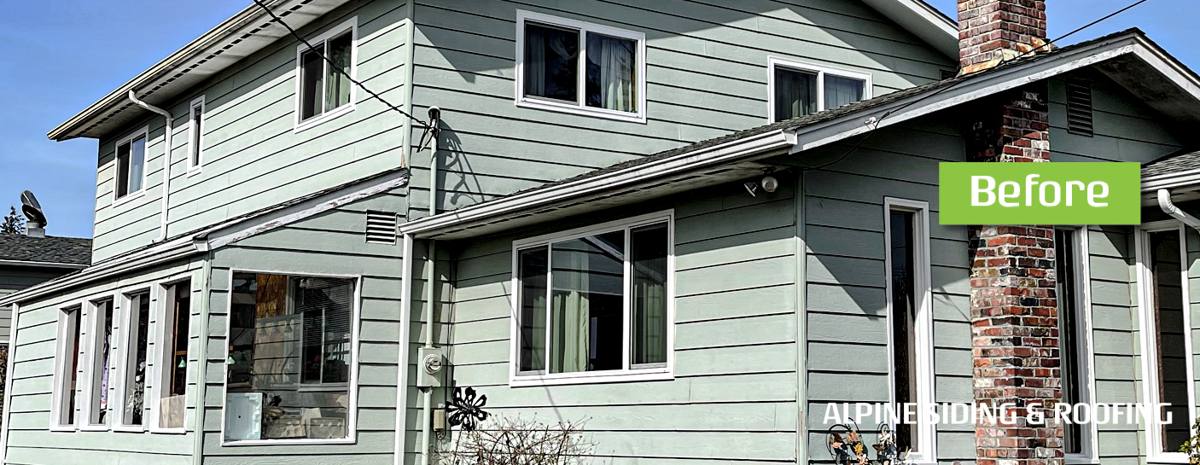
Siding in this climate has one main job beyond looks: keep moisture from getting behind it. Once water gets trapped behind a siding system in a humid climate like ours, it doesn't dry out quickly, and that's when you start seeing rot, mold, or paint failure. We pay close attention to house wrap, flashing at windows and doors, and proper overlap and fastening — the details that don't show up in a photo but determine whether siding lasts fifteen years or thirty.
Material Considerations for This Area
Fiber cement and quality engineered wood products tend to perform well in Whatcom County's damp conditions when installed correctly, because they resist moisture absorption and hold paint well over time. Vinyl remains a budget-conscious option that's low-maintenance but can show its age faster in constant damp shade. We don't steer people away from any product category outright — we explain how each one behaves in this specific climate and let the homeowner weigh cost against long-term upkeep.
Windows: Sealing Out the Damp
Old or poorly sealed windows are one of the most common sources of hidden moisture problems we find in homes throughout the Ferndale area, Kendall included. A window that's sealed properly does two jobs: keeps conditioned air in and keeps wind-driven rain out. When either fails, you get condensation, fogged glass, or in worse cases, water tracking down into the wall cavity where it's not visible until damage is already done.
Replacement windows also matter for energy efficiency in a climate with a long heating season. Even without a full remodel, updating aging windows can noticeably cut down on drafts and moisture buildup on interior glass during the wetter months.
Decks Built for Wet-Season Durability
A deck in this region spends more of the year wet than dry, which changes how it should be built and maintained. Standing water, debris buildup between boards, and ground moisture near footings are the main long-term threats. We build with drainage and airflow in mind — proper board spacing, ledger flashing, and joist protection — because those details are what keep a deck structurally sound well past the point where a poorly built one starts to soften.
Deck Maintenance Basics
- Clear leaves and debris from between boards regularly, especially in fall under any nearby trees.
- Check that water is draining away from the house, not pooling near ledger boards or footings.
- Reseal or refinish wood decking on the schedule the product calls for — skipping a cycle in a wet climate compounds fast.
- Inspect footings and posts periodically for softening or ground movement, particularly on lots with heavier clay or slow-draining soil.
Comparing Roofing Material Trade-Offs
| Material | Typical Lifespan Here | Moss/Moisture Behavior | Maintenance |
|---|---|---|---|
| Asphalt Composition Shingle | 20-30 years | Prone to moss in shaded areas; treatable | Periodic cleaning, moss treatment |
| Metal Roofing | 40-50+ years | Sheds moisture fast, resists moss growth | Low; occasional fastener/seam check |
| Cedar Shake | 25-30 years with upkeep | Absorbs moisture; needs active moss/mold management | Higher; regular treatment required |
These are general ranges, not guarantees — actual performance depends heavily on slope, shade, ventilation, and how consistently a roof is maintained. A well-ventilated, well-maintained asphalt roof can easily outperform a neglected premium material.
Why a Local Crew Makes a Difference
A contractor who works Whatcom County regularly has already seen how a given roof pitch, siding type, or deck design holds up over multiple wet seasons in this exact climate — not a generic climate zone on a spec sheet. That translates into practical decisions: where to add extra flashing detail, which ventilation setup actually keeps moss from coming back, and which siding installation details matter most given how much rain this area gets pushed against homes by wind. It also means we're accountable locally — reachable if a question comes up after the work is done, not a crew that finished the job and left the region.
What to Look For When Hiring an Exterior Contractor
- Proper Washington state contractor licensing and insurance, verifiable and current.
- A written estimate that explains scope, materials, and timeline — not just a bottom-line number.
- Willingness to explain trade-offs between material options rather than pushing one product.
- Local references or a track record of work in the same climate conditions.
- Clear communication about warranty coverage — both manufacturer and workmanship.
Get an Honest Look at Your Roof or Exterior
If you're in Kendall and dealing with moss buildup, a roof that's due for an honest assessment, siding showing its age, or a deck that needs attention before another wet season sets in, we're glad to take a look. We'll give you a straightforward read on what's actually going on and what your options are — no pressure, no upsell. Reach out using the form below for a free estimate.