 Ferndale Roofing
 Roofing in Blaine's Marine Climate
Blaine sits right on Semiahmoo Bay, about as close to salt water and the Canadian border as a Whatcom County roof gets. That location is beautiful, but it's hard on a roof. Salt-laden air corrodes exposed metal faster than it does even a few miles inland. Wind-driven rain off the Strait of Georgia doesn't just fall on a roof, it gets pushed sideways into laps, valleys, and fastener heads that a calmer climate would never test. And the same cool, damp, shaded conditions that make this corner of the county green year-round also make it one of the harder places in Washington to keep a roof free of moss.
None of that means a roof in Blaine needs to be exotic or overbuilt. It means the details that get overlooked on an easier job — flashing metal choice, fastener selection, ventilation, and moss-resistant surfacing — matter more here than they would on a roof twenty miles inland. We work this stretch of the county regularly, and we build every Blaine roof replacement with that salt-and-rain reality in mind from the first estimate.
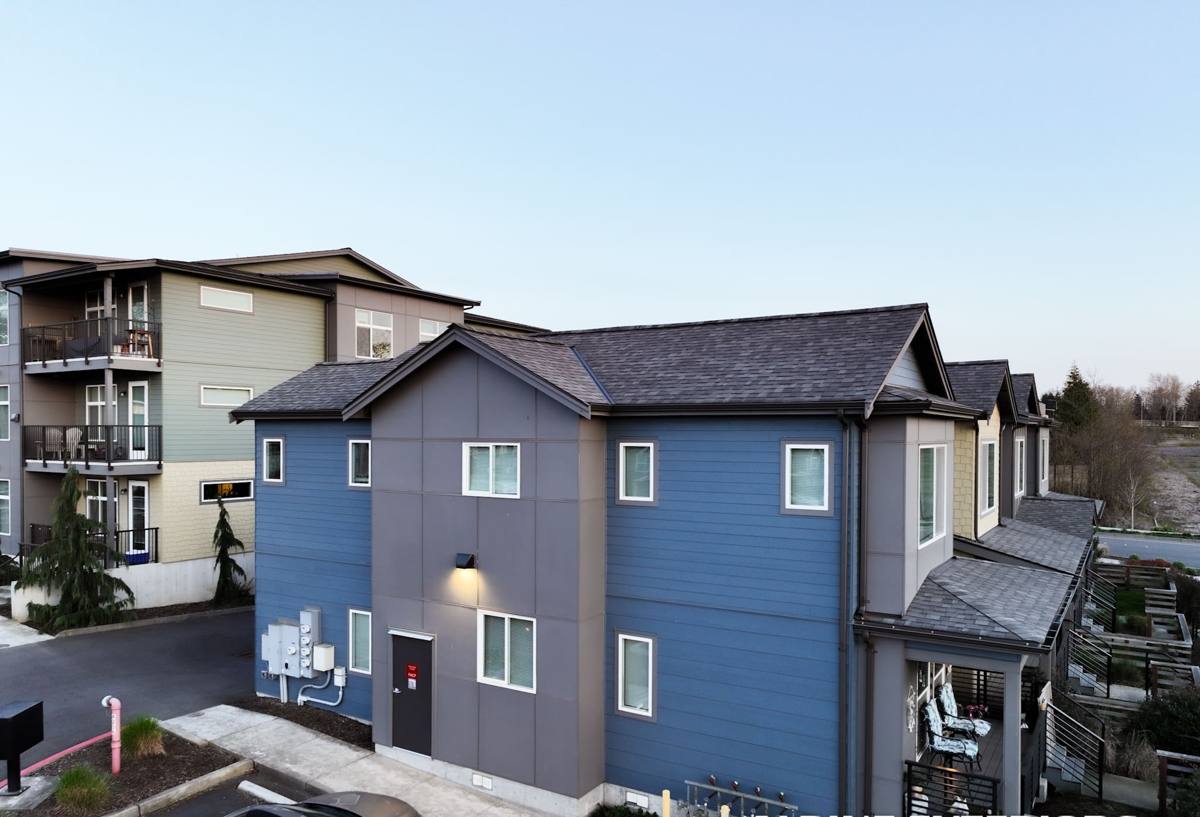
Signs a Blaine Roof Is Due for Replacement
Roofs near the water don't always fail the way inland roofs do. Corrosion and moss damage can shorten a roof's useful life even when the shingles themselves still look intact from the ground. Homeowners in Blaine should watch for:
- Granule loss showing up in gutters or at downspout outlets after normal rain, not just storms
- Rusting or pitted flashing around chimneys, skylights, and roof-to-wall transitions
- Moss colonies on north-facing or shaded slopes that keep returning after cleaning
- Curling, cupping, or cracked shingles, especially on slopes that face the water and take the brunt of the wind
- Soft spots in the decking, visible when walking the roof or from staining on the interior ceiling below
- Fastener heads backing out or showing rust streaks running down the shingle face
Any one of these can often be repaired. Several showing up together, or a roof that's simply reached the end of its rated service life, is usually the point where replacement is the more honest recommendation than another round of patching.
Why Coastal Roofs Age Differently
Salt air is mildly corrosive to most metals, and a roof has a lot of exposed metal — flashing, drip edge, fasteners, vent caps, ridge components. Standard galvanized fasteners and lower-grade flashing can start showing surface corrosion well before the shingles themselves are due for replacement. Combine that with the moisture load from near-constant marine drizzle, and the metal components frequently become the limiting factor on how long a coastal roof actually lasts.
What a Correct Roof Replacement Involves Here
A roof replacement is more than stripping old shingles and nailing down new ones. Done right on a Blaine home, it includes:
Tear-Off and Deck Inspection
Full removal of the old roofing down to the deck, so we can actually see the plywood or plank sheathing underneath. Coastal moisture means we're specifically checking for soft or delaminated decking near valleys, eaves, and old flashing points — areas where trapped water does the most damage over time.
Underlayment Built for Wind-Driven Rain
A synthetic or self-adhered underlayment appropriate to the slope and exposure, with extra attention to eaves, valleys, and any wall-to-roof transitions where wind can drive rain uphill under the shingle edge. This layer is what protects the deck if wind ever pushes moisture past the primary roofing surface, which happens more often on exposed Blaine lots than it does further inland.
Corrosion-Resistant Flashing and Fasteners
Given the salt air, we default to flashing and fastener materials chosen for corrosion resistance rather than the cheapest code-minimum option. This is a straightforward upfront decision that avoids a much more expensive repair five or ten years down the road when standard-grade metal starts to fail at chimneys, skylights, and valleys.
Ventilation That Matches the Climate
Balanced intake and exhaust ventilation keeps the attic dry and temperature-stable, which does double duty in a marine climate: it reduces condensation risk inside the attic and helps the roof surface dry out faster after Blaine's frequent damp spells, which is one of the best long-term defenses against moss.
Moss-Resistant Detailing
Where appropriate, that includes zinc or copper strips near the ridge on shaded slopes, and shingle products with built-in algae and moss resistance. No detailing eliminates the need for periodic roof cleaning in this climate, but it meaningfully slows regrowth on the slopes that struggle most.
Material Options for a Coastal Whatcom County Home
| Material | How It Handles Salt Air & Moisture | Maintenance Considerations |
|---|---|---|
| Architectural asphalt shingle | Good performance with proper flashing and underlayment; algae-resistant granules available | Periodic moss and debris removal on shaded slopes; most common, most cost-predictable choice |
| Standing seam metal | Excellent water shedding on steep or complex rooflines; requires marine-grade coatings or finishes near the coast to manage corrosion | Low debris retention, so it resists moss well; finish and fastener quality matter more here than inland |
| Synthetic/composite shingle | Resists moisture absorption and doesn't corrode; performs consistently in damp, shaded conditions | Higher upfront cost; low ongoing maintenance |
| Wood shake | Absorbs moisture readily in a climate this damp, which shortens service life and increases moss and rot risk | Higher maintenance burden in this specific climate; we're upfront that it's a harder recommendation for shaded, marine-exposed roofs |
We don't push one material on every home. The right choice depends on the roof's slope, how much shade it gets, the home's architecture, and the homeowner's budget and maintenance appetite. We'll walk through the honest trade-offs for your specific roof during the estimate.
Our Process for a Blaine Roof Replacement
- On-site inspection and estimate. We look at the whole roof system — decking, flashing, ventilation, slope, and exposure — not just the shingles, and give a written, no-pressure estimate.
- Material selection. We walk through the options above in the context of your specific roof and shade pattern, and help you land on the material that fits your home and budget.
- Scheduling around the weather. Whatcom County's wet season isn't a mystery to us. We plan tear-off and dry-in around forecasted weather windows so your home isn't exposed longer than necessary.
- Tear-off, deck repair, and dry-in. Old roofing comes off, any compromised decking gets replaced, and the roof is dried in with weather-resistant underlayment the same day whenever conditions allow.
- Installation. New roofing, flashing, and ventilation components go on to manufacturer specification, with the corrosion- and moss-resistant detailing appropriate to a coastal Whatcom County home.
- Final walkthrough. We review the completed roof with you, confirm everything meets our standard, and answer any questions about care going forward.
Why a Crew That Already Works Blaine Matters
Roofing crews unfamiliar with this exact stretch of coastline sometimes spec a roof the same way they would for a drier, more sheltered part of the county — and it shows up later as premature flashing corrosion or moss that keeps coming back no matter how often it's cleaned. We work Blaine and the surrounding Whatcom County coastline regularly, so we already know which slopes take the worst wind-driven rain, which shaded areas need extra moss-resistant detailing, and which fastener and flashing grades actually hold up this close to the water. That local familiarity shows up in fewer callbacks and a roof that's built for the conditions it will actually face, not generic conditions.
Planning and Cost Factors
Every roof replacement is priced around the specifics of the job, but the main factors that move the number on a Blaine home are consistent:
- Roof size and number of slopes, valleys, and penetrations (chimneys, skylights, vents)
- Current decking condition — hidden rot or delamination adds repair work once the old roofing is off
- Material choice, from standard architectural shingle up to standing seam metal or composite
- Amount of moss-resistant and corrosion-resistant detailing needed based on shade and exposure
- Access — steep pitches, tall structures, or tight lots can affect labor and staging
We won't know your real number until we've seen the roof, but we'll always explain what's driving the estimate so you understand what you're paying for and why.
Get a Free, No-Pressure Estimate
If your Blaine home's roof is showing rust streaks, recurring moss, or granule loss, or if it's simply getting up in years, we're happy to take a look. The estimate is free, there's no pressure to commit on the spot, and you'll get a straight answer about whether replacement is actually the right call or whether a repair will still get you more useful life. Fill out the form below to get started.