 Ferndale Roofing
 Why Blaine's Marine Climate Is Rough on Siding
Blaine sits right on Semiahmoo Bay, at the very edge of Whatcom County, which means homes here deal with a combination of weather stresses that inland houses simply don't face. Salt-laden air blows in off the water and settles on every exterior surface, accelerating corrosion on fasteners, trim, and anything with exposed metal. Add in the driving, wind-pushed rain that comes through in fall and winter storms, and you've got moisture finding its way into seams, laps, and joints that would stay dry on a calmer site. Then there's moss season, which in this part of Washington isn't really a season at all — it's most of the year. Shaded north and west-facing walls, tree cover, and near-constant dampness give moss and algae everything they need to take hold on siding that isn't built or installed to resist it.
None of this is unique to any one house in Blaine — it's the baseline condition for anything built close to the water in Whatcom County. But it does mean that siding choice and installation quality matter more here than they would in a drier, more sheltered part of the state. A product or install that would hold up fine forty miles inland can fail years early on a bay-facing wall.
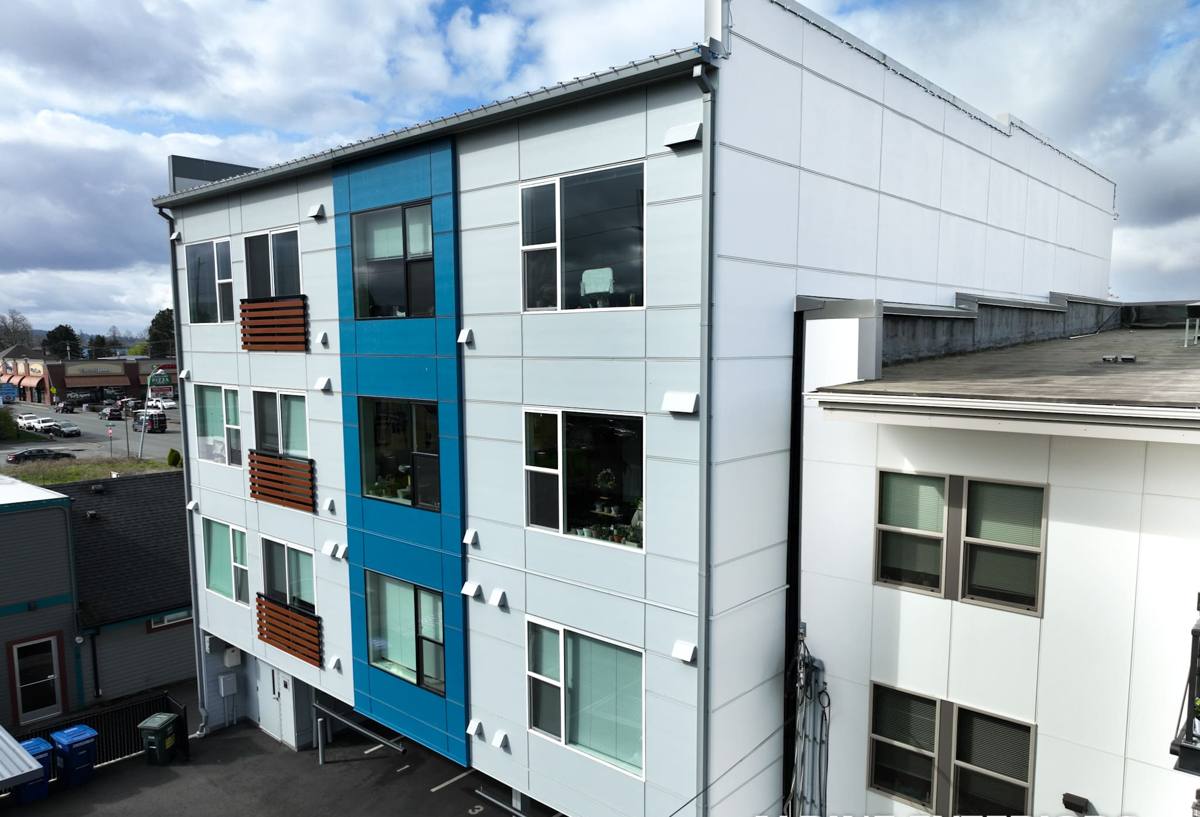
What a Correct Fiber Cement Install Requires in This Environment
Flashing and Water Management
Fiber cement siding is only as good as the water management system behind it. Every window, door, and penetration needs properly lapped flashing so water is directed out and down, never trapped behind the cladding. In a driving-rain environment like Blaine's, we pay particular attention to head flashing above openings and to how the weather-resistive barrier integrates with window and door flanges — gaps here are where the slow, hidden rot starts.
Fastening and Clearances
Corrosion-resistant fasteners are non-negotiable this close to salt water. We follow manufacturer fastening patterns and keep the siding held off decks, walkways, and grade at the clearances James Hardie specifies, so splash-back and standing moisture don't sit against the bottom course. Skipping these clearances is one of the most common shortcuts we see on homes that weren't installed by a crew used to coastal conditions.
Factory Finish vs. Field-Applied Paint
We install James Hardie siding with the factory-applied ColorPlus finish rather than field-painting after installation whenever possible. A factory finish is baked on under controlled conditions and carries its own finish warranty — that matters in a climate where a field-applied coat has less time to cure properly between rain events and is more exposed to salt residue while it's still fresh.
James Hardie vs. Other Siding Options for a Blaine Home
We only install James Hardie fiber cement siding, and the comparison below is why. This isn't about any one product being "bad" — it's about which materials hold up to salt air, driving rain, and moss without demanding constant homeowner attention.
| Factor | James Hardie Fiber Cement | Vinyl | Cedar / Primed Wood |
|---|---|---|---|
| Moisture behavior | Non-combustible, engineered to resist moisture-related swelling and rot | Doesn't rot, but can warp and gap, letting water behind it | Absorbs moisture; needs consistent sealing to avoid rot |
| Salt air exposure | Holds finish and structure well near water | Can become brittle and discolor faster in salt air and UV | Salt accelerates weathering of the wood and finish |
| Moss and algae | Factory finish resists staining; cleans up without damaging the substrate | Moss and mildew show readily in shaded, damp spots | Moss and algae take hold quickly and can trap moisture against wood |
| Maintenance | Periodic washing; no repainting for years with ColorPlus finish | Low maintenance but limited repair options once damaged | Regular repainting and sealing required, especially in wet climates |
| Fire resistance | Non-combustible material | Can melt or deform under heat | Combustible |
We're often asked why we don't also offer LP SmartSide, Cemplank, or Allura as lower-cost alternatives. Our answer is straightforward: we've standardized on one product line so we can install it correctly, every time, and stand behind it with a single, consistent warranty conversation. James Hardie's HZ product lines are engineered specifically for different climate zones, which matters in a marine environment like Blaine's, and the company backs the material with a strong transferable warranty that follows the home if it's sold.
Our Process, Start to Finish
- On-site assessment. We walk the exterior, check current siding and trim condition, and look specifically at water intrusion points common to bay-facing and shaded walls.
- Tear-off and substrate check. Old siding comes off and we inspect the sheathing underneath for hidden moisture damage before anything new goes up.
- Weather-resistive barrier and flashing. A new water-resistive barrier is installed with properly lapped flashing at every window, door, and penetration.
- Siding installation. James Hardie panels or lap siding go up to manufacturer spec — correct fastener type, spacing, and clearance from grade and hard surfaces.
- Trim and joint detailing. Trim boards, corners, and butt joints are sealed with products compatible with the ColorPlus finish, not generic caulk that will fail early in salt air.
- Final walk-through. We go over the finished job with the homeowner before calling it done.
Why a Crew That Already Works Blaine Matters
A lot of siding problems we get called out to fix aren't product failures — they're installation shortcuts taken by a crew unfamiliar with what a coastal Whatcom County home actually needs. A crew that regularly works in Blaine already knows to over-build the water management detailing rather than treat it as an afterthought, because they've seen what happens when it isn't. That includes knowing which walls in a given layout take the worst of the wind-driven rain, where moss tends to establish first, and how much clearance really matters near a shoreline lot versus a more sheltered one.
There's also the practical side: we're familiar with pulling permits through the City of Blaine and Whatcom County, so that part of the project doesn't become a source of delay. A crew based in Ferndale and working this corner of the county regularly isn't learning the local conditions on your job — they already know them.
Maintenance in Salt Air and Moss Season
Correctly installed James Hardie siding is low-maintenance, not no-maintenance. A little attention once or twice a year keeps it performing the way it's designed to in this environment.
- Rinse siding with a garden hose (not a pressure washer aimed directly at seams) once or twice a year to clear salt residue and organic buildup.
- Check caulking at trim joints, window and door surrounds, and butt joints annually — this is the first place minor failures show up.
- Keep gutters clear so overflow doesn't run down the wall face and feed moss growth on shaded siding.
- Trim back vegetation and tree cover where it's keeping a wall damp and shaded longer than necessary.
- Look for any fastener heads showing rust streaking — an early sign a fastener wasn't the corrosion-resistant type specified for coastal use.
- Address any visible gaps at flashing or trim promptly rather than waiting for a full repaint or re-caulk cycle.
Cost Factors for Blaine Siding Projects
Every home is different, but the factors that move a fiber cement siding project's cost up or down are consistent. We go over these specifically during a free estimate rather than quoting a number sight unseen.
| Factor | Why It Matters |
|---|---|
| Amount of tear-off and substrate repair | Hidden moisture damage from old siding failures adds labor before new siding can go on |
| Home shape and trim detail | More corners, dormers, and trim work mean more cuts, flashing, and labor time |
| Siding profile chosen | Lap siding, panel siding, and shingle-style profiles differ in material and install time |
| Access and site conditions | Waterfront lots, slopes, and limited staging area can affect scaffolding and logistics |
| Finish selection | Factory ColorPlus finish colors and touch-up needs versus field-painted trim |
Common Problems We See on Coastal Whatcom County Homes
Called out to homes near the water, we see a handful of issues repeatedly: caulk that failed early because it wasn't rated for the movement and moisture cycling of a marine climate, moss establishing at trim-to-siding joints where debris collects, and fastener rust bleeding through a finish where the wrong fastener type was used originally. Almost all of it traces back to installation choices made to save time or cost rather than a failure of the fiber cement material itself. It's a big part of why we're particular about doing every detail — flashing, fastening, clearances, sealants — to spec rather than to whatever's fastest.
Ready to Talk About Your Home
If you're weighing a siding replacement on a Blaine property, we're happy to walk the exterior with you, point out what's driving any current problems, and explain exactly what a correct James Hardie installation would involve for your specific home. Fill out the form below for a free, no-pressure estimate.