 Ferndale Roofing
 Building Decks for Blaine's Marine Climate
Blaine sits about as close to Puget Sound salt air as a Whatcom County home can get, and that changes what a deck has to survive. A deck built to a generic spec sheet might look fine the first summer, but two or three winters of driving rain off the water, salt-laden air, and the long gray stretch when moss and algae take over anything that stays damp will expose every shortcut. We build decks in Blaine the way this climate actually demands, not the way a catalog assumes.
That means fasteners rated for coastal exposure, framing details that shed water instead of trapping it, and decking material chosen for how it behaves wet — not just how it looks dry on a showroom sample. None of this is exotic. It's just attention to the parts of a deck that fail first when the weather here does what it does most of the year.
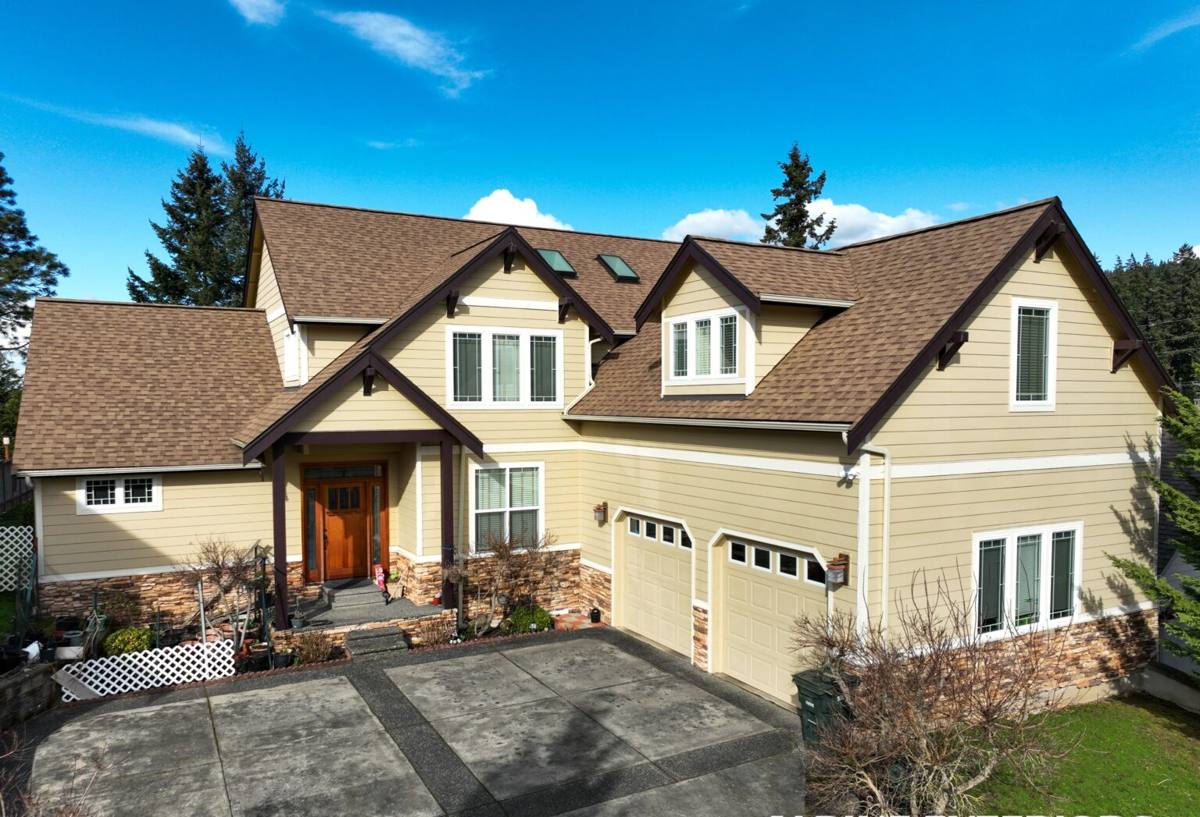
What Blaine Homes Actually Need From a Deck
Most deck problems we get called out to fix in this area trace back to the same handful of causes: standing water on the deck surface, fasteners that were never rated for salt exposure, ledger boards that weren't properly flashed against the house, or framing that never had a chance to dry out between rain events. A correctly built deck in Blaine addresses all four before the first board goes down.
- Positive drainage across the deck surface so water doesn't pool against the house or in low spots
- Stainless steel or coated fasteners rated for coastal and marine-adjacent exposure, not standard interior-grade hardware
- Proper ledger flashing where the deck meets the house — the single most common source of hidden rot we find
- Airflow underneath the deck so framing can dry out between storms instead of staying damp for weeks
- A decking surface with enough texture or drainage gap to resist the moss and algae film that builds up during the wet season
Skip any one of these and the deck will still look acceptable for a season or two. The failures show up underneath and behind, where nobody looks until there's a soft spot or a rot smell near the house.
Choosing the Right Decking Material for This Coast
There's no single "best" decking material — there's a best material for your budget, your maintenance appetite, and how much exposure your particular deck gets to wind-driven rain and salt air. Here's how the common options actually perform in Blaine's climate, based on what we see hold up and what we see fail early.
| Material | Salt Air / Rain Performance | Maintenance | Honest Trade-Off |
|---|---|---|---|
| Pressure-treated fir/hem-fir | Good if properly sealed and re-sealed on schedule | Annual or biennial staining/sealing | Lowest upfront cost, but neglect shows fast — checking, graying, and moss growth in shaded spots |
| Cedar | Naturally rot- and insect-resistant, ages well with care | Regular oiling to prevent silvering and moss | Beautiful and traditional for this region, but softer wood means more attention to fastener corrosion and surface wear |
| Composite decking | Excellent — engineered to resist moisture absorption and doesn't rot | Occasional washing to clear moss/algae film; no staining or sealing | Higher upfront cost, but far less ongoing labor over the life of the deck |
| Tropical hardwood (ipe and similar) | Very good; naturally dense and rot-resistant | Periodic oiling to maintain color, though it will gray naturally if left untreated | Premium price point; requires pre-drilling and specialized fasteners for correct installation |
We don't push one material on every job. What we push is being honest about the maintenance commitment each one carries once it's living through a Whatcom County winter, so you're not surprised two years in.
A Note on Cheap Fasteners
This is worth calling out on its own because it's the most common corner-cutting we see on decks that fail early near the water. Standard galvanized screws and joist hardware are built for general framing, not sustained salt air exposure. In Blaine, that hardware can start corroding within a few seasons, which weakens connections long before the visible decking shows any wear. We use fasteners and structural connectors rated for coastal exposure on every deck we build here — it costs more per box, but it's the difference between a deck that's structurally sound at year fifteen and one that needs the frame reinforced at year seven.
Framing and Substructure — What Correct Looks Like
The part of a deck nobody sees is the part that determines how long the whole thing lasts. Correct framing in this climate means:
- Footings sized and set to local frost and soil conditions, not the minimum the plan set allows
- Joist hangers and structural screws rated for exterior and coastal exposure throughout, not just at the visible edges
- A ledger board attached with proper flashing and spacing so water can't wick between the deck and the house siding
- Post bases that keep wood off concrete and out of standing water
- Enough clearance and airflow beneath the deck for framing to dry between rain events, which in this region can mean days at a time with no real drying window
We size and space framing to the actual span and load, not just to pass a quick visual inspection. A deck that's going to carry furniture, a hot tub, or regular gatherings needs framing calculated for that load from the start — retrofitting stronger support under a finished deck is far more expensive than building it right the first time.
Moss, Mildew, and the Long Wet Season
Whatcom County's wet season runs long, and a deck surface that stays damp for weeks at a stretch is exactly the environment moss and mildew need to take hold. Once moss establishes on a wood deck, it holds moisture against the boards and accelerates rot underneath the growth — by the time it's visibly green, the damage underneath may already be started.
The fix isn't just periodic cleaning, though that matters too. It starts with design: adequate gaps between boards for drainage and airflow, a slope away from the house so water doesn't sit, and material choices that don't give moss spores an easy foothold in the first place. Composite and dense hardwood decking resist this far better than softer, more porous woods, which is one reason we walk every Blaine client through the maintenance trade-off before they commit to a material.
For wood decks, an annual inspection and cleaning before the wet season sets in — clearing debris from between boards, checking for early moss growth in shaded corners, and re-sealing as needed — does more to extend the life of the deck than almost anything else you can do after it's built.
Our Deck Building Process
Every deck we build in Blaine follows the same sequence, adjusted for the specific site:
- On-site assessment. We look at drainage patterns, sun and wind exposure, soil conditions, and how the deck will tie into the house before recommending anything.
- Material and design conversation. We walk through the trade-offs above so you're choosing based on real maintenance expectations, not just a sample board.
- Permitting. We handle the permit process for the jurisdiction your property falls under, including any setback or height requirements that apply to the site.
- Footings and framing. Built to the load and span the deck actually needs, with coastal-rated hardware throughout.
- Decking, railing, and finish work. Installed with attention to drainage gaps, fastener placement, and clean transitions at the house.
- Final walkthrough. We go over the finished deck with you, including what maintenance schedule fits the material you chose.
Permits and Site Considerations Around Blaine
Deck projects near the water or close to property lines in this area often involve setback rules, and larger or elevated decks typically require a building permit and inspection regardless of location. Requirements vary by exact jurisdiction and site — proximity to shoreline, lot size, and whether the deck is attached to the house all factor in. We handle this as part of every project rather than leaving it for the homeowner to sort out, because getting it wrong means delays or rework after the fact.
Deck Maintenance Checklist for Blaine Homeowners
Whatever material you choose, a short annual routine goes a long way in this climate:
- Clear leaves and debris from between boards before the wet season, especially in shaded corners where moss takes hold first
- Inspect the ledger board area and any spots where the deck meets the house for signs of moisture or staining
- Check railing posts and stair connections for looseness — coastal air accelerates hardware wear faster than inland locations
- Re-seal or re-stain wood decking on the schedule appropriate to the product, typically every one to two years
- Wash composite or hardwood decking periodically to remove the algae film that builds up during long wet stretches
- Walk the underside of the deck once a year if accessible, checking for soft spots, corrosion at fasteners, or standing water
Why Hire a Crew That Already Works in Blaine
A deck built to a generic regional spec and a deck built for this specific stretch of coastline are not the same project, even if they look identical from the street. Fastener selection, drainage detailing, and material recommendations all shift when you're building a few miles from salt water in a county that sees a long, wet moss season every year. We build decks throughout Whatcom County, and the details we've described here — coastal-rated hardware, ledger flashing, drainage-first framing — aren't upsells. They're what we consider a correctly built deck in this climate, and we build every one that way whether it's asked for by name or not.
If you're planning a new deck or replacing one that's showing its age, we're happy to take a look and put together a straightforward estimate — no pressure, no obligation. Use the form below to get started.