 Ferndale Roofing
 Roofing Built for Life on Sandy Point
Sandy Point sits close enough to the water that the weather never really lets a roof rest. Between the salt-laden air coming off the water, the driving rain that rolls through Whatcom County for much of the year, and a moss season that seems to stretch longer every winter, homes out here work harder than homes just a few miles inland. Ferndale Roofing Co has spent years working on roofs, siding, windows, and decks throughout this stretch of the county, and Sandy Point has its own personality when it comes to exterior wear. We don't treat it like a generic Ferndale job — we look at it as a waterfront property with waterfront problems.
This page is meant to give Sandy Point homeowners a straightforward, no-hype look at what your roof and exterior are up against out here, what real maintenance and replacement look like, and why having a crew that actually understands this specific pocket of Whatcom County matters more than it might seem.
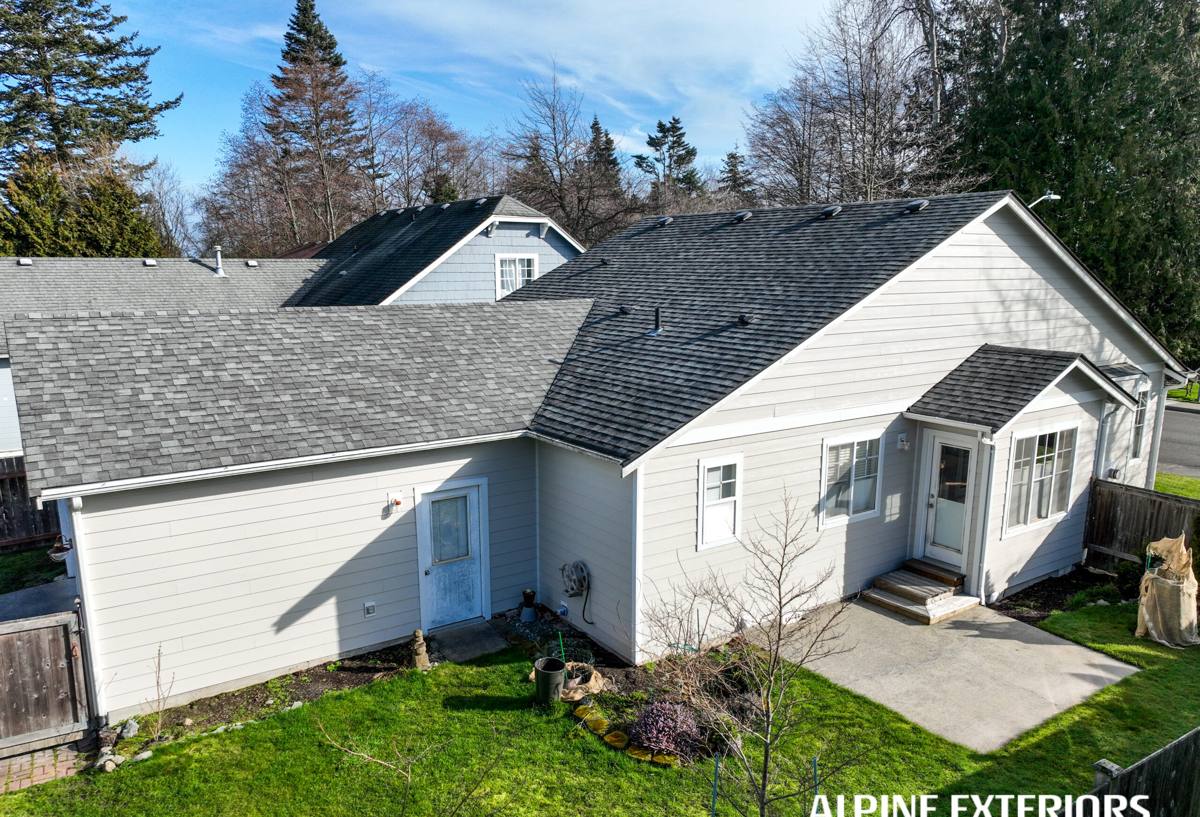
What Salt Air Actually Does to a Roof
Salt air gets a lot of blame in casual conversation, but the mechanism is worth understanding because it changes how we recommend materials and hardware. Airborne salt is corrosive to exposed metal — nails, flashing, gutter hangers, and any fasteners that aren't properly coated or sealed. Over years, this corrosion can weaken the very connections that hold roofing material in place, long before the shingles or panels themselves show visible wear.
Where We See It First
- Exposed fastener heads on metal roofing and flashing starting to rust before the panels do
- Gutter and downspout hardware corroding faster than the gutter material itself
- Valley flashing and step flashing around chimneys or dormers showing pitting
- Staining that streaks down from metal components onto siding or roofing below
For homes closer to the water, we generally recommend stainless or hot-dip galvanized fasteners and flashing rated for coastal exposure, rather than standard-grade hardware. It costs a bit more up front, but replacing corroded flashing on a roof that's otherwise sound is a frustrating and avoidable repair.
Driving Rain and Wind-Driven Water Intrusion
Whatcom County rain doesn't always fall straight down. Storms coming off the water often push rain sideways, and that changes where water actually tries to get into a house. Wind-driven rain finds its way under shingle tabs, through poorly lapped siding, and around window flashing that was installed for a "normal" rain event rather than a sideways one.
This is one of the biggest reasons we pay close attention to underlayment quality and flashing details on Sandy Point homes specifically. A roof that would perform fine a few miles inland can develop leaks here simply because the water is hitting it from an angle the original installation didn't account for. The same logic applies to window and door flashing — a proper installation integrates the flashing with the building's water-resistive barrier so wind-driven rain has nowhere to go but back outside.
Common Water Entry Points We Check
- Roof-to-wall transitions and dormer flashing
- Chimney and vent pipe boots
- Window and door head flashing, especially on the weather-facing side of the house
- Deck ledger boards where they attach to the house
- Gutter overflow points during heavy, wind-driven storms
Moss: The Slow, Quiet Damage
Moss is often treated as a cosmetic nuisance, but on a shaded, moisture-heavy lot — which describes a good share of Sandy Point properties with mature trees and marine-layer humidity — moss is a long-term roof health issue. Moss holds moisture against the roofing surface far longer than the surface would otherwise stay wet, which accelerates granule loss on asphalt shingles and can work into seams over time. On wood-adjacent materials, prolonged moisture contact is even more of a concern.
Our Standard Approach to Moss
- Physical removal by hand or soft-wash methods that don't damage the roofing surface — we avoid aggressive pressure washing, which can strip granules and shorten shingle life
- Clearing gutters and valleys where moss and debris collect and hold water
- Zinc or copper strip installation near the ridge on eligible roofs, which allows rain to carry trace metal ions down the roof surface and discourage regrowth
- A conversation about tree trimming or canopy thinning where nearby trees are keeping a roof section shaded and damp most of the year
Moss removal isn't a once-and-done service in a place like this — it's a seasonal maintenance item, and we're upfront with homeowners about that instead of pretending one treatment solves it permanently.
Roofing Material Trade-Offs for a Coastal Property
There's no single "best" roofing material for Sandy Point — it depends on budget, roof pitch, sun exposure, and how much maintenance a homeowner wants to take on. Here's how the common options actually compare in this environment:
| Material | Salt Air Resistance | Moss Resistance | Maintenance Level |
|---|---|---|---|
| Architectural asphalt shingle | Good, with corrosion-resistant fasteners | Moderate — benefits from zinc strips | Low to moderate |
| Standing seam metal | Very good with proper coating/fasteners | Good — sheds moss more easily | Low |
| Composite/synthetic shake | Good | Moderate | Moderate |
| Cedar shake | Requires vigilant maintenance near salt air | Needs regular treatment and cleaning | High |
We're honest about cedar shake specifically: it can look great, but in a marine-influenced environment with heavy moss pressure, it demands a maintenance commitment that not every homeowner wants to take on. That's a trade-off we'll walk through with you rather than talk you into or out of a material based on looks alone.
Siding, Windows, and Decks Face the Same Environment
A roof inspection out here often turns into a broader exterior conversation, because salt air and driving rain don't stop at the roofline. Siding seams and caulk joints take the same wind-driven moisture exposure as the roof. Window flashing and seals are under the same pressure. Deck ledger connections and fasteners face the same corrosion risk as roof flashing, especially on decks that get direct salt spray or sit in a shaded, damp corner of the yard.
Because we handle all four trades — roofing, siding, windows, and decks — we're able to look at a Sandy Point home as one system rather than four separate jobs. A leak that shows up as a stain on an interior wall might trace back to a roof flashing issue, a siding gap, or a window seal failure, and diagnosing that correctly the first time saves homeowners from paying for the wrong repair.
What a Sandy Point Roof Inspection Looks Like
When we inspect a home in this area, we're not just checking for obvious damage. We're looking specifically for the failure patterns this environment produces:
- Fastener and flashing corrosion, particularly on the side of the roof facing prevailing wind and water
- Moss buildup in valleys, north-facing slopes, and shaded sections
- Granule loss patterns that suggest accelerated wear from trapped moisture
- Gutter and downspout condition, including hardware corrosion
- Flashing integration at every roof-to-wall and penetration point
- Signs of wind-driven water intrusion around windows and doors on exposed elevations
We give homeowners a straightforward written summary of what we find, what's urgent versus what can be scheduled, and realistic cost ranges — not a scare-tactic sales pitch.
Why a Local Crew Matters Here
Sandy Point isn't a huge community, and it doesn't behave like a typical inland Ferndale neighborhood. A crew that mostly works dry, sheltered lots elsewhere in Whatcom County can miss the specific wear patterns that show up on a waterfront-adjacent property — corrosion in places you wouldn't expect, moss in spots that stay damp longer than the rest of the roof, flashing that needs to handle rain coming in sideways rather than straight down. Being based nearby means we've seen these patterns repeatedly, we know which fastener and flashing upgrades are worth the extra cost here, and we can respond quickly if a storm causes damage that needs a tarp or emergency repair before it turns into a bigger problem.
Maintenance Checklist for Sandy Point Homeowners
- Have gutters cleared at least twice a year, more often under overhanging trees
- Schedule moss removal before it visibly spreads, not after
- Have flashing and fasteners inspected for corrosion every few years, especially on roofs over 8-10 years old
- Check window and door seals on the weather-facing side of the house after major storms
- Walk the yard after high wind events to look for lifted shingles, displaced ridge caps, or debris damage
- Address small leaks immediately — in this environment, small leaks don't stay small for long
If you're noticing moss buildup, corrosion around your flashing, or you just want an honest read on where your roof, siding, windows, or deck stand after another wet Whatcom County winter, we're happy to come take a look. Reach out for a free, no-pressure estimate — there's a form right below this page.