 Ferndale Roofing
 Nooksack Homes Take a Different Kind of Beating
Nooksack sits inland along the river valley, away from the open water but still squarely inside Whatcom County's wet marine climate. That means long stretches of steady rain, heavy tree cover in a lot of neighborhoods, and humidity that lingers close to the ground well into the afternoon on many days. Add in the salt-tinged air that moves through the county off the Strait and Bellingham Bay on windy days, and you get an exterior environment that punishes anything installed without moisture management in mind. Homes here don't fail because of one big storm. They fail slowly, from years of small amounts of water finding the one spot that wasn't sealed, flashed, or vented correctly.
We've worked on enough roofs, walls, and decks in this part of the county to know what shows up first and where. This page walks through what we actually see on Nooksack homes, how we approach roofing, siding, windows, and decks for this specific climate, and what a homeowner out here should actually watch for between inspections.
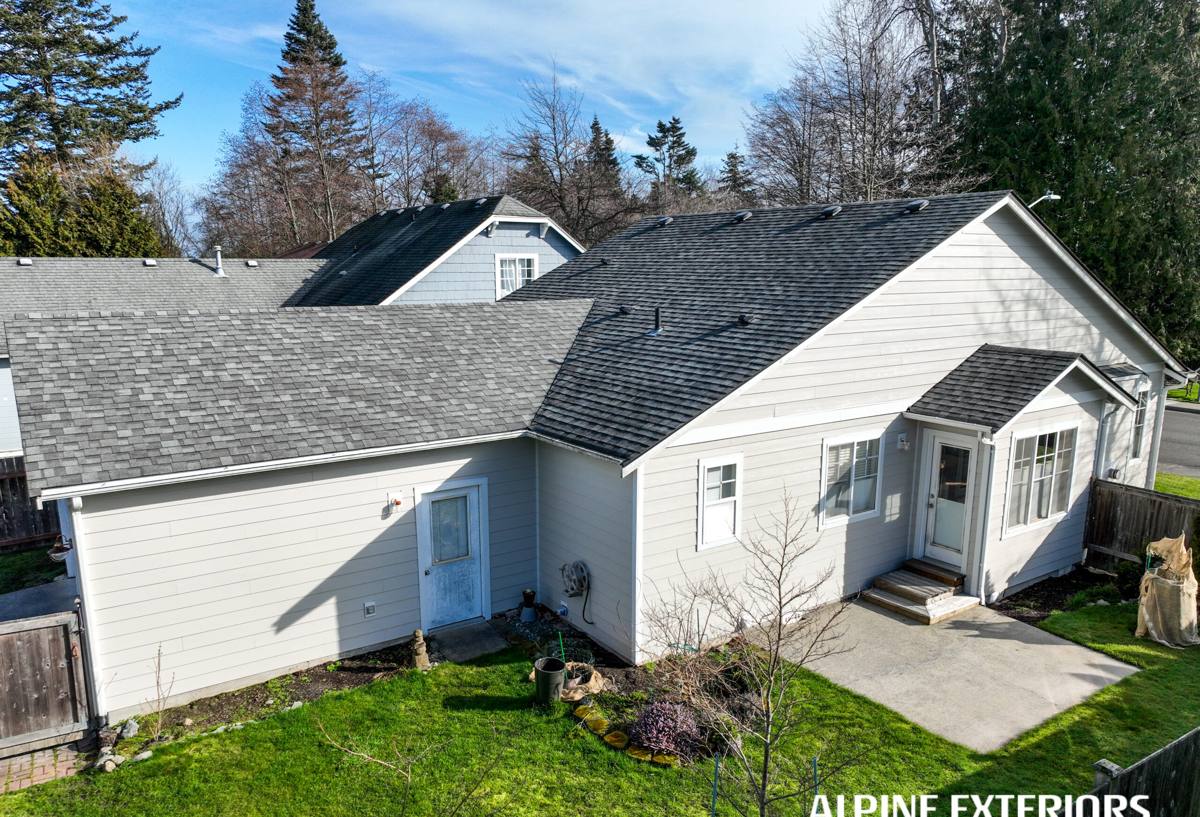
What the Climate Actually Does to a House
Moss and Organic Growth
Nooksack's mix of shade, moisture, and moderate temperatures is close to ideal growing conditions for moss and algae. On roofs, moss isn't just cosmetic — it holds water against the shingle surface, works its way under tabs, and lifts granules loose over time. On north-facing siding and under deck rails that don't get much direct sun, the same growth traps moisture against wood and paint, which is where rot usually starts.
Driving Rain and Wind-Driven Water
Rain in this area rarely falls straight down for long. Wind pushes it sideways into wall assemblies, around window frames, and up under roof edges where standard installation shortcuts show their weaknesses. This is why flashing detail and underlayment quality matter more here than in drier climates — a roof or wall system that would be fine in Arizona can leak steadily in Whatcom County.
Humidity and Condensation
Even without a drop of rain, high ambient humidity condenses on cool surfaces — inside attics, on older single-pane windows, and behind siding that doesn't ventilate well. Over years, that trapped moisture is what rots sheathing and framing long before anyone sees a visible leak.
Roofing for the Nooksack Area
Roofing in this climate is mostly a moisture-management problem, not just a shingle-selection problem. We look at ventilation, underlayment, flashing at every penetration, and how water sheds off valleys and edges — all before we talk about which material goes on top.
Material Trade-Offs
| Material | How it handles this climate | Maintenance to expect |
|---|---|---|
| Asphalt composition | Good performance for the cost when installed with proper underlayment and ice/water protection at eaves and valleys | Periodic moss treatment, gutter clearing, and inspection after wind events |
| Standing seam metal | Sheds water and snow fast, resists moss better due to smooth surface, strong wind resistance | Low maintenance, but fastener and sealant checks over decades matter |
| Cedar shake | Traditional look, but wood roofing needs more attention in a climate this wet to avoid moisture retention | Regular treatment and inspection; higher upkeep than the other two options |
We'll walk through the honest trade-offs for your specific roof pitch, tree cover, and budget rather than pushing one product. What matters most is that whichever material you choose is installed with the flashing, ventilation, and underlayment details this climate actually requires.
The Moss Question
Moss removal alone doesn't fix anything if the underlying shade and moisture conditions stay the same — it will come back. We treat moss as part of a broader plan that may include zinc or copper strips at the ridge, better attic ventilation to reduce warm, moist air reaching the underside of the roof deck, and realistic talk about tree trimming where branches keep a section of roof shaded and damp.
Siding Built for a River Valley Climate
Siding takes the brunt of wind-driven rain, and in a valley setting like Nooksack, it also deals with more shade and slower drying time than homes out in open, sunnier lots. We pay close attention to house wrap and drainage plane details behind the siding, not just what's visible on the surface, because that's the layer that actually keeps bulk water out of the wall assembly.
Common Siding Options
- Fiber cement: Handles moisture well, holds paint longer than wood, and resists the rot that shaded, damp walls are prone to.
- Vinyl: Low maintenance and cost-effective, though proper installation with room to expand and drain behind it matters more in a wet climate than in dry ones.
- Wood siding: Can look great, but requires a real maintenance commitment in this climate — repainting or restaining on a schedule, not "whenever it looks bad."
Whatever material a homeowner picks, we install it with attention to the parts nobody sees after the job is done: proper flashing above windows and doors, correct overlaps, and a drainage gap where the product calls for one. That's the difference between siding that lasts two decades and siding that traps moisture behind it within a few wet winters.
Windows in a Wet, Humid Climate
Older single-pane and early double-pane windows in this area tend to show two problems: condensation between panes (a sign the seal has failed) and drafts around frames that were never properly flashed or sealed to the wall. Neither is just an energy-bill issue — both let moisture work into the wall cavity around the window over time.
What We Look At
When we replace windows, flashing integration with the existing wall or siding system is as important as the window unit itself. A high-efficiency window installed without correct flashing will leak into the wall behind it eventually — the window itself isn't the weak point, the installation is. We also talk through frame material trade-offs honestly: vinyl frames handle this climate's moisture well and keep costs reasonable, while wood-clad frames offer a different look but need more upkeep where humidity stays high for long stretches of the year.
Decks That Actually Hold Up Outdoors Here
A deck in Nooksack spends a lot of the year wet, and often shaded by trees, which slows drying between rain events. That combination is hard on standard lumber if it isn't maintained, and hard on any deck where drainage and airflow underneath weren't considered during the build.
Material Considerations
- Pressure-treated lumber: Affordable and workable, but needs sealing or staining on a real schedule to hold up to this much moisture.
- Cedar: Naturally more rot-resistant than standard lumber, still benefits from periodic sealing in a climate this wet.
- Composite decking: Higher upfront cost, but resists moisture absorption and doesn't need the same repeated finishing.
Beyond the decking material itself, framing and ledger board attachment matter enormously here. Flashing tape at the ledger, proper joist spacing, and gaps between boards for airflow and drainage all determine whether a deck lasts fifteen years or shows soft spots in five.
Why a Local Crew Matters More Than It Sounds Like It Should
A crew that works across Whatcom County regularly, rather than flying in from out of the area for one job, has actually seen how a given detail performs after a few Ferndale-area winters — not just how it looks on installation day. That shows up in small decisions: how much overlap to build into flashing given how hard wind-driven rain hits a particular exposure, when a ventilation upgrade is worth recommending versus overkill, and which shortcuts common elsewhere just don't hold up in a valley climate like this one.
It also means someone is reasonably close by if a question comes up after the job — not a call center, but a crew that knows the property and the area.
A Simple Maintenance Checklist for Nooksack Homes
- Clear gutters and downspouts at least twice a year — more often if there's heavy tree cover overhead
- Check roof valleys and north-facing slopes for moss buildup each fall before the rainy season sets in
- Look for peeling paint or soft spots on wood siding, especially in shaded, less-ventilated areas
- Check window seals for fogging or condensation between panes, a sign the seal has failed
- Inspect deck ledger boards and framing for softness or discoloration, particularly where the deck meets the house
- Trim back branches that keep any section of roof or siding in constant shade and dampness
None of these take long, and catching a problem at the "small repair" stage is a lot less disruptive than catching it after it's turned into a structural one.
Getting an Honest Look at Your Property
Every property in the Nooksack area has its own mix of shade, exposure, tree cover, and age, so there isn't a one-size answer for roofing, siding, windows, or decks out here. If you're noticing moss buildup, drafts, soft decking, or just want an honest read on where your home stands, we're happy to come take a look. There's a free, no-pressure estimate form below whenever you're ready.