 Ferndale Roofing
 Exterior Work Built for Sudden Valley's Weather
Homes in Sudden Valley sit in a stretch of Whatcom County where the weather doesn't take a day off. Moisture off the water, long stretches of overcast drizzle, and a moss season that can run half the year all work on a roof, siding, window seal, or deck board in ways that homeowners further inland rarely deal with. We work throughout Ferndale and the surrounding communities, and Sudden Valley gets the same attention to detail we'd give a job two minutes from our shop.
This page walks through what the local climate actually does to the four systems we work on most — roofing, siding, windows, and decks — and how we approach each one so it holds up here, not just on paper.
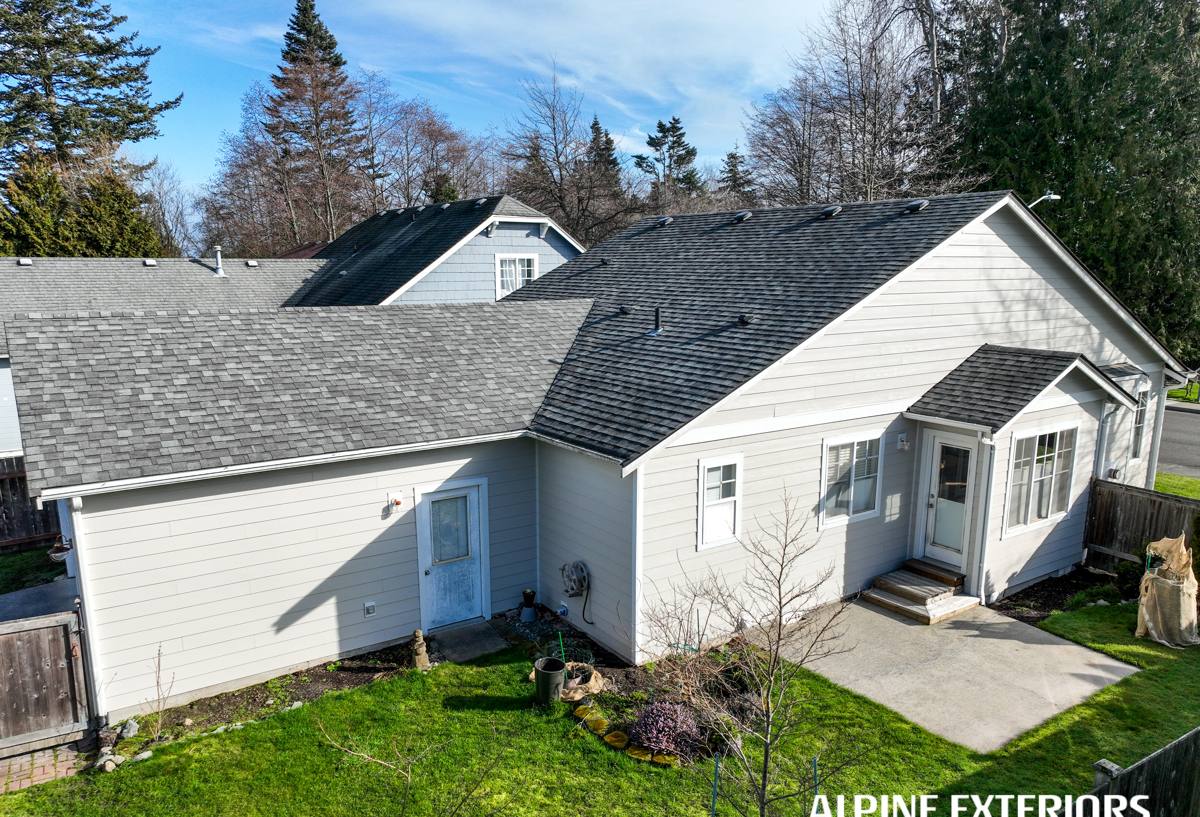
What the Climate Does to a Home Here
Salt Air and Corrosion
Proximity to the water means airborne salt finds its way onto exposed metal — roof flashing, fasteners, gutter hardware, deck railings, and window frames. Over years, untreated or lower-grade metal can pit and corrode faster than the same material would inland. It's not dramatic, it's just steady, and it's the kind of wear that gets ignored until a fastener fails or a flashing seam starts leaking.
Driving Rain
Whatcom County doesn't usually get violent storms, but it gets a lot of wind-driven rain — rain that comes in at an angle instead of straight down. That matters because it pushes water into laps, seams, and joints that would stay dry in a calm rain. Roofing underlayment, siding overlaps, and window flashing all have to be installed with that sideways push in mind, not just gravity.
Moss, Algae, and a Long Wet Season
Shade, moisture, and mild temperatures are exactly what moss and algae need to thrive, and Sudden Valley's tree cover only adds to that. Moss on a roof isn't just cosmetic — it holds water against shingles and decking, works its way under tabs, and speeds up granule loss. Algae streaking on siding is mostly a look issue, but it's a sign that a surface is staying damp longer than it should.
Roofing in Sudden Valley
Common Failure Points We See
On roofs in this area, problems tend to show up in predictable places: valleys where water concentrates, north-facing slopes that stay shaded and damp longer, and roof-to-wall transitions where flashing has to do a lot of work. Moss buildup along the shaded slopes is often the first visible sign that a roof needs attention, even when the shingles themselves still have life left.
Our Approach
We pay close attention to underlayment quality and flashing detail on every roof we install or repair here, since those are the parts doing the real work during a sideways rain. We also talk homeowners through moss-resistant options and realistic maintenance expectations rather than promising a roof that never needs attention — no roofing material is maintenance-free in this climate, and we'd rather be upfront about that than oversell.
Material Trade-Offs
There's no single "right" roofing material for every home — it depends on the roof's slope, shading, budget, and how much upkeep the homeowner wants to do.
| Material | Moss/Moisture Behavior | Maintenance | Typical Lifespan Here |
|---|---|---|---|
| Asphalt composition shingle | Moderate; benefits from algae-resistant granules | Periodic moss removal, gutter clearing | 20-30 years |
| Metal roofing | Sheds moisture quickly; less moss retention | Low, but fastener/seam checks over time | 40-plus years |
| Wood shake/shingle | Holds moisture; higher moss and rot risk | High; regular treatment needed | Varies widely with upkeep |
| Composite/synthetic shingle | Good moisture resistance | Low to moderate | 30-50 years |
We'll walk through these trade-offs honestly for your specific roof rather than pushing one product across the board.
Siding for Whatcom County Homes
What Wears Siding Down Here
Siding takes a slower, quieter beating than a roof does. Constant damp air can work into seams and butt joints, and shaded walls — common on lots with mature trees, which describes a good chunk of Sudden Valley — hold moisture longer and are more prone to algae growth and, in wood products, rot at the bottom courses.
Installation Details That Matter
Good siding performance here comes down to details most homeowners never see once the job's done: proper house wrap and weather barrier behind the siding, correct flashing above windows and doors, adequate ventilation gaps so moisture can escape, and starter strips and J-channels sealed the right way. We install with those details as the standard, not an upsell, because skipping them is exactly how a wall assembly ends up trapping moisture instead of shedding it.
Material Options
Fiber cement, engineered wood, and vinyl all perform differently in a wet, shaded climate. Fiber cement holds up well against moisture but is heavier to install correctly. Engineered wood products have improved a lot over older wood siding but still need good flashing and ventilation behind them. Vinyl is low-maintenance and moisture-shrugging, but expansion and contraction with temperature swings needs to be accounted for during installation. We'll talk through which fits your home's exposure and your maintenance preferences.
Windows: Sealing Out Rain and Cold
Condensation and Seal Failure
Older or lower-quality windows in this climate often show their age through condensation between panes — a sign the seal has failed and the insulating gas or air gap is compromised. Combined with driving rain, a failing window seal or worn exterior caulking can let water track down into the wall cavity long before there's an obvious interior sign.
What We Check and Install
When we replace windows here, we're not just swapping the sash — we're re-flashing the opening so water sheds correctly, sealing to the house wrap properly, and confirming the unit's rating fits an exposure that includes driving rain and salt-tinged air. Double- and triple-pane units with good low-E coatings help with both moisture control and the energy losses that come with Whatcom County's cool, damp winters.
Decks: Standing Up to Standing Water
Where Decks Fail First
Decks take a direct hit from this climate because they're horizontal — water sits on them instead of running off a slope. Ledger board connections, joist tops, and any spot where debris collects are the first places we look for rot, since trapped moisture there does more damage than open exposure to rain.
Material and Build Choices
Composite decking has become popular here because it doesn't absorb water the way wood does, but the framing underneath still matters enormously — proper joist tape, flashing at the ledger, and gaps for drainage and airflow are what actually keep a deck sound for decades, regardless of what the surface boards are made of. For wood decks, we build in drainage and airflow from the start rather than relying on surface sealants to do all the work.
A Practical Maintenance Checklist for This Climate
Whether or not we did the original installation, these are the things worth checking on a home in Sudden Valley at least once or twice a year:
- Roof valleys and shaded slopes for moss buildup or dark streaking
- Gutters and downspouts for debris that traps water against the roof edge
- Siding seams and butt joints, especially on shaded or tree-covered walls
- Window sills and lower corners for soft caulking, staining, or condensation between panes
- Deck ledger boards and joist tops for soft spots or discoloration
- Any exposed metal fasteners or flashing for early corrosion
- Areas where tree branches overhang the roof or sit close to siding
Catching any of these early is almost always a small repair. Left alone through a few wet seasons, they tend to become bigger, more expensive problems.
Why a Local Crew Makes a Difference
A contractor who works across Whatcom County regularly sees how the same house design performs differently depending on tree cover, slope orientation, and distance from the water. That's not something you get from a general contractor passing through the area once. We size up a Sudden Valley home's exposure — how shaded it is, which walls take the driving rain, how much moss pressure the roof is under — and build the work around that, rather than applying a one-size-fits-all spec.
Local also means being reachable after the job's done. If something needs a look during the next wet season, we're not far away.
Get a Free, No-Pressure Estimate
If you're noticing moss buildup, siding streaking, a window that's fogging between the panes, or a deck board that feels soft underfoot, it's worth having someone take an honest look before it turns into a bigger repair. Use the form below to request a free estimate for your Sudden Valley home — no pressure, no obligation, just a straight assessment of what your roof, siding, windows, or deck actually need.