 Ferndale Roofing
 Roofing and Exterior Work in Custer, WA
Custer sits in the northern stretch of Whatcom County, close enough to the coastline and the open farmland around it that homes here take a particular kind of weather beating year after year. It's not dramatic storm damage that wears out a roof or a wall of siding in this part of the county — it's the slow, steady combination of moist marine air, near-constant rain for months at a time, and the moss and algae that come with both. We've built our business around understanding that pattern and building or repairing exteriors that can actually stand up to it, rather than just patching what's in front of us.
As a Ferndale-based crew, Custer is well within our regular service area. That matters more than it might sound like on paper. A contractor who works this corridor of Whatcom County regularly knows what a Custer roof looks like after ten winters versus a roof twenty miles inland, and adjusts material choices, ventilation, and detailing accordingly.
What the Custer Climate Does to a Roof
Homes in and around Custer deal with a few consistent stressors:
- Salt-influenced air: Proximity to the coast means metal fasteners, flashing, and exposed hardware corrode faster than they would further inland. Material and fastener choice matters more here than in a dry climate.
- Driving rain: Wind-driven rain off the water doesn't just fall straight down — it gets pushed sideways into laps, seams, and flashing details. Roofs and siding systems that rely on gravity alone to shed water are more likely to develop leaks over time in this kind of exposure.
- Extended moss season: Cool, damp conditions for much of the year create ideal growing conditions for moss and algae, especially on north-facing slopes and shaded roof sections under tree cover. Left unchecked, moss holds moisture against shingles and works into laps, accelerating granule loss and eventually causing leaks.
- Wind exposure: Open farmland and coastal proximity mean more sustained wind events than a fully sheltered inland lot. Shingle sealing and fastening patterns need to account for that.
None of this means a roof in Custer is doomed to fail early — it means the roof needs to be built and maintained with these specific conditions in mind, rather than treated the same as a roof in a dry, low-wind climate.
Signs of Climate-Related Wear to Watch For
- Dark streaking or green-black growth on north-facing or shaded roof slopes
- Granules collecting in gutters or at downspout outlets
- Rust staining around metal flashing, vents, or fasteners
- Soft or discolored fascia and trim, especially near roof edges and valleys
- Interior ceiling stains that appear or worsen during heavy rain events
Roof Repair and Replacement
Most of the roofing calls we get from the Custer area fall into a few categories: moss and algae damage that's progressed past a simple cleaning, flashing failures around chimneys, vents, or roof-to-wall transitions, and full roof replacements on homes reaching the end of their shingle's service life. We inspect before we recommend anything — a roof that looks rough from the ground sometimes just needs cleaning and a few flashing repairs, while a roof that looks fine from the ground can have underlying moisture damage that needs a closer look.
For repairs, we focus on the details that actually cause leaks in this climate: flashing at valleys, chimneys, and wall intersections; proper lap and seal patterns on shingles; and ventilation that lets a roof deck dry out between rain events instead of staying damp. For full replacements, we talk through material options honestly, including the maintenance each one requires long-term in a wet, moss-prone climate — we'd rather you know what you're signing up for than sell you on a look that turns into a headache in five years.
Roofing Material Considerations for This Climate
| Material | How It Handles Local Conditions | Maintenance Reality |
|---|---|---|
| Asphalt composition shingle | Good performance when properly ventilated and flashed; algae-resistant shingle options help reduce staining | Periodic moss/algae removal, especially on shaded slopes |
| Metal roofing | Sheds rain and moss well due to smooth surface; needs corrosion-resistant fasteners near the coast | Low maintenance once installed correctly; fastener and coating quality matter |
| Wood shake/shingle | Traditional look but holds moisture longer, which accelerates rot and moss growth in this climate | Higher upkeep; we're upfront about this trade-off before recommending it |
| Flat/low-slope membrane | Common on additions or outbuildings; requires careful detailing since it relies less on gravity drainage | Needs regular inspection at seams and penetrations |
Siding for Coastal and Farmland Exposure
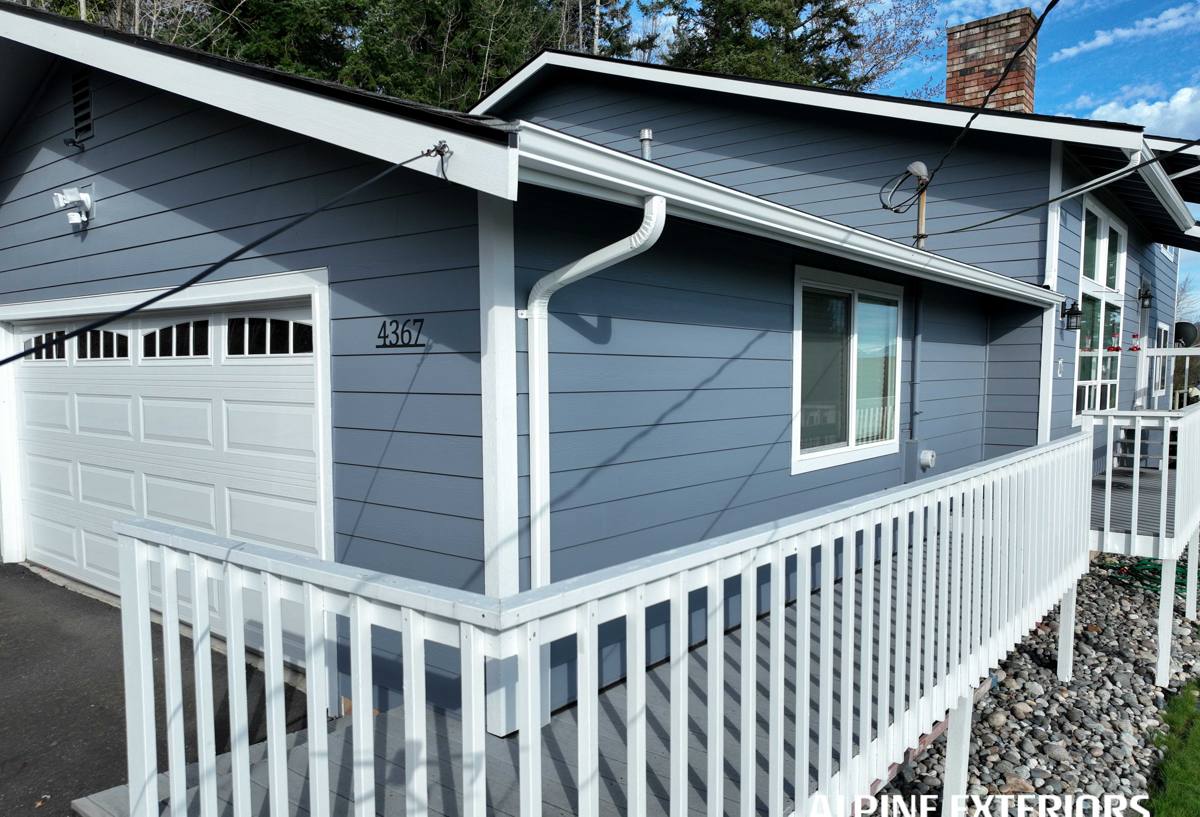
Siding in Custer faces the same moisture and wind pressures as the roof, plus the added challenge of splash-back moisture near grade and driving rain hitting walls directly. We install and repair fiber cement, engineered wood, and vinyl siding systems, and in every case the water-management details — house wrap, flashing at windows and doors, proper lap orientation, and ventilation gaps where called for — matter as much as the siding material itself. A well-installed lower-cost siding system will outperform a poorly flashed premium one in this climate, so we don't cut corners on the parts you don't see once the job is done.
We also handle siding repair where isolated damage — a cracked panel, a section with rot around a window, storm damage — doesn't require a full re-side. Matching existing siding profiles and colors as closely as possible is part of that work.
Windows: Sealing Out Wind and Rain
Older or improperly flashed windows are one of the more common sources of hidden moisture intrusion we find in homes throughout this part of Whatcom County. Wind-driven rain finds gaps around window frames that wouldn't be an issue in a calmer, drier climate. When we replace windows, proper flashing integration with the surrounding siding or wall assembly is as important as the window unit itself — a good window installed with poor flashing details will leak eventually regardless of the window's quality or warranty.
For homeowners not ready for full window replacement, we also address failed seals, drafts, and minor water intrusion issues where a repair or partial replacement makes more sense than replacing the whole window.
Decks Built for Wet-Season Durability
A deck in Custer spends a good part of the year wet, which means drainage, fastener corrosion resistance, and board spacing all matter more than they would in a drier region. We build and repair decks with attention to how water actually moves off the surface and away from ledger boards and structural connections — the places where rot problems most often start out of sight. Composite decking is a common choice for homeowners who want to minimize the sanding, sealing, and moss cleaning that wood decking requires in this climate, though we're happy to work in either material depending on your budget and preferences.
Why a Local Whatcom County Crew Matters
Working regularly throughout Ferndale and the surrounding Whatcom County communities, including Custer, means we're not guessing at what this climate does to a roof or a wall of siding over time — we see it repeatedly. That translates into practical decisions on the job: which flashing details actually hold up to driving rain off the coast, which shingle or siding choices make sense given how much moss pressure a particular lot has, and how ventilation needs to be handled on homes with heavy tree cover versus open exposure. It also means when you call about a leak or a repair, you're getting a crew that can be on-site without a long drive, and that's still going to be around locally if a warranty question comes up down the road.
What to Expect From a Local Estimate Visit
- A physical inspection of the roof, siding, windows, or deck in question — not just a phone estimate
- An honest assessment of whether you're looking at a repair or a full replacement
- Material recommendations suited to Custer's specific exposure — coastal wind, rain, and moss pressure
- A written estimate with no pressure to decide on the spot
- Straight answers about maintenance requirements for whatever material you choose
Maintenance That Extends the Life of Your Exterior
A lot of premature roof and siding failure in this climate isn't a materials problem — it's a maintenance gap. Gutters that stay clogged hold water against fascia and roof edges. Moss left to grow unchecked works its way under shingle laps. Vegetation growing too close to siding keeps moisture trapped against the wall. None of this requires elaborate upkeep, just consistency: clearing gutters and downspouts before the heavy rain season, keeping an eye on shaded roof areas for moss growth, and addressing small leaks or cracked caulking before they become bigger repairs. We're glad to point out what we notice during any visit, whether or not it turns into a job.
If you're dealing with a leak, noticing moss buildup, or just want an honest read on how your roof, siding, windows, or deck are holding up to the Custer climate, we'd be glad to take a look. Reach out for a free, no-pressure estimate using the form below.