 Ferndale Roofing
 The Real Question Isn't "Which Roof Is Better"
It's "which roof is better for your house, in this climate, on your budget." Metal and asphalt shingles are both proven roofing materials used successfully all over Whatcom County, and either one can last for decades if it's installed correctly and matched to the site. The differences that actually matter for a Ferndale home come down to how each material handles year-round moisture, salt-laden air off Bellingham Bay and the Strait of Georgia, moss pressure under our tree canopy, and what you're willing to spend up front versus over the life of the roof.
This page walks through both materials honestly, including the trade-offs we'd tell a neighbor about, not just the selling points.
How Asphalt Shingles Perform in Ferndale
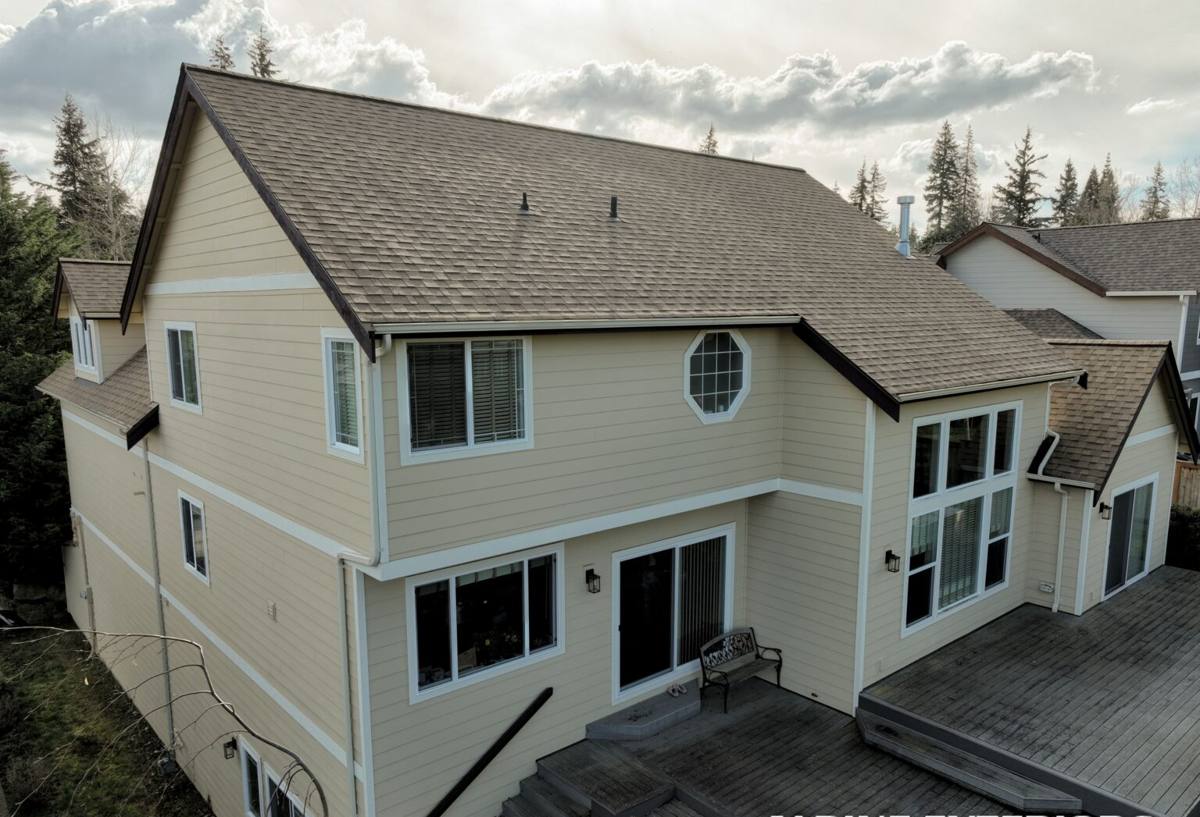
Asphalt composition shingles remain the most common roofing material in Whatcom County for good reason: they're affordable, widely available, straightforward to install and repair, and they perform well when properly ventilated and maintained. A quality architectural shingle roof, installed with correct underlayment, ice-and-water barrier at eaves and valleys, and adequate attic ventilation, can reasonably be expected to last 20-30 years in our climate.
Where asphalt does well
- Lower upfront cost, which matters for budgeting a full re-roof
- Easy to source matching materials for future repairs
- Wide range of colors and styles to match different home aesthetics
- Straightforward, well-understood installation with predictable timelines
Where asphalt struggles here
Our long, wet moss season is the biggest challenge. Shaded, north-facing slopes under fir and cedar canopy stay damp for months at a time, and moss and algae can take hold in the granule surface of asphalt shingles faster than they would in a drier climate. Left unaddressed, moss holds moisture against the shingle mat and can shorten the roof's usable life. It's manageable with periodic cleaning and good gutter maintenance, but it is an ongoing maintenance item, not a one-time concern.
How Metal Roofing Performs in Ferndale
Standing-seam and metal shingle roofing systems have become a lot more common on Whatcom County homes over the past decade, and for coastal properties in particular, there's a clear case for them. Metal sheds moisture fast, gives moss and algae almost nothing to grab onto, and with a proper coating system, holds up well against the salt air that comes off the water and settles on everything from siding to fasteners in Ferndale and along the I-5 corridor toward Blaine.
Where metal does well
- Steep runoff sheds rain and reduces the standing moisture that feeds moss
- Longer service life — commonly 40-60+ years with a quality coating and proper install
- Handles heavy winter rain events without the granule loss that shows up on aging asphalt
- Lighter roof loading in most systems, which can be a plus on older framing
Where metal requires more care
Metal roofing is far less forgiving of installation mistakes than asphalt. Panel layout, fastener selection, flashing details, and expansion allowance all have to be done correctly, or you end up with leaks, oil-canning, or premature fastener failure. Cost is also a real factor — metal systems typically run well above asphalt for the same roof area, and repairs, if ever needed, generally require a roofer experienced specifically with metal, not just general roofing.
Salt air is also a two-edged consideration. Bare or poorly coated steel will corrode faster near the coast. We only recommend metal systems with coatings and fastener hardware rated for coastal exposure — that's a standard we hold to, not an optional upgrade, for any metal roof going on a home within a few miles of the water.
Salt Air, Driving Rain, and Moss: The Three Forces at Work
Ferndale sits close enough to Bellingham Bay and the Strait of Georgia that airborne salt is a genuine factor in material selection, not a theoretical one. Combine that with Whatcom County's driving winter rain and the deep shade many lots get from mature trees, and you've got three forces working on a roof at once: corrosion risk, water volume, and organic growth. Every roofing material sold here has to answer to all three.
| Factor | Asphalt Shingles | Metal Roofing |
|---|---|---|
| Moss/algae resistance | Moderate — needs periodic cleaning, especially in shaded areas | High — smooth, sloped surface discourages growth |
| Salt air / coastal corrosion | Not a significant factor | Requires coastal-rated coatings and fasteners |
| Heavy rain performance | Good, with proper underlayment and flashing | Excellent — fast runoff, minimal standing water |
| Typical lifespan (installed correctly) | 20-30 years | 40-60+ years |
| Installation sensitivity | Lower — well-understood, widely available skill | Higher — flashing and fastening details are critical |
| Upfront cost | Lower | Higher |
Cost: Upfront Price vs. Lifetime Cost
Sticker price and true cost aren't the same thing, and it's worth separating them when you're comparing bids. Asphalt shingles cost less per square foot installed, which makes them the practical choice for many homeowners, especially if a re-roof needs to happen on a set budget or timeline. Metal costs more up front — often a meaningful multiple of an asphalt job for the same roof area — but it's also going to outlast one, and often two, asphalt roof replacements over the life of the house.
The math only works in metal's favor if you're planning to stay in the home long enough to see that lifespan advantage, or if you value not having to think about a re-roof again for decades. If you're roofing a rental, working with a tighter budget, or planning to sell within the next several years, asphalt is often the more sensible financial choice. We'll walk through both numbers honestly when we look at your specific roof — there's no universal right answer, only the right answer for your situation.
Other cost factors that affect either material
- Roof complexity — number of valleys, dormers, and penetrations adds labor regardless of material
- Tear-off and disposal of the existing roof
- Decking repair or replacement if the substrate has moisture damage
- Ventilation upgrades needed to meet manufacturer warranty requirements
- Access — steep pitch or difficult site access affects labor time on any roof
Noise, Energy, and Curb Appeal
Rain noise on metal is a common concern, but with proper solid decking and underlayment — which is standard on any correctly installed metal roof — the difference in interior noise from a hard rain is much smaller than people expect. It's mainly a concern with older, open-batten metal installations, not modern systems installed over solid sheathing.
Metal roofing also reflects more solar heat than dark asphalt, which can modestly reduce summer attic temperatures, though this matters less in our marine climate than it would in a hotter region. On appearance, standing-seam metal gives homes a clean, modern look that some owners specifically want, while asphalt offers more texture and color variety that can better match traditional or historic-style homes. Neither is objectively better here — it's a matter of the look you want for your house.
Which Roof Fits Which Home?
A few patterns hold up across most of the re-roofs we look at in the Ferndale area:
Asphalt often makes sense when:
- Budget is a primary constraint
- You're not planning to own the home for 20+ years
- The roof has a traditional style where shingle texture fits the architecture
- You want the simplest path to future repairs or insurance claims
Metal often makes sense when:
- The home is close to the water and salt exposure is a real factor
- The roof sits under heavy shade with a history of moss buildup
- You're planning to stay in the home long-term and want to avoid a second re-roof
- You want a specific modern or clean-line appearance
Installation Details That Determine How Either Roof Actually Performs
Whichever material you choose, the material itself is only part of the story — installation quality determines whether it lives up to its expected lifespan. For asphalt, that means correct nailing patterns, proper starter and ridge treatment, ice-and-water shield at vulnerable areas, and balanced intake/exhaust ventilation so the attic isn't cooking the shingles from underneath. For metal, it means correct panel spacing to allow for thermal expansion, properly sealed penetrations, compatible fastener metallurgy so you're not creating a corrosion reaction between dissimilar metals, and flashing details built for our rain volume, not just a dry-climate standard.
A roof installed to a lower standard, in either material, will underperform its potential lifespan regardless of what the shingle or panel is rated for on paper. That's the piece we control, and the piece worth asking any contractor about directly.
A Quick Decision Checklist
- How long do you plan to own this home?
- Is your roof within a few miles of Bellingham Bay or otherwise exposed to salt air?
- Does your roof sit under heavy tree shade with a moss history?
- What's your comfortable budget range for this project?
- Do you want a traditional shingle look or a cleaner modern profile?
- Is this roof on a home you intend to sell in the next few years?
Walking through those questions honestly usually points pretty clearly toward one material or the other.
Getting a Straight Answer for Your Specific Roof
Every roof in Ferndale sits a little differently — some catch more coastal wind, some sit under heavy fir canopy that holds moisture longer into spring, some have roof geometry that changes the cost math between materials. General guidance only goes so far. If you'd like us to look at your actual roof and walk through the honest trade-offs for your home and budget, request a free, no-pressure estimate using the form below.