 Ferndale Roofing
 Blaine's Climate Puts Real Stress on Exterior Siding
Blaine sits at the far northwest corner of Whatcom County, close enough to the water that homes here deal with a different set of pressures than siding a few miles inland. Salt-laden marine air, wind-driven rain off the water, and long stretches of gray, damp weather all work on exterior surfaces year after year. Add in the shade from mature conifers on many lots, and you get a near-permanent moss and algae season that can run from fall through spring. Siding that isn't built for this combination doesn't fail overnight — it fails slowly, at seams, fastener holes, and butt joints, often years before a homeowner expects to be thinking about replacement.
This page is specifically about siding replacement for homes in and around Blaine. The fundamentals of a correct install don't change from town to town, but what the material has to survive does — and that's the piece a lot of siding jobs get wrong when the crew doing the work isn't used to coastal Whatcom County conditions.
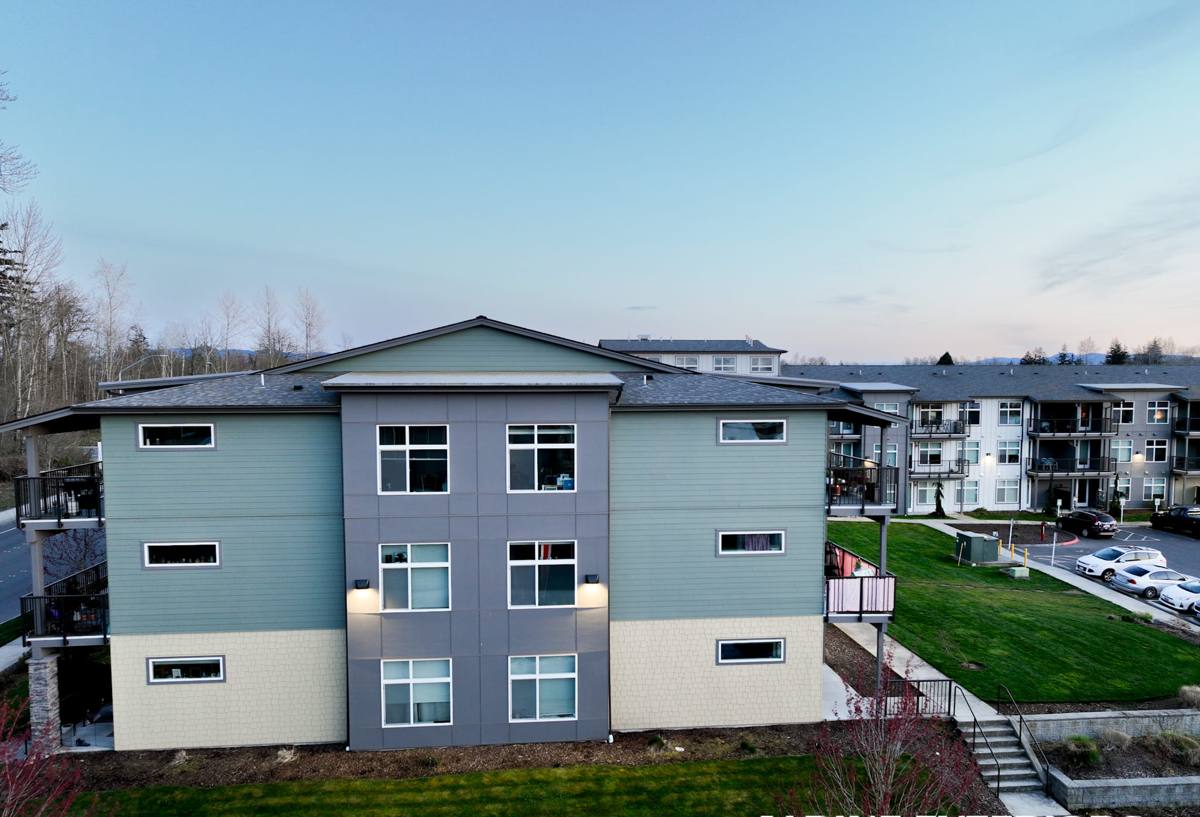
How to Tell Your Siding Has Reached the End of Its Life
Moisture and Rot Warning Signs
Driving rain finds every gap in a building envelope, and salt air accelerates corrosion of fasteners and trim long before the siding panel itself gives out. Soft spots near the bottom courses, staining below window sills, and paint that keeps failing in the same spots no matter how often it's redone are all signs that moisture is getting behind the siding rather than shedding off of it.
Moss, Algae, and Organic Growth
A little surface moss on a north-facing wall is cosmetic. Moss that's established itself in seams, under laps, or around fastener heads is a different problem — it holds moisture against the material and keeps that section of wall wet far longer than the surrounding siding, which is exactly the condition that leads to rot in wood-based products and swelling or delamination in lower-grade composites.
- Paint or caulk failing repeatedly in the same locations despite maintenance
- Soft, spongy, or bubbling sections when pressed gently
- Visible gaps, warping, or buckling at panel edges and corners
- Moss or algae established in seams rather than just on the surface
- Rust streaking from fasteners or corroded trim pieces
- Rising energy bills that suggest the wall assembly is no longer sealing properly
If two or more of these show up together, it's worth having the siding assessed rather than patching around the symptoms.
What a Correct Siding Replacement Involves in a Coastal Climate
Tear-Off and Sheathing Inspection
Replacement starts with full removal of the old siding, not an overlay. That's the only way to see the sheathing underneath, and in a climate like Blaine's it's common to find soft or delaminated sheathing behind old siding that looked fine from the outside. Any damaged sheathing gets replaced before anything new goes up — covering it over just locks the problem inside the wall.
Weather-Resistive Barrier and Flashing Details
A correctly detailed weather-resistive barrier, properly lapped and taped, along with new flashing at every window, door, and penetration, matters more here than in a drier climate because there's simply more water trying to get in, more often, for more months of the year. Flashing that's cut short or caulked instead of properly lapped is one of the most common causes of hidden rot in coastal homes.
Fastening, Clearances, and Caulking
Correct fastener spacing and type, proper clearance between siding and grade or roofing, and butt joints that are actually sealed rather than just butted together all affect how long the job lasts. In a marine climate, corrosion-resistant fasteners aren't optional — the wrong fastener can start streaking and loosening within a few seasons.
Why We Install Only James Hardie Fiber Cement
Built for Moisture and Salt Exposure
We install James Hardie fiber cement siding exclusively, and we don't install vinyl, LP SmartSide, Cemplank, Allura, primed spruce, or cedar. That's not a knock on every homeowner's existing siding — plenty of those products have a place — but for the conditions Blaine homes actually face, fiber cement's non-combustible, moisture-stable composition holds up to salt air and driving rain in a way that wood-based and engineered-wood products, which rely on treated wood fiber and can be more sensitive to sustained moisture exposure, generally don't match over the long run. Hardie's HZ5 line in particular is engineered for the wetter, more humid climate zones the Pacific Northwest falls into.
ColorPlus Factory Finish
Hardie's ColorPlus finish is baked on at the factory under controlled conditions, which gives it better fade and color retention than field-applied paint, and it comes with its own finish warranty on top of the product warranty. For a home dealing with constant damp and UV cycling near the water, that factory finish means fewer repaint cycles over the life of the siding.
Comparing Siding Materials for Blaine's Coastal Conditions
| Material | Salt Air / Moisture Behavior | Moss & Algae Resistance | Typical Maintenance |
|---|---|---|---|
| James Hardie Fiber Cement | Non-combustible, engineered moisture-stable composition | Resists surface growth well; easy to clean without damaging the substrate | Periodic rinsing; factory finish reduces repainting |
| Vinyl | Doesn't rot, but can warp or become brittle with temperature swings and UV exposure | Can trap moisture at overlaps where growth takes hold | Low, but color fades and can't be repainted easily |
| LP SmartSide / Engineered Wood | Wood-fiber core is more sensitive to sustained moisture at cut edges and seams | Moss holding moisture at seams is a real long-term risk | Regular sealant and edge inspection needed |
| Cedar / Primed Spruce | Natural wood movement and moisture absorption in a wet marine climate | Prone to moss and mildew without frequent treatment | Highest — regular staining, sealing, and inspection |
Our Siding Replacement Process, Start to Finish
- Assessment and estimate: We walk the home, check for existing moisture damage, and put together a clear, itemized estimate before any work starts.
- Tear-off and sheathing repair: Old siding comes off completely, sheathing is inspected, and any damaged sections are replaced.
- Weather barrier and flashing: A new weather-resistive barrier and properly lapped flashing go in at every opening and penetration.
- Hardie installation: Panels, planks, or shingle siding are installed to James Hardie's fastening and clearance specifications, not shortcuts.
- Final inspection and walkthrough: We check seams, caulking, and trim details with the homeowner before calling the job complete.
What Affects the Cost of a Blaine Siding Replacement
| Cost Factor | Why It Matters |
|---|---|
| Home size and number of stories | More square footage and taller walls mean more material and labor time |
| Condition of existing sheathing | Hidden moisture damage found during tear-off adds repair scope before new siding goes on |
| Trim and detail complexity | Homes with more corners, dormers, and window trim take longer to flash and finish correctly |
| Site access | Tight lots, slopes, or landscaping close to the house can affect staging and labor time |
| Hardie product line and profile | Lap siding, shingle-style panels, and board-and-batten each carry different material and install costs |
We give straightforward, itemized estimates rather than vague ballpark numbers, so you know exactly what you're paying for before work begins.
Why Local Experience in Blaine Matters
A crew that already works in Blaine understands the practical realities of building here: how much moisture the sheathing on an older home is likely to have absorbed, how local permitting works, and what details actually matter versus what's just theoretical. That familiarity shows up in small decisions throughout the job — where extra flashing attention is worth the time, how to sequence work around Whatcom County's wetter months, and what fastener and finish choices actually hold up here rather than in a showroom sample.
Keeping Your New Siding Looking Good Year-Round
Fiber cement siding is low-maintenance, not no-maintenance. A yearly rinse to clear moss spores and salt residue before they establish themselves, prompt attention to any caulking that starts to separate, and keeping vegetation trimmed back from walls all go a long way toward getting the full lifespan out of the installation. None of this is heavy lifting — it's the difference between siding that looks new for decades and siding that starts showing its age early because small issues were left alone.
If your Blaine home's siding is showing its age, or you're planning ahead before problems start, we're happy to take a look and walk you through what we'd recommend. Request a free, no-pressure estimate using the form below.