 Ferndale Roofing
 Roofing That's Built for Bellingham's Weather, Not Just Any Weather
Bellingham sits close enough to the water that homes here deal with a specific combination of punishment: salt-laden air rolling in off Bellingham Bay and the Strait of Georgia, long stretches of driving rain through fall and winter, and a moss season that can run most of the year in shaded, north-facing roof sections. A roofing system that holds up fine in a drier inland climate can start failing years early once it's exposed to this combination day in and day out. We're based just up the road in Ferndale, and Bellingham has been part of our regular service area for as long as we've been in business — this isn't a market we drive into occasionally, it's one we know.
This page walks through what Bellingham homeowners tend to run into with their roofs, how we approach repairs and replacements for this specific climate, and what to look for when you're hiring anyone to work on your roof — us or otherwise.
What Whatcom County Weather Actually Does to a Roof
Moss and Organic Growth
Moss isn't just a cosmetic nuisance. On roofs with any amount of shade — big fir and cedar trees are everywhere in this area — moss holds moisture directly against shingles and roof decking long after the rest of the roof has dried out. Over time that trapped moisture accelerates granule loss on asphalt shingles, promotes rot in wood-based roofing materials, and can work its way under shingle edges and lift them. Moss also tends to grow heaviest on north-facing slopes and low-slope sections, which is exactly where water is already slower to drain.
Salt Air and Corrosion
Homes closer to the water deal with airborne salt that accelerates corrosion on exposed metal — flashing, fasteners, gutter hardware, and vent caps. Standard galvanized fasteners and thin flashing can start showing rust and pitting well before they would in a drier, inland location. This matters most at the details: valleys, chimney flashing, and roof penetrations are where a corroding fastener or a thinning piece of flashing turns into an active leak.
Driving Rain and Wind-Driven Water
Bellingham gets plenty of straightforward vertical rain, but it also gets wind-driven rain off the water that pushes moisture sideways and upward under laps and edges that were only ever designed to shed water moving straight down. That's why underlayment quality, proper shingle overlap, and correctly installed flashing at valleys and walls matter more here than in calmer inland climates — the margin for a sloppy detail is thinner.
Roofing Services We Provide in Bellingham
Roof Inspections and Assessments
Before we recommend anything, we look at the whole picture: attic ventilation, visible moisture staining, flashing condition, moss coverage, and the general age and wear pattern of the roofing material. A lot of what looks like "the whole roof needs replacing" from the ground turns out to be a handful of specific problem areas — and a lot of what looks fine from the ground has a slow leak building at a valley or chimney that isn't visible until you're up there.
Roof Repairs
Leaks, damaged flashing, wind-lifted shingles, and localized moss damage are all repairable without a full tear-off in most cases. We focus repairs on fixing the actual cause — a failed flashing detail, a clogged valley, ventilation problems driving condensation from underneath — rather than just patching the visible symptom.
Roof Replacement
When a roof is genuinely at the end of its service life, we walk through material options with an eye toward what actually performs well in this climate: proper underlayment for wind-driven rain protection, corrosion-resistant flashing and fasteners at every penetration, and ventilation that keeps moisture from condensing on the underside of the decking. We're not going to sell you the fanciest option on the shelf if a well-installed standard system is the more honest choice for your home and budget.
Moss Treatment and Prevention
Removing existing moss growth without damaging shingles, along with steps to slow regrowth in persistently shaded areas, is a routine part of roof maintenance here. We treat it as ongoing upkeep rather than a one-time fix, because as long as the tree cover and shade pattern stay the same, moss is going to keep trying to come back.
Beyond the Roof: Siding, Windows, and Decks
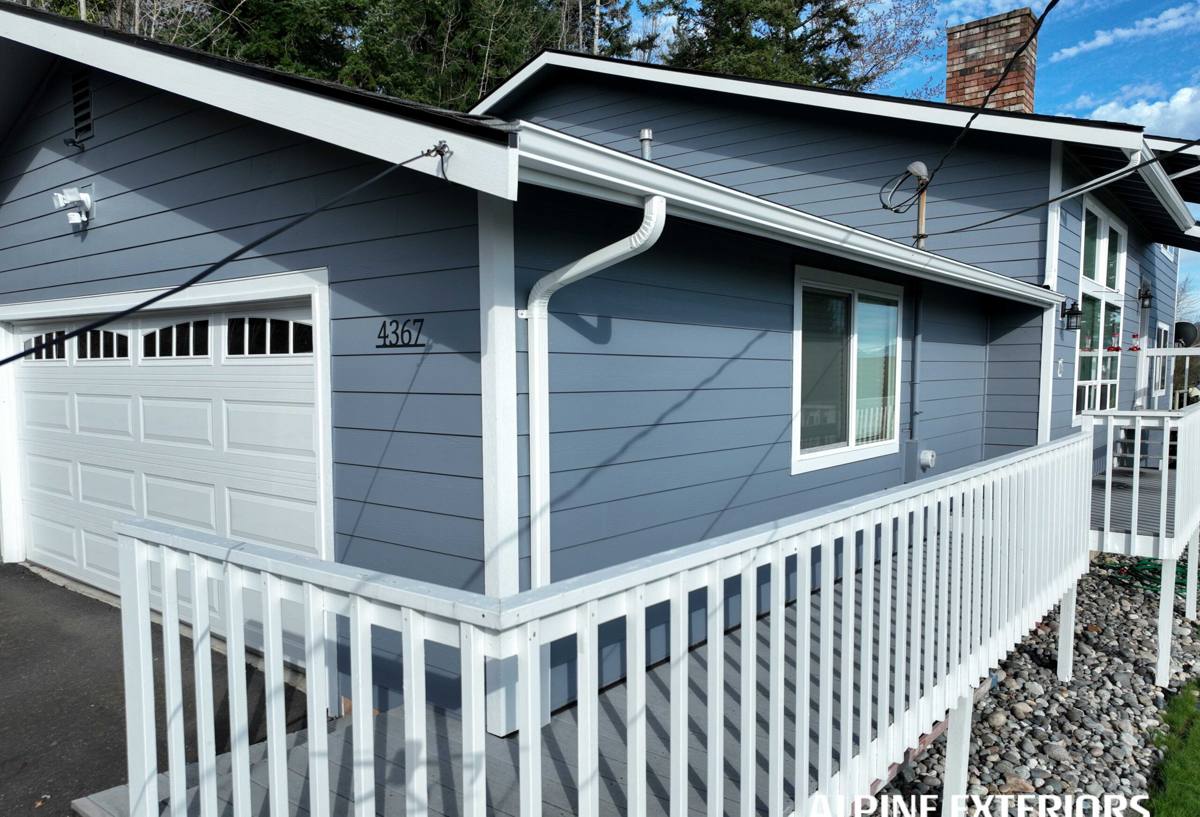
Roofs don't fail in isolation. Water that gets past a roofing system often shows up next in fascia boards, siding, or window trim, and a lot of the moisture problems we find on a roof inspection have a related issue somewhere else on the exterior. Because we handle siding, windows, and decks in addition to roofing, we can look at a home's exterior as one connected system instead of treating each component separately. A rotting fascia board next to a gutter, siding that's staying damp longer than it should behind a poorly flashed roof edge, or a deck ledger board taking on more water than it was built for — these are the kinds of things that get missed when different trades only look at their own piece of the house.
Comparing Roofing Approaches for This Climate
| Consideration | What matters in Bellingham's climate |
|---|---|
| Underlayment | Higher-quality synthetic or self-adhered underlayment at vulnerable areas (valleys, eaves) resists wind-driven rain better than minimal-grade underlayment |
| Flashing and fasteners | Corrosion-resistant materials matter more near the water, where salt air accelerates rust on standard galvanized components |
| Attic and roof ventilation | Proper airflow reduces condensation buildup on the underside of the roof deck during long damp stretches |
| Shade and moss exposure | North-facing and heavily treed sections need more frequent moss monitoring regardless of material chosen |
| Gutter and drainage sizing | Adequate capacity prevents overflow during sustained heavy rain events, which protects fascia and siding below the roofline |
What Drives Roofing Costs in This Area
Every roof is different, but the same handful of factors tend to move the price up or down for Bellingham homes specifically:
- Roof pitch and accessibility — steeper roofs and difficult access take longer and require more safety setup
- Extent of moss and organic damage found once the old roofing is removed
- Number and complexity of penetrations — chimneys, skylights, vents, and valleys all add flashing work
- Underlayment and material quality chosen for wind-driven rain resistance
- Existing deck condition — whether the plywood or plank sheathing underneath needs partial replacement
- Ventilation upgrades needed to address condensation or moisture issues found during tear-off
We give straightforward, itemized assessments rather than vague ranges, because the honest answer depends on what we actually find once we're up there.
Why Hiring a Local Crew Matters Here
A contractor working across a wide, varied region day to day builds a working knowledge of how the local climate actually behaves on roofs — which slopes hold moss longest, which details tend to fail first in wind-driven rain, and how ventilation problems tend to show up in homes built during particular eras common to this area. That's different from general roofing knowledge that could apply anywhere. Being based in Ferndale and working throughout Whatcom County, including Bellingham, means we're not guessing at how a roof will perform here — we're seeing the same climate conditions on jobs throughout the year.
Local presence also matters for accountability. If something needs a follow-up visit or a warranty check months or years down the road, you're not trying to track down a company that only worked in your area for one season.
What to Look for When Hiring Any Roofing Contractor
- Current state licensing and insurance — ask to see proof, not just claims
- A written, itemized estimate that specifies materials, underlayment, and flashing details — not just a total price
- Willingness to explain why they recommend a specific material or approach for your specific roof
- A physical inspection before quoting major work, rather than a price given sight-unseen
- Clear communication about what happens if hidden damage is found once old roofing is removed
- References or a track record specific to your region's climate, not just general roofing experience
Maintaining a Roof Between Major Work
Most roofs benefit from periodic attention rather than being ignored until something fails. In this climate, that generally means keeping gutters and downspouts clear so water isn't backing up under roof edges, keeping an eye on moss coverage in shaded areas before it spreads, and having a professional look at flashing and penetrations every few years rather than only after a leak shows up inside the house. Catching a small flashing or fastener issue early is almost always less disruptive and less costly than dealing with the water damage that follows once it's been left alone.
If you're noticing moss buildup, missing or lifted shingles, staining on an interior ceiling, or you simply haven't had your roof looked at in a while, we're happy to come take a look. The estimate is free, there's no pressure attached to it, and you'll get a straight answer about what your roof actually needs — use the form below to get started.