 Ferndale Roofing
 Roofing on the Semiahmoo Spit: A Different Kind of Exposure
Semiahmoo sits out on its own in Whatcom County — a narrow spit reaching into Semiahmoo Bay near Blaine and the Canadian border, with water on multiple sides and very little in the way of terrain to slow down wind or salt spray before it reaches a roof. That's a meaningfully different exposure than most inland Whatcom County properties see. Homes here don't just deal with the region's normal wet-season rainfall; they take it with more wind behind it, and they take on airborne salt that inland roofs never encounter. Combine that with the long, mild, damp stretches that let moss and algae take hold on almost any roof surface in this part of Washington, and you've got a roof environment that punishes shortcuts faster than most.
Ferndale Roofing Co works on roofs, siding, windows, and decks throughout Whatcom County, and Semiahmoo is one of the areas where we're the most particular about material choice and installation detail. A roofing job that would hold up fine a few miles inland can fail early out here if it wasn't built with direct salt exposure and sustained coastal moisture in mind from the start.
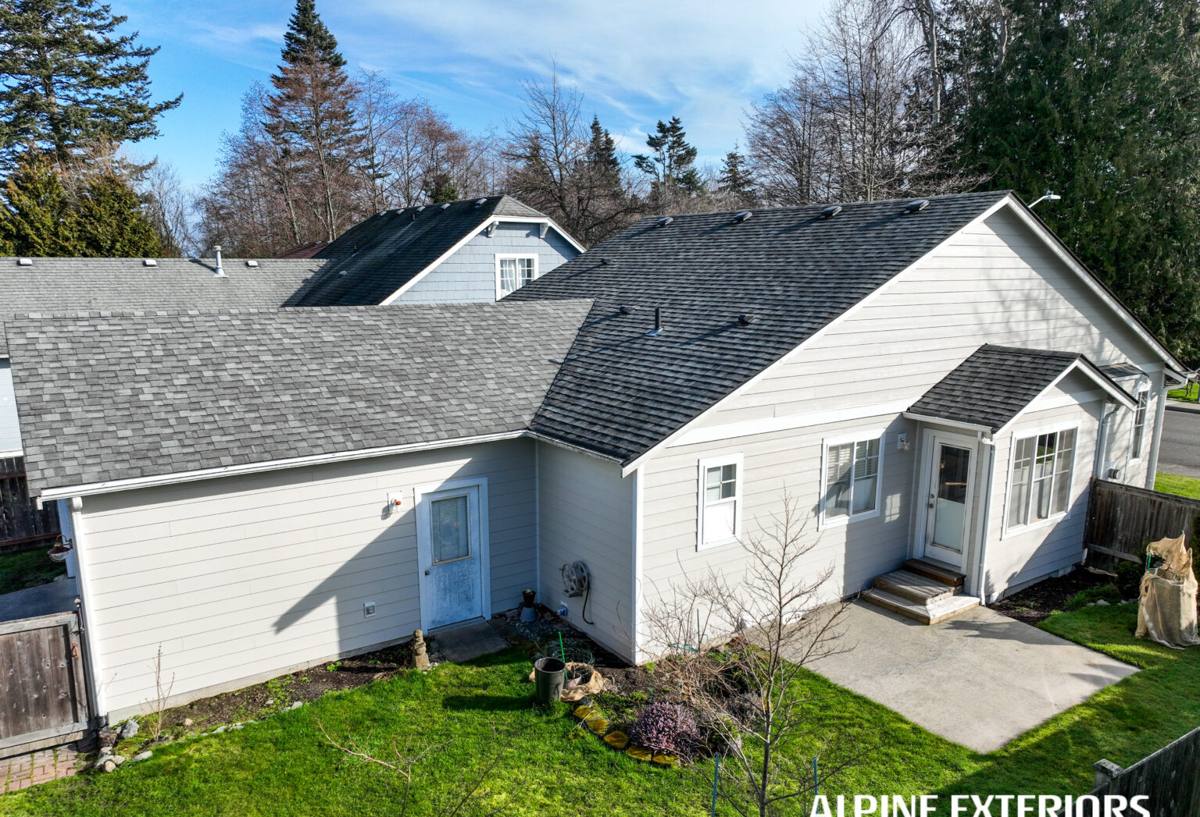
What Semiahmoo's Climate Actually Does to a Roof
Salt Air and Corrosion
Airborne salt is corrosive to a lot of the metal components that make a roof actually work — fasteners, flashing, drip edge, vent caps, gutter hardware. On a waterfront or near-waterfront property like most homes in Semiahmoo, that corrosion process runs faster than it would a few miles inland, and it's often invisible until a fastener fails or a flashing seam starts leaking. Standard-grade hardware that's fine in a typical inland install isn't the right call out here.
Wind-Driven, Sideways Rain
Being out on open water means less windbreak, not more. Rain routinely comes in at an angle rather than falling straight down, and it gets pushed into places a roof isn't necessarily built to shed water from — under shingle tabs, into valleys from the side, behind flashing that's only sealed for vertical water flow. Roofs with weak flashing details or aging underlayment are the ones that show leaks first in this kind of wind pattern.
Moss, Algae, and a Long Damp Season
Whatcom County's mild, wet climate gives moss and algae a growing season that runs most of the year on shaded or north-facing roof planes. Moss does more than look bad on a roof — it holds moisture against the roofing material and can work its way under shingle edges, lifting them over time and giving water a path in that wasn't there originally.
Sun, Salt, and Material Fatigue Together
It's easy to think of a marine climate as just "wet," but Semiahmoo also gets real sun exposure off the open water, and the combination of salt residue plus UV exposure ages some roofing surfaces faster than either factor alone would. Materials and finishes that aren't rated for that combination can chalk, fade, or degrade ahead of schedule.
Roofing Materials: What Holds Up in a Salt-Air Environment
Material choice matters more in Semiahmoo than it does in most of our service area, because the penalty for the wrong choice — corrosion, early fastener failure, coating breakdown — shows up faster this close to the water. There's still no single right answer for every roof; it depends on pitch, budget, sun exposure, and how long you plan to own the home. Here's how the common options actually perform under this kind of coastal exposure.
| Material | Salt Air & Corrosion Behavior | Moss & Moisture Behavior | Realistic Lifespan Here |
|---|---|---|---|
| Architectural asphalt shingle (marine-grade fasteners) | Good, if hardware and flashing are corrosion-rated | Moss-resistant granule options help on shaded slopes | 18-28 years |
| Standing seam metal, coastal-rated finish | Strong when the coating and fasteners are specifically rated for salt exposure | Sheds moss and moisture well due to smooth surface | 35-50 years |
| Cedar shake | Fasteners need to be corrosion-resistant; wood itself is not affected by salt directly | Absorbs moisture readily; needs airflow underneath | 18-25 years with consistent upkeep |
| Composite/synthetic shingle | Varies significantly by product and hardware quality | Resists moisture absorption well | 25-45 years depending on product |
Standard-grade fasteners and uncoated flashing are where we see the most premature failures on waterfront and near-waterfront roofs in general. We'll go over which combination of material and hardware actually fits your roof's exposure and budget, rather than defaulting to whatever's easiest to install.
Installation Details That Matter More This Close to the Water
A roof's long-term performance in Semiahmoo comes down to details that don't show up on a shingle sample or a spec sheet. On every job in this area, that means paying specific attention to:
- Corrosion-resistant fasteners and flashing rated for direct salt exposure, not general-purpose galvanized hardware
- Flashing laps and sealant details built for wind-driven, sideways rain, not just straight-down runoff
- Underlayment rated for sustained moisture exposure at valleys, eaves, and roof-to-wall transitions
- Attic and roof deck ventilation that lets trapped moisture escape rather than condensing under the roofing material
- Ice-and-water shield at eaves, valleys, and any low-slope transitions where wind-driven rain tends to pool
- Gutter and downspout hardware matched to the same corrosion resistance as the roof itself
None of these add much to the total cost of a job. Skipping them is what turns a roof that should last decades into one that's showing corrosion and leaks inside ten years.
Fasteners and Flashing: Where the Corrosion Clock Actually Starts
Most homeowners think about the shingles or panels when they think about roofing material, but on a property this close to open water, the fasteners and flashing are usually the first things to fail — often years before the roofing surface itself shows any wear. Stainless steel or hot-dip galvanized hardware rated for marine exposure costs more upfront than standard fasteners, but the price difference over the life of a roof is small compared to the cost of a callback to replace corroded flashing or re-seat lifted shingles from failed nails.
Signs a Semiahmoo Roof Needs Attention
- Rust staining running down from flashing, vent pipes, or fastener heads
- Moss buildup on shaded or north-facing slopes that returns quickly after cleaning
- Granule loss showing up in gutters or at the base of downspouts
- Curling, cupping, or lifted shingle edges, especially after a windstorm off the water
- Water staining on interior ceilings near exterior walls, chimneys, or skylights
- Soft spots or noticeable give when the roof deck is walked on
- Flashing that looks lifted, discolored, or missing sealant
Any one of these is worth a professional look, and out here we'd rather catch a corrosion issue or a lifted flashing seam early than have it turn into interior water damage over a winter.
Repair or Replace? How We Approach That Decision Here
We don't default to recommending a full replacement, and a lot of roofing problems in Semiahmoo are legitimately repairable rather than a sign the whole roof needs to come off. We look at the roof's age, how widespread any corrosion or moss damage actually is, whether the deck underneath has taken on moisture, and how many repairs it's already had. A single failed flashing detail or a localized leak on an otherwise sound roof is usually a straightforward fix. A roof with corrosion spread across multiple fastener runs, or a deck with soft spots from long-term moisture intrusion, is more honestly addressed with a replacement than another round of patchwork. We'll walk through what we actually find and explain the reasoning, not just point you toward whichever option costs more.
Why a Local Crew Matters More on the Spit
A crew that's actually worked roofs in Semiahmoo and along Whatcom County's waterfront knows how salt air and wind-driven rain behave on real houses over years, not just how a product performs on a spec sheet. That translates into practical calls: which fastener and flashing grade is actually worth it for a given roof's direct water exposure, how much ice-and-water shield a specific valley needs given the wind patterns out here, and which roof orientations need extra corrosion protection because of how the property sits relative to the water. It also means not applying the same generic approach used on an inland roof to a property that's dealing with a fundamentally different set of stresses.
Beyond the Roof: Siding, Windows, and Decks in a Salt-Air Environment
The same salt air and driving rain that wear on a Semiahmoo roof wear on the rest of the exterior just as hard, and often on the same timeline. We install James Hardie fiber cement siding as our standard for this area, specifically because of how it holds up against sustained moisture and salt exposure compared to lower-cost alternatives that absorb moisture or degrade faster in a marine climate. We also handle window replacement and deck construction, and on waterfront properties we pay the same attention to corrosion-resistant hardware on decks and window flashing that we do on a roof. If a roof inspection turns up moisture damage at a wall-to-roof transition, or siding and trim that are showing their age nearby, we can address it in the same conversation instead of sending you to track down a second contractor.
What to Expect From a Roofing Estimate on the Spit
When we come out to look at a roof in Semiahmoo, we're checking more than just the shingle or panel surface. We look at fastener and flashing condition, ventilation, the state of the deck underneath where accessible, and how the roof's specific orientation and exposure to open water are likely to affect material choice. You'll get a written explanation of what we found, what we'd recommend, and why — including the honest trade-offs between options rather than a push toward whichever is most profitable for us. If it's a repair, we'll say so.
Get a Free, No-Pressure Estimate
If your roof in Semiahmoo needs an inspection, a repair after a windstorm, or you're weighing a full replacement on an aging roof, we're glad to take a look and give you a straightforward, honest read on what it actually needs given this location's exposure. Reach out using the form below to schedule a free estimate — no pressure, no upsell script.