 Ferndale Roofing
 Window Replacement for Bellingham Homes
Bellingham sits close enough to the water and the weather patterns that roll off it that windows here take a beating most inland homes never see. Salt-laden air, wind-driven rain off the Sound, and a moss season that seems to stretch longer every year all work on window frames, seals, and glazing year-round. When we replace windows for homeowners in and around Bellingham, we're not just swapping old glass for new — we're re-solving the water and air management problem that the original windows, or a prior repair, may never have solved correctly in the first place.
This page covers what actually matters for window replacement in this specific climate: what wears windows out here, what a correct installation looks like, how to think about frame material and cost, and why it's worth hiring a crew that already knows how Bellingham weather behaves against a house.
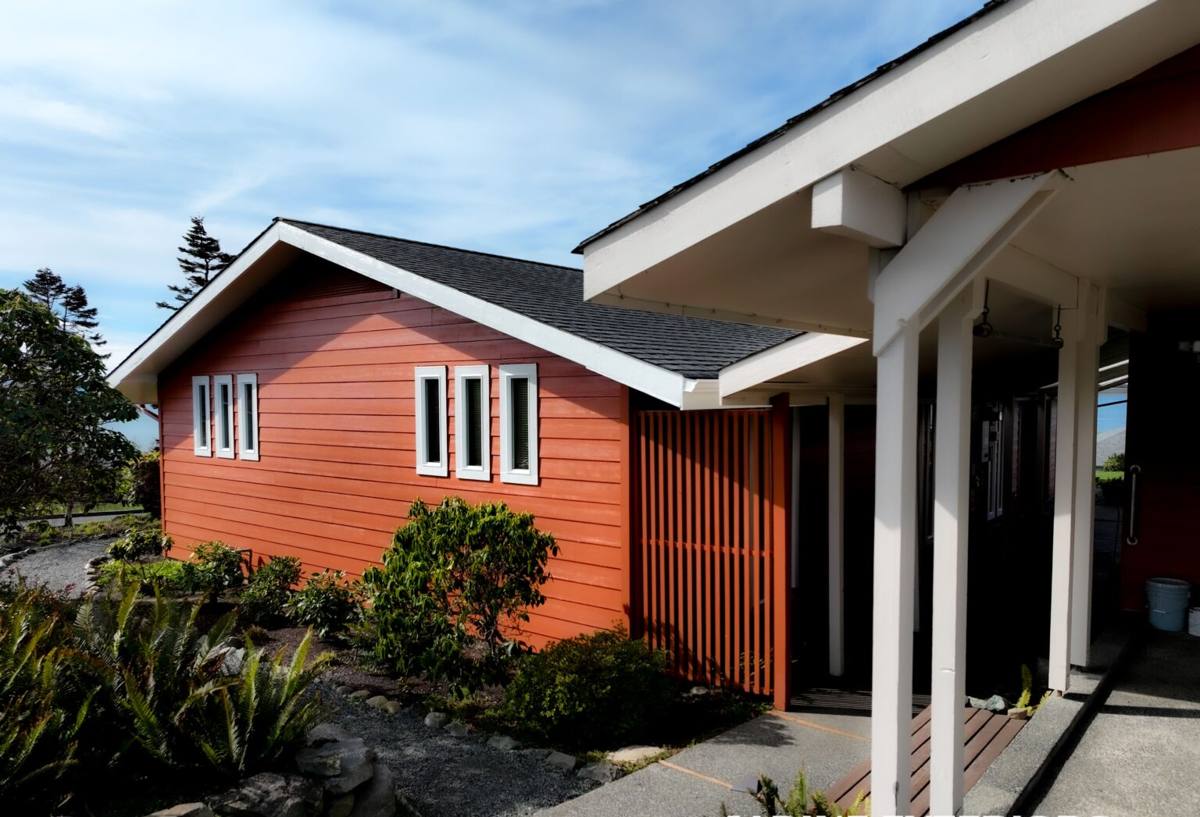
How Whatcom County's Marine Climate Wears Down Windows
Window failure in this region rarely comes from one dramatic event. It's the slow, cumulative effect of moisture and salt exposure working on materials that were never built to shrug it off indefinitely.
Salt Air and Metal Components
Homes closer to the water pick up salt in the air that settles on window hardware, aluminum frames, and fasteners. Over years, that salt accelerates corrosion on hinges, cranks, and locking mechanisms, and it can pit unprotected aluminum. Windows that looked fine cosmetically often have hardware that's seized up or corroding from the inside out.
Wind-Driven Rain and Sealant Failure
Rain in this area doesn't just fall — it gets pushed sideways against west- and southwest-facing walls during winter storms. Sealants and weatherstripping that would hold up fine in a drier, calmer climate get tested constantly here, and once a bead of caulk or a compression seal fails, water finds its way behind the trim and into the wall assembly.
Moss, Moisture, and Wood Rot Around Frames
A long, damp moss season means anything organic — wood sills, wood-clad frames, even the sheathing behind a window opening — stays wet longer than it should. That prolonged dampness is exactly what wood rot and mold need to get established, usually starting quietly at the bottom corners of a window before it's visible from inside the house.
Signs It's Time to Replace, Not Repair
Not every problem window needs full replacement, but certain signs point away from patching and toward starting fresh:
- Soft or spongy wood at the sill or lower frame corners
- Fogging or a permanent haze between panes of double-glazed glass — a sign the seal has failed
- Windows that are difficult to open, close, or lock, especially after being fine a few years ago
- Visible daylight or a noticeable draft around the frame with the window closed
- Paint that keeps failing or bubbling around the frame no matter how often it's redone
- Condensation forming on the interior glass or frame regularly during cold, wet weeks
- A noticeable jump in heating costs without any other explanation
If you're only seeing one of these and the frame itself is sound, a repair or re-seal may still make sense. Several at once, especially combined with soft wood, usually means the window and its opening need to be addressed properly rather than patched again.
What a Correct Window Replacement Job Actually Involves
The window unit itself is only part of the job. Most window failures we're called out to inspect trace back to how the opening was flashed and sealed during a prior installation, not to a defect in the window itself.
Flashing and Water Management
A correct installation integrates the window with the wall's water-resistive barrier the same way a roof integrates with flashing — water that gets past the window trim needs a clear path down and out, not a place to pool and soak into sheathing. That means proper sill pan flashing, correctly lapped house wrap or building paper, and head flashing that sheds water over the window rather than behind it.
Insulation and Air Sealing
The gap between the window frame and the rough opening needs to be sealed and insulated correctly — not stuffed tight with fiberglass, which can restrict the frame's ability to expand and contract, and not left as an open gap for air and moisture to move through. Low-expansion foam or backer rod and sealant, applied correctly, keeps the opening both insulated and able to move with temperature changes.
Skipping either of these steps is how a brand-new window ends up with the same rot and drafts as the one it replaced, just a few years later instead of immediately.
Choosing the Right Frame Material for This Climate
Frame material matters more here than in drier climates, since it has to handle constant moisture exposure and, for homes closer to the water, salt air as well.
| Material | How it handles this climate | Maintenance | General cost tier |
|---|---|---|---|
| Vinyl | Won't rot or corrode; handles moisture well; can expand/contract more with temperature swings | Low — occasional cleaning | Lower |
| Fiberglass | Very stable dimensionally, strong moisture and corrosion resistance, holds paint well if desired | Low | Higher |
| Wood-clad (wood interior, clad exterior) | Good performance if the cladding and seals stay intact; exposed wood is vulnerable if the seal ever fails | Moderate to high — cladding seams need periodic inspection | Higher |
| Aluminum | Strong and slim-profile, but conducts cold and is more prone to salt-air corrosion and condensation | Moderate — watch hardware and finish | Mid to higher |
For most Bellingham-area homes dealing with salt air, rain, and moss, vinyl and fiberglass tend to be the more forgiving, lower-maintenance choices over the long run. Wood-clad windows can still be the right call for a specific look or a historic home, as long as everyone understands the maintenance commitment that comes with keeping the seals and cladding intact.
Our Window Replacement Process
We keep the process straightforward and try to minimize disruption to your home, especially since window work opens up your walls to the outside for a period of time.
- On-site assessment — we look at each window opening, not just the glass, checking sill condition, existing flashing, and signs of moisture intrusion
- Honest scope and estimate — you get a clear picture of which windows need replacement, which can be repaired, and what drives the cost
- Careful removal — old units come out without unnecessary damage to surrounding siding or trim, and we check the opening for hidden rot before anything new goes in
- Repair of any hidden damage — if we find soft sheathing or rot behind the old window, we address it before installing the new one, not after
- Proper flashing and sealing — sill pan, house wrap integration, and head flashing installed to shed water correctly
- Window installation and insulation — unit set plumb and level, gap insulated and sealed without over-compression
- Interior and exterior trim finish — trim reinstalled or replaced to match, and the area cleaned up before we leave
- Final walkthrough — we check operation, sealing, and appearance with you before calling the job done
What Window Replacement Costs — And What Drives the Price
Every home and window opening is different, but a few factors consistently move the price up or down. Broadly, standard vinyl replacement windows tend to run from several hundred to a bit over a thousand dollars per window installed, with fiberglass, wood-clad, larger units, or custom shapes costing more. The only way to get an accurate number is a site visit, since hidden damage behind an old window can change the scope significantly.
| Cost factor | Why it matters |
|---|---|
| Window size and type | Larger units, bay/bow windows, or custom shapes cost more than standard single or double-hung sizes |
| Frame material | Vinyl is typically the most budget-friendly; fiberglass and wood-clad cost more upfront |
| Hidden wall or sill damage | Rot found behind an old window needs to be repaired before a new one goes in, adding labor and material |
| Glazing package | Double- vs. triple-pane, low-E coatings, and gas fill all affect price and performance |
| Number of windows | Replacing several windows at once is usually more cost-efficient per window than doing one at a time |
| Trim and siding tie-in | Matching existing trim or siding profiles can add labor, especially on older homes |
Why a Crew That Already Works Bellingham Matters
Window replacement done by someone unfamiliar with this specific climate often looks fine on installation day and fails a few winters later, when wind-driven rain finds a sealant gap or moisture gets trapped behind trim that wasn't detailed for this much year-round dampness. A crew that regularly works Bellingham and the rest of Whatcom County already knows which details — sill flashing, weep paths, sealant choice — need extra attention here, and doesn't have to learn that the hard way on your house.
Being based nearby in Ferndale also means we're not disappearing after the invoice clears. If a question comes up after the job — a hardware adjustment, a sealant check before a big storm season — we're a short drive away, not a call center for a company that worked your neighborhood once and moved on.
Caring for New Windows in a Salt Air, Moss-Prone Climate
New windows installed correctly should need very little from you, but a bit of upkeep extends their life meaningfully in this climate:
- Rinse exterior frames and hardware periodically, especially on homes closer to the water, to reduce salt buildup
- Keep gutters and downspouts clear so water isn't overflowing near window heads
- Check exterior caulk lines once a year, particularly after a hard winter, and re-seal any cracks before they let water in
- Clear moss or organic debris that accumulates on sills or nearby trim rather than letting it sit
- Operate locks and cranks periodically through the year so hardware doesn't seize from disuse and moisture
None of this is heavy maintenance — it's the kind of five-minute check that catches a small issue before it becomes a wall repair.
Get a Free, No-Pressure Estimate
If your windows in Bellingham are showing any of the signs above, or you just want an honest read on whether repair or replacement makes more sense, we're happy to take a look. Fill out the form below for a free estimate — no pressure, no sales script, just a clear assessment from a crew that works this climate every day.