 Ferndale Roofing
 Why Bellingham Homes Need Siding Built for This Climate
Homes in and around Bellingham sit close enough to the water that salt-laden air is a daily fact of life, not an occasional nuisance. Add Whatcom County's long wet season, driving rain that comes in sideways off Bellingham Bay and the Strait, and a shoulder season that stays damp and shaded long enough to grow moss on almost any north-facing surface, and you have a climate that is genuinely tough on exterior building materials. Siding here doesn't just need to look good on a dry August afternoon — it needs to hold up through eight or nine months a year of moisture exposure, wind-driven rain, and salt air that accelerates corrosion and finish breakdown on materials that aren't built for it.
This is the exact reason we standardized on James Hardie fiber cement siding and stopped installing the alternatives. It's not a marketing position — it's a response to what we see happen to siding on homes in this part of Whatcom County over ten, fifteen, twenty years.
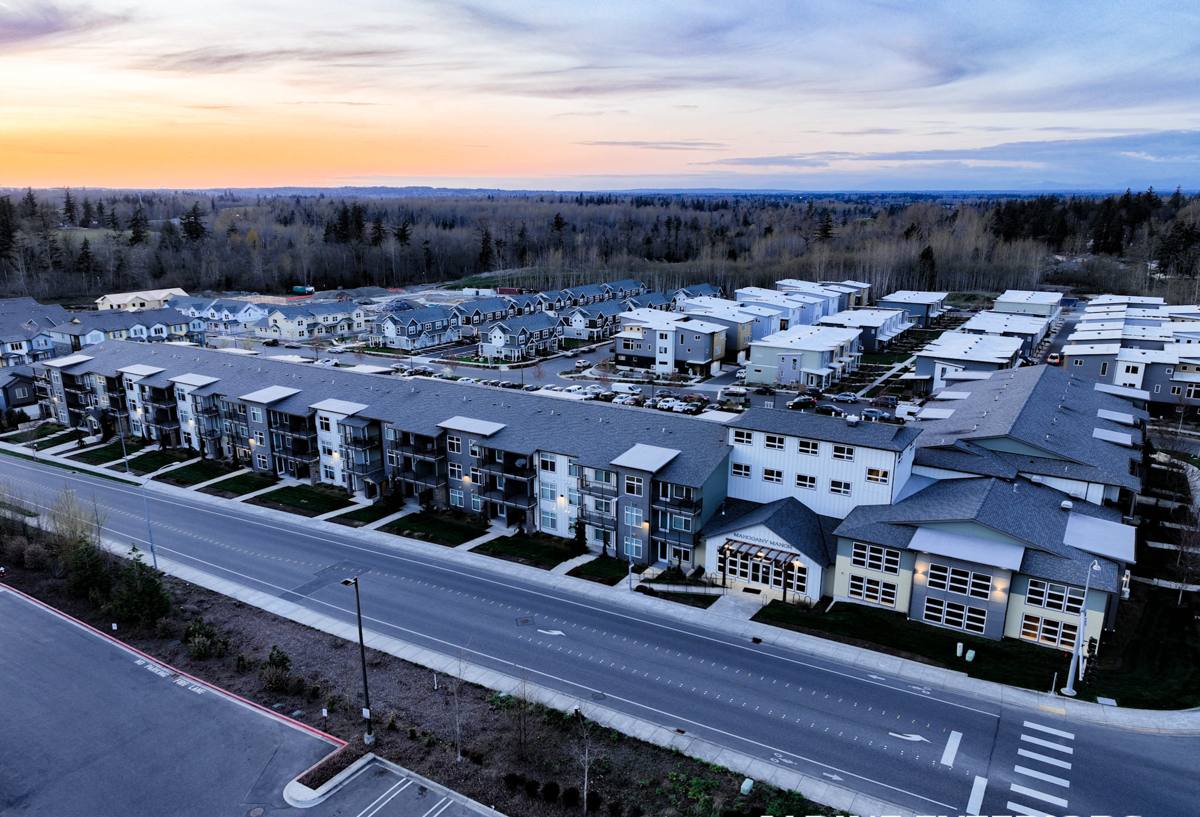
What Salt Air, Rain, and Moss Actually Do to Siding
Salt Air
Airborne salt is corrosive to metal fasteners, flashing, and trim, and it degrades certain paints and coatings faster than inland exposure would. Products that rely on a surface-applied paint film for protection tend to chalk, fade, and break down faster in this environment, which means more frequent repainting to keep water out.
Driving Rain
Wind-driven rain doesn't just fall on siding — it gets pushed sideways and upward into laps, seams, and penetrations. Any siding system that isn't installed with correct overlaps, flashing, and drainage behind it will eventually let water behind the cladding, where it can sit against sheathing and framing.
Moss Season
Shaded, north-facing, and tree-adjacent walls in this region stay damp long enough for moss and algae to take hold. Moss holds moisture directly against the siding surface for extended periods, which is a slow but real problem for wood-based and some composite products in particular.
None of these three factors is dramatic on its own. Together, over years, they're what separates siding that still looks and performs well after two decades from siding that needs replacement or heavy maintenance far sooner.
Why We Only Install James Hardie
We made a deliberate decision as a company to install James Hardie fiber cement exclusively — not vinyl, not LP SmartSide, not Cemplank or Allura, not primed spruce or cedar. Every one of those products has legitimate uses and reasonable people choose them. Our decision is about what we're willing to put our name behind and warranty in this specific climate.
- Non-combustible core: Hardie's fiber cement composition doesn't burn, which matters in a region where wildfire smoke and ember exposure have become a real seasonal concern even west of the Cascades.
- ColorPlus factory finish: A baked-on, multi-coat finish applied under controlled factory conditions holds color and resists fading far better than field-applied paint, which matters directly for salt-air exposure.
- HZ5 climate-engineered formulation: Hardie manufactures different product formulations for different climate zones. The HZ5 line used in the Pacific Northwest is engineered specifically for high-moisture, freeze-capable climates like ours — it isn't the same product sold in Arizona.
- Moisture behavior: Fiber cement doesn't absorb and swell the way engineered wood products can, and it doesn't support the kind of moisture-driven deterioration that wood-based sidings are prone to over time.
- Transferable warranty: A strong, transferable warranty protects the investment for the current owner and adds value at resale, which matters in a competitive Whatcom County housing market.
Wood-based and vinyl products aren't inherently "bad" — but the maintenance burden, moisture sensitivity, or long-term appearance trade-offs they carry are things we're not willing to install and then stand behind in a climate this wet and this salty.
How the Alternatives Compare in This Climate
| Product | Salt Air Behavior | Moisture Behavior | Maintenance Burden |
|---|---|---|---|
| James Hardie fiber cement | Factory finish resists corrosion-driven fading | Doesn't absorb/swell; engineered for wet climates | Low — occasional wash, no repainting cycle |
| Vinyl siding | Can become brittle and discolor faster near salt air | Doesn't rot, but seams can allow water intrusion behind panels | Low, but limited repair options if damaged |
| LP SmartSide / engineered wood | Coating breakdown accelerated by salt exposure | Wood-strand core is moisture-sensitive at cut edges and seams | Moderate — edge sealing and repainting over time |
| Cedar / primed spruce | Untreated wood weathers and grays quickly in salt air | Prone to moisture absorption, warping, and moss retention | High — regular staining/painting and moss treatment |
What a Correct James Hardie Installation Involves
The product itself is only half the equation. A large share of siding failures we're called out to assess — regardless of brand — trace back to installation shortcuts, not the material. In a climate like Bellingham's, correct installation is what actually keeps water out.
Water Management Behind the Siding
Every wall gets a weather-resistant barrier and, where conditions call for it, a drainage plane that lets any incidental moisture escape rather than sit against the sheathing. This matters more here than in drier climates because wind-driven rain will find any gap given enough seasons.
Flashing and Penetrations
Windows, doors, hose bibs, vents, and any other wall penetration are common failure points on poorly installed siding. Correct flashing detail at every one of these locations is non-negotiable, especially on walls that take direct rain exposure.
Fastening and Clearances
James Hardie specifies exact fastener types, spacing, and clearances from grade, roof lines, and decks. Corrosion-resistant fasteners matter in salt air specifically — the wrong fastener can rust and stain the siding face or fail structurally years before the siding itself would.
Gaps and Caulking
Hardie's manufacturer instructions call for specific gaps at butt joints and trim, sealed with the correct sealant. Boards installed tight with no gap, or caulked incorrectly, are one of the most common defects we see on other contractors' work.
Our Process for Bellingham Siding Projects
- On-site assessment: We walk the exterior, check existing siding and sheathing condition, note moisture-prone areas (shaded walls, low clearances, tree cover) and identify problem details from the current installation.
- Written estimate and product plan: You get a clear scope, product line and color recommendation, and pricing before any work starts.
- Prep and moisture barrier: Old siding is removed, sheathing is inspected and repaired as needed, and the weather-resistant barrier and flashing are installed correctly before a single Hardie board goes up.
- Installation to manufacturer spec: Fastening, gapping, and flashing detail follow James Hardie's published installation requirements, not shortcuts.
- Final walkthrough: We review the finished work with you, including trim, caulking lines, and any touch-up needed.
Maintaining Hardie Siding in a Moss-Prone, Salty Environment
One advantage of fiber cement in this climate is how little ongoing maintenance it actually needs compared to wood-based alternatives — but "little" isn't "none." A short annual routine keeps it performing the way it's designed to:
- Rinse the exterior annually, focusing on shaded and north-facing walls where moss and algae are most likely to establish
- Keep vegetation and tree limbs trimmed back from siding to reduce shade, trapped moisture, and debris buildup
- Inspect caulking at trim and penetrations every year or two and re-seal if it's cracked or pulling away
- Check gutters and downspouts are directing water away from the wall, not sheeting down the siding face
- Address any moss growth promptly with a gentle wash rather than pressure-washing directly into seams
Cost Factors for a Bellingham Siding Project
| Factor | Why It Affects Price |
|---|---|
| Existing siding removal | Tear-off and disposal add labor beyond a straightforward re-side |
| Sheathing condition | Moisture damage found underneath existing siding requires repair before new siding goes on |
| Home size and complexity | Cut-up walls, multiple stories, and dormers add labor time and material waste |
| Product line and profile | Lap width, texture, and trim details vary in material cost |
| Color | Standard ColorPlus colors versus custom or premium options affect pricing |
We don't quote broad numbers without seeing the house — too many of these variables change the real cost. A written, itemized estimate after an on-site look is the only honest way to price a project like this.
Why Local Experience in Bellingham Matters
A crew that already works houses in and around Bellingham knows which walls in this area take the worst of the wind-driven rain off the water, which lots hold shade and moisture long enough to grow moss fastest, and how salt exposure shows up differently on a home a half-mile from the water versus one further inland. That local pattern recognition shapes real decisions — where extra flashing attention goes, which walls get prioritized for drainage detail, what maintenance schedule actually makes sense for a given property. It's the difference between a generic installation and one built for the specific conditions the house will face for the next several decades.
If you're considering new siding or need to replace siding that's failing on a Bellingham-area home, we'd be glad to take a look and give you a straightforward, no-pressure estimate — what we'd recommend, why, and what it would cost. Use the form below to get started.