 Ferndale Roofing
 Why Bellingham Roofs Age Differently Than Most
A roof in Bellingham does not fail the same way a roof does in a dry inland climate. Between the salt air drifting in off the water, months of driving rain, and a moss season that can stretch from fall through spring, the materials and details that hold up elsewhere often fall short here. When we replace a roof for a homeowner in the Bellingham area, we are not just swapping old shingles for new ones — we are building a system meant to shed constant moisture, resist corrosion, and keep organic growth from taking hold.
This matters because a roof replacement is one of the few home projects where cutting corners does not show up right away. A poorly detailed roof can look fine for a year or two before leaks, rot, and moss damage start showing up in the attic, the fascia, or the interior ceiling. Getting it right the first time, with materials and methods suited to Whatcom County's climate, is what actually protects the investment.
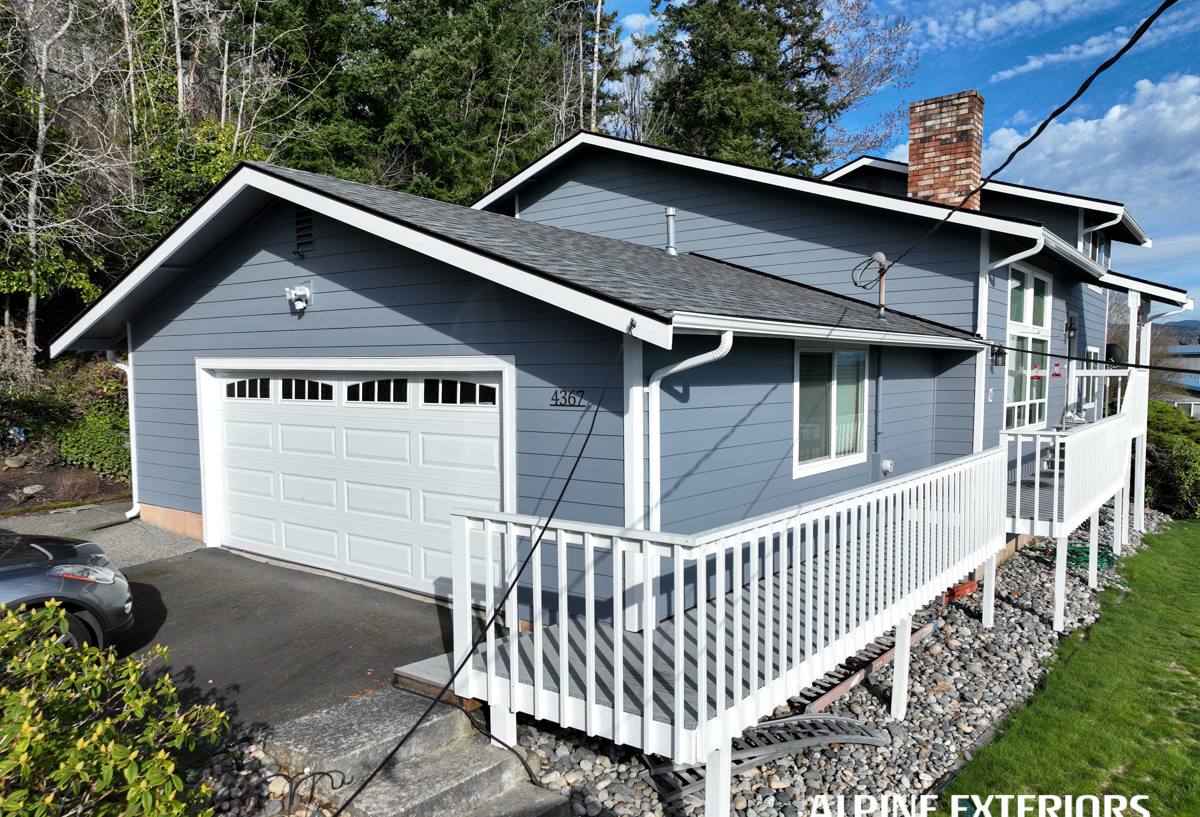
What Bellingham's Climate Actually Does to a Roof
Salt Air and Metal Fatigue
Homes closer to the water deal with airborne salt that accelerates corrosion on exposed fasteners, flashing, and metal roofing components. Standard galvanized nails and low-grade flashing can start rusting years before they would in a drier, inland setting. On a proper replacement, we account for this with corrosion-resistant fasteners and flashing metals suited to coastal exposure, not just whatever is cheapest at the supply house.
Driving Rain and Wind-Driven Water
This region does not just get a lot of rain — it gets rain pushed sideways by wind off the Strait and the Sound. That kind of weather finds every weak point in a roof: under-lapped shingle courses, poorly sealed valleys, and skylight or vent flashing that was installed to "pass inspection" rather than actually shed water under pressure. A roof built for Bellingham needs extra attention at these transition points, not just a good field of shingles.
Moss and Organic Growth
Shade, moisture, and mild temperatures are exactly what moss and algae need to thrive, and Whatcom County offers all three for a good part of the year. Moss does more than look bad — it holds moisture against the roofing material, lifts shingle edges as it grows, and can work its way under flashing over time. A roof replacement is the right moment to address moss-prone areas properly, rather than relying on repeated cleaning or pressure washing that shortens shingle life.
What a Correct Roof Replacement Actually Involves
A quality replacement is not just new shingles over the same deck. Each layer of the system plays a role, and skipping or shortcutting any of them is where most premature failures start.
Tear-Off and Deck Inspection
We remove the old roofing down to the deck rather than layering over it. This lets us actually see the condition of the sheathing, check for soft spots or rot around vents and chimneys, and replace any damaged boards before anything new goes down. Roofing over a compromised deck just hides a problem that gets worse underneath.
Underlayment and Moisture Barriers
In a climate with this much sustained rain, underlayment is not a formality — it is a second line of defense. We use ice-and-water shield or synthetic underlayment at the eaves, valleys, and other vulnerable areas, sized to actually handle wind-driven rain rather than the bare minimum code allows.
Flashing and Roof-to-Wall Details
Most leaks start at flashing, not in the open field of the roof. Chimneys, skylights, dormers, and roof-to-wall intersections all need step flashing, counterflashing, or kickout flashing installed correctly — not caulked over as a shortcut. This is one of the areas where experience with wet coastal climates shows up most clearly in the finished work.
Ventilation
An under-ventilated attic traps moisture, which shortens shingle life from underneath and can lead to condensation, mold, and even ice damming in cold snaps. We evaluate intake and exhaust ventilation as part of every replacement, since a new roof over a poorly ventilated attic will not perform the way it should.
Choosing the Right Material for a Bellingham Home
There is no single "best" roofing material for every home — the right choice depends on your roof's slope, sun and shade exposure, budget, and how much long-term maintenance you want to take on. Here is how the common options compare for this specific climate.
| Material | Typical Lifespan | How It Handles Our Climate | Maintenance Considerations |
|---|---|---|---|
| Architectural asphalt shingles | 25–30 years | Good performance with proper underlayment and flashing; algae-resistant granule options help slow moss and streaking | Periodic moss and debris removal in shaded areas |
| Standing seam metal | 40–50+ years | Sheds heavy rain fast and resists moss better than shingles; needs corrosion-resistant fasteners near the water | Low maintenance once installed correctly |
| Cedar shake | 20–30 years with upkeep | Traditional look but more sensitive to constant moisture and moss in shaded, damp areas | Higher maintenance; needs regular treatment and inspection |
| 3-tab asphalt shingles | 15–20 years | Budget option, but thinner profile is less forgiving of wind-driven rain and moss over time | Shorter service life in this climate |
For most Bellingham homes, a mid-to-upper-grade architectural asphalt shingle strikes the right balance of cost, appearance, and durability. Homes with heavy tree cover or a strong preference for low long-term maintenance often do better with metal.
Signs a Bellingham Roof Needs Replacement, Not Repair
Not every roofing problem calls for a full replacement, but there are signals that point away from patch repairs and toward a full system replacement.
- Shingles are curling, cupping, or losing granules across large sections of the roof, not just one spot
- Moss is established in multiple areas and keeps returning shortly after cleaning
- You see daylight through the attic roof boards or find damp insulation after a storm
- Flashing around chimneys, skylights, or vents is cracked, rusted, or was caulked as a repeated patch fix
- The roof is nearing or past its expected lifespan for its material, even if it "looks okay" from the ground
- Multiple repair calls in the last few years without the underlying leak actually going away
What Drives the Cost of a Bellingham Roof Replacement
Every roof is different, so we do not quote sight unseen — but these are the main factors that shape the price of a replacement in this area.
| Factor | Why It Matters |
|---|---|
| Roof size and number of planes | More square footage and more valleys, hips, and dormers mean more material and labor |
| Deck condition | Rotted or soft sheathing found during tear-off needs replacement before new roofing goes down |
| Material choice | Asphalt, metal, and cedar carry very different material and installation costs |
| Roof pitch and access | Steep or hard-to-access roofs take longer and require more safety setup |
| Ventilation and flashing upgrades | Bringing older ventilation or flashing details up to current standards adds scope but reduces future problems |
We provide a written, itemized estimate before any work begins, so you know exactly what you are paying for and why — no vague lump-sum numbers.
Our Replacement Process
- On-site inspection — we walk the roof and attic to assess current condition, ventilation, and any problem areas specific to your home.
- Written estimate — a clear breakdown of materials, labor, and any deck or ventilation work anticipated.
- Material selection — we walk through options suited to your roof's exposure, shade, and budget.
- Tear-off and deck check — old roofing removed, sheathing inspected and repaired as needed.
- Underlayment, flashing, and material installation — installed to handle sustained rain and wind, not just to code minimums.
- Final walkthrough — we review the completed roof with you and go over warranty coverage.
Why a Crew That Already Works in Bellingham Makes a Difference
A roofing crew that regularly works in and around Bellingham has already seen how the local climate affects roofs over time — which shaded roof lines hold moss longest, which flashing details tend to fail first under driving rain, and how salt exposure closer to the water changes what hardware is worth using. That kind of familiarity does not replace good workmanship, but it does mean fewer surprises and fewer callbacks. It also means we are a known, local business you can reach easily if a question comes up after the job is done — not a crew that drove in from out of the area for one project.
As a Ferndale-based contractor serving Whatcom County, we treat Bellingham roofs with the same standards we'd want on our own homes: correct tear-off, correct flashing, and materials chosen for what this climate actually does to a roof over the decades, not just the first few years.
Get a Straightforward Estimate
If your roof is showing signs of wear, has an active leak, or you are simply planning ahead, we're happy to take a look and give you an honest assessment — replacement isn't always the answer, and we'll tell you if a repair makes more sense. Reach out using the form below for a free, no-pressure estimate on your Bellingham home.