 Ferndale Roofing
 Deck Building Built for Bellingham's Conditions
A deck in Bellingham does a different job than a deck almost anywhere else. Between the marine air rolling in off Bellingham Bay, the long stretch of wet months, and the shade that mature Pacific Northwest trees throw over so many lots, a deck here is under near-constant moisture pressure for most of the year. That doesn't mean decks don't work in this climate — they absolutely do, and a well-built one will outlast a poorly built one by decades. It means the build has to account for what the climate actually does, instead of following a generic framing and decking approach that was designed for a drier region.
We build decks for homeowners throughout Bellingham and the surrounding Whatcom County area, and the conversation with every homeowner starts the same way: not what the deck should look like, but what it needs to survive.
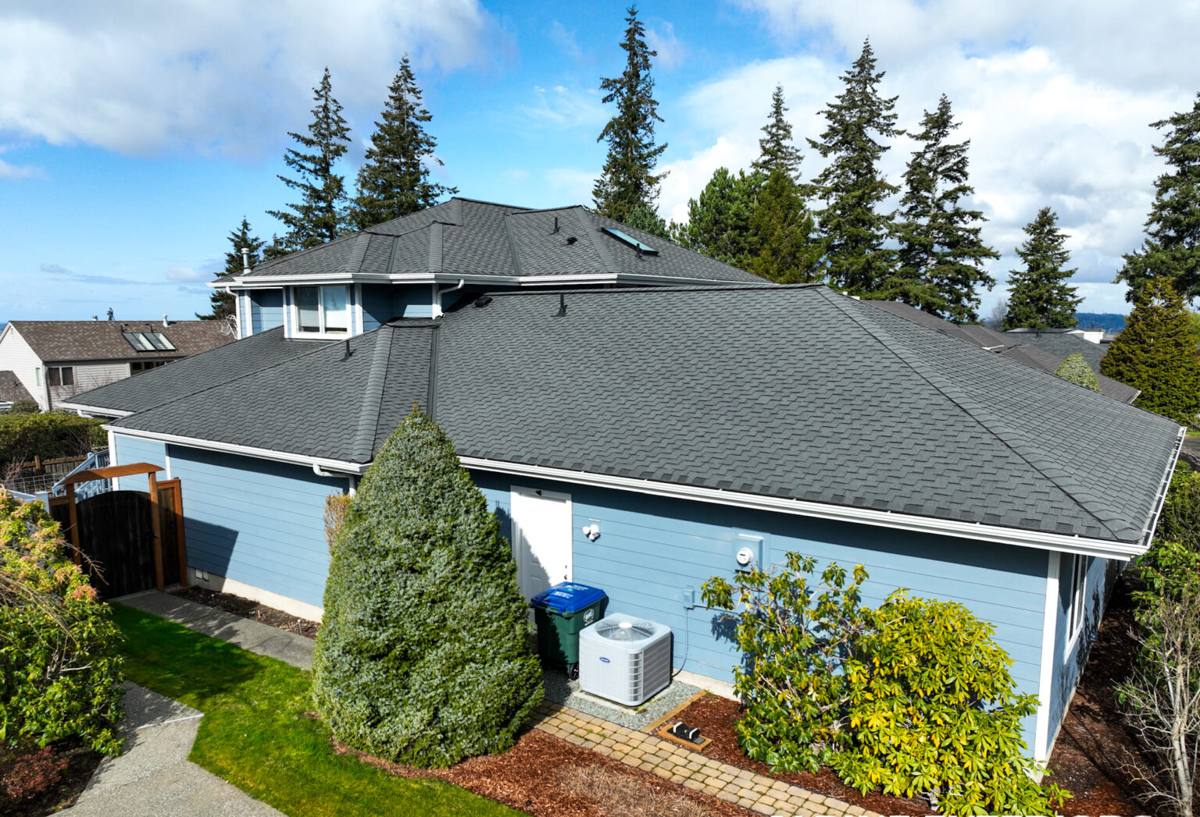
What Bellingham's Climate Does to a Deck Over Time
Understanding the failure points is the first step to avoiding them. Three regional factors do most of the damage to decks in this part of Whatcom County.
Salt Air and Metal Corrosion
Homes closer to Bellingham Bay and the Puget Sound shoreline deal with airborne salt that accelerates corrosion on any fastener, bracket, or connector that isn't properly rated for it. A deck that looks structurally sound on the surface can have compromised joist hangers or ledger bolts underneath if the wrong hardware went in during the build. This is one of the most common problems we find when we're asked to inspect or repair an older deck in the area.
Driving Rain and Moisture Intrusion
Bellingham doesn't just get a lot of rain — it gets a lot of wind-driven rain, which pushes water into places a vertical rain wouldn't reach: ledger connections, stair stringers, the underside of rail posts, and any horizontal surface that isn't sloped to shed water. Standing water and trapped moisture are what turn a 25-year deck into a 10-year deck.
Moss, Algae, and the Long Wet Season
Whatcom County's wet season runs long, and shaded or north-facing decks can stay damp for weeks at a stretch. That's exactly the environment moss and algae need to take hold. Beyond being a slip hazard, moss holds moisture directly against decking boards and fasteners, which speeds up rot in wood and can dull or degrade the surface of some composite products if it's left to sit.
Choosing the Right Decking Material for This Climate
There's no single "best" decking material — there's the material that fits your budget, your maintenance appetite, and how exposed your specific lot is to sun, shade, and moisture. We walk every homeowner through the real trade-offs rather than pushing one product line.
| Material | Moisture Behavior | Maintenance | Typical Lifespan | Relative Cost |
|---|---|---|---|---|
| Pressure-treated wood | Prone to swelling, checking, and mildew if not sealed regularly | Annual cleaning and re-sealing/staining recommended | 10-15 years with upkeep | $ |
| Cedar | Naturally rot- and insect-resistant, but still needs sealing against our rain | Periodic cleaning, occasional refinishing | 15-20 years with upkeep | $$ |
| Capped composite | Does not absorb moisture; resists rot and mildew growth on the board itself | Periodic washing to keep moss/algae from clinging to the surface | 25-30+ years | $$$ |
| PVC decking | Fully moisture-resistant, no wood fibers to break down | Low; occasional washing | 25-30+ years | $$$-$$$$ |
Wood is a legitimate choice for homeowners who like the look and don't mind the upkeep — but in a climate that stays damp for months at a time, it only performs well if someone actually keeps up with sealing and cleaning. Capped composite and PVC cost more up front but remove most of the moisture-related maintenance burden, which matters more here than in drier climates. We'll give you honest numbers for your specific project rather than steering you toward whatever has the best margin.
What's Underneath Matters More Than What's On Top
A beautiful deck surface over a poorly built frame is a problem waiting to surface, usually a few winters in. This is where most corner-cutting happens on lower-quality builds, because it's the part nobody sees once the decking goes down.
Footings and Drainage
Footings need to be sized and set below frost depth per Whatcom County code, and the ground around and under the deck needs somewhere for water to go. On sloped Bellingham lots, or lots with heavier clay soil, poor drainage planning at the footing stage is one of the most common causes of a deck settling unevenly a few years down the road.
Ledger Board Attachment and Flashing
Where the deck attaches to the house is the single highest-risk moisture point on the entire structure. It needs proper flashing that directs water away from the house band board, correct fastener spacing, and a waterproof membrane behind it. Get this wrong and you're not just risking the deck — you're risking water intrusion into the house itself.
Fasteners and Connectors
Given the salt air in parts of Bellingham, we spec hardware rated for coastal/corrosive environments rather than standard-grade fasteners. It costs a little more. It also means you're not replacing rusted joist hangers in twelve years.
Design Considerations for Bellingham Properties
Bellingham's terrain and tree cover create some specific design questions we work through with homeowners:
- Shade and sun exposure — decks under heavy tree cover need decking and framing choices that handle prolonged dampness better, plus layout that avoids trapping water where sun can't help dry it out.
- Sloped lots — common throughout the hillier parts of the city, requiring taller support posts, additional bracing, and sometimes multi-level deck designs.
- View orientation — many Bellingham properties have water or mountain views worth designing around, which affects railing choices (cable or glass rail systems preserve sightlines better than solid rail).
- Covered vs. open — a partial roof or pergola over at least part of the deck meaningfully cuts down on moss growth and UV wear, and it's worth discussing at the design stage rather than adding later.
Our Deck Building Process
We keep the process straightforward and communicate clearly at each stage, since a deck build touches your property for several weeks and you should always know what's happening and why.
- On-site assessment — we look at your lot's grade, sun/shade pattern, soil, and how close you are to the bay, since that affects hardware specs.
- Design and material selection — we walk through decking materials, railing systems, and layout options against your budget and maintenance preferences.
- Permitting — we handle the Whatcom County or City of Bellingham permit submission and inspections tied to your project.
- Footings and framing — the structural work that determines how the deck performs for the next 20-30 years.
- Decking, railing, and finish work — installed to shed water correctly, with attention to every transition point where moisture can collect.
- Final walkthrough — we go over the finished deck and basic care with you directly.
Permits and Code Requirements
Most new decks and many significant deck rebuilds in and around Bellingham require a building permit, with inspections at the footing and framing stages before decking goes down. Requirements vary depending on deck height, attachment to the house, and whether it's within city limits or unincorporated Whatcom County. We manage this end-to-end so you're not the one tracking down inspection windows or code specifics — but it's worth knowing upfront that a legitimate deck build includes permitting, and a contractor offering to skip it is cutting a corner that becomes your liability later, not theirs.
Keeping a Bellingham Deck in Good Shape Year-Round
Even the right materials and the right build benefit from a little seasonal attention in this climate. A simple annual routine goes a long way:
- Sweep leaves and debris off the deck regularly through fall — trapped organic material is what feeds moss and algae growth.
- Rinse or lightly scrub the surface once or twice a year to keep moss from establishing, especially in shaded areas.
- Check that gaps between boards stay clear so water can drain through rather than pooling.
- Inspect the ledger board area and any visible fasteners once a year for early signs of rust or moisture staining.
- If you have a wood deck, plan on resealing or restaining on the schedule your specific product recommends — don't wait until it visibly needs it.
- Trim back overhanging branches where practical to let more light and air reach the deck surface.
Why a Crew That Already Works Bellingham Makes a Difference
Deck building isn't exotic work, but building one that actually holds up here takes some local judgment: knowing which fastener grade a given lot needs based on its distance from the bay, knowing how Whatcom County's permitting and inspection process runs, and knowing how a shaded, sloped lot in this region behaves differently than a flat, sunny one. A crew that builds decks across a range of climates might get the framing right and still under-spec the hardware, or skip the drainage detail that matters most in a place that stays wet for half the year. We build decks specifically for this climate, for homeowners in Bellingham and the wider Ferndale and Whatcom County area, and we stand behind the work because we're the ones your neighbors will call if something goes wrong.
If you're planning a new deck or need to replace one that hasn't held up to the weather, we're happy to take a look and put together a free, no-pressure estimate. Just fill out the form below and we'll get in touch.