 Ferndale Roofing
 Board & Batten Siding in Bellingham: A Look That Has to Work as Hard as It Looks Good
Board and batten siding shows up all over Bellingham, from craftsman-style homes near the water to newer builds up on the hillsides. The vertical lines and crisp shadow reveals give a home a clean, tailored look that a lot of homeowners prefer over standard lap siding. But board and batten is also one of the least forgiving siding styles when it comes to moisture management. Every batten creates a seam, and every seam is a place where water can either shed cleanly or get trapped, depending on how the wall was built underneath it. In Bellingham's climate, that distinction matters more than the color you pick.
This page is specifically about board and batten siding for homes in and around the Bellingham area we serve out of Ferndale. We'll walk through what the local climate does to this siding style, what a correct installation actually requires, and why we only install it in James Hardie fiber cement rather than the wood, engineered wood, or vinyl versions still common on the market.
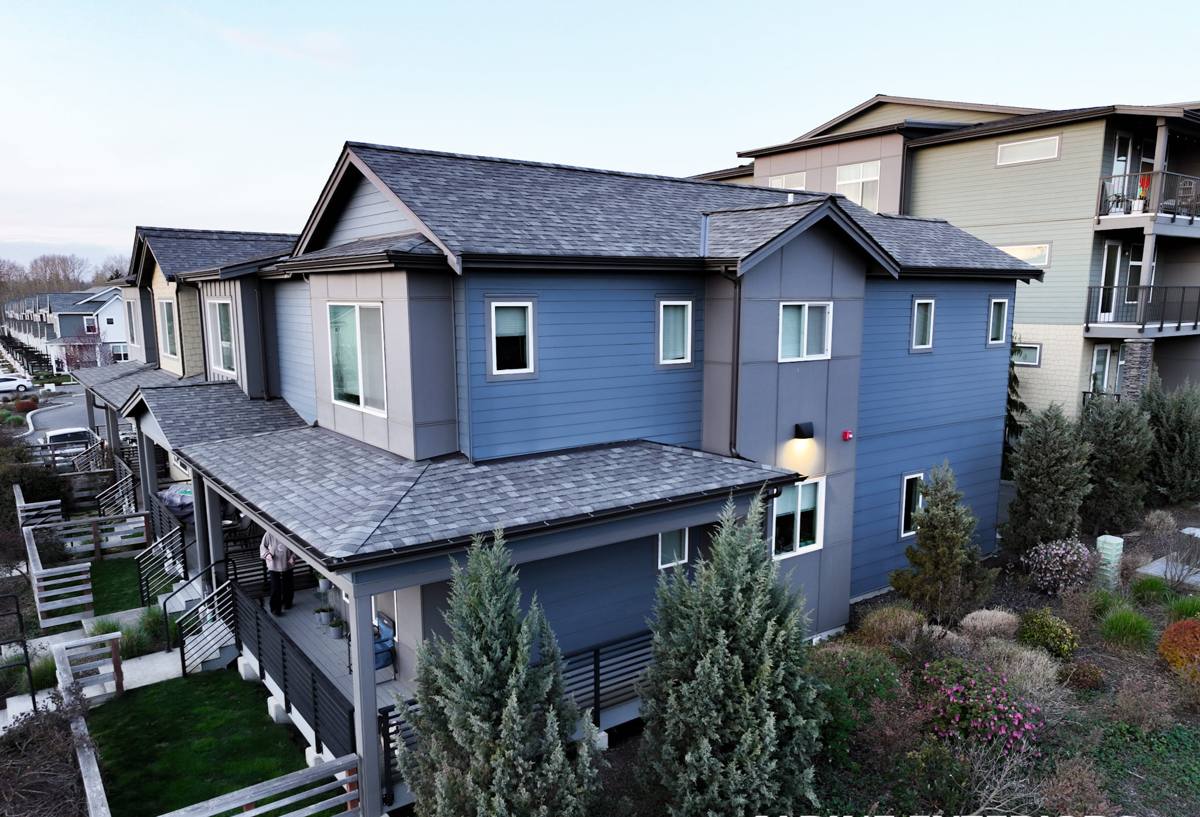
What Bellingham's Climate Does to Vertical Siding
Whatcom County sits right where Puget Sound weather meets a long, wet winter season, and Bellingham gets the full effect. Three factors specifically stress board and batten siding here:
Salt Air Off the Bay
Homes closer to Bellingham Bay deal with airborne salt that accelerates corrosion on fasteners, flashing, and any metal trim details. Board and batten has more exposed vertical seams than lap siding, and more seams means more hardware exposed to that salt-laden air over the life of the siding.
Driving, Wind-Driven Rain
Bellingham's rain doesn't always fall straight down. Storms off the water push rain sideways into walls, and vertical battens can actually funnel that water downward along the seam if the underlying wall isn't built to handle it. A lap siding profile sheds water outward by design; a board and batten wall has to be detailed correctly to do the same job.
A Long, Shaded Moss Season
Bellingham's tree cover and overcast stretches from fall through spring create ideal conditions for moss and algae growth on north-facing and shaded walls. Moss holds moisture against the siding surface far longer than open air would, which is a slow but real threat to any substrate that isn't fully moisture-stable.
None of this means board and batten is a bad choice for this area. It means the material and the installation details have to be right for the climate, not just the look.
Why We Install Board & Batten Only in James Hardie Fiber Cement
We get asked fairly often about board and batten in cedar, primed wood, engineered wood panels, or vinyl. Each of those has a place in the market, and we're not going to pretend otherwise. But we made a standing decision as a company to install board and batten exclusively in James Hardie fiber cement, and it comes down to how each material behaves specifically in a climate like Bellingham's:
- Wood and primed spruce battens look great on day one but rely entirely on paint film and caulk to stay dry. In a climate with this much sustained moisture and moss exposure, that paint film is the only thing standing between the wood and rot, and it needs constant upkeep to hold up.
- Engineered wood siding improved a lot over older wood products, but it's still a wood-fiber core. Any point where water gets past the factory coating and sits — behind moss, in a compromised seam, at a fastener — can lead to swelling or softening at that spot.
- Vinyl board and batten doesn't rot, but it's a thin, flexible material with a lot of seams in a vertical pattern, and it can warp or fade over time, especially with the freeze-thaw swings Whatcom County sees in winter.
- James Hardie fiber cement is cement, sand, and cellulose fiber. It doesn't absorb and swell the way wood-based products can, it doesn't soften from prolonged moisture contact against moss, and it holds a factory-baked finish that isn't relying on field-applied paint to keep water out of the substrate.
That's the honest trade-off: fiber cement costs more up front than vinyl and is less "warm" to the touch than real wood. What it buys back is a substrate that's built for exactly the kind of sustained damp exposure Bellingham throws at a wall for months at a time.
What a Correct Board & Batten Installation Actually Involves
The siding material is only part of the equation. Board and batten fails or succeeds based on what's underneath and how the seams are detailed. On every Bellingham-area job, our installation includes:
Drainage Plane and Rainscreen Gap
We install a weather-resistant barrier behind the siding along with furring strips or a rainscreen product that creates a small air gap between the wall and the panel. That gap lets any moisture that does get past the surface drain and dry out instead of sitting against the sheathing.
Batten Spacing and Fastening
Battens have to be spaced to James Hardie's engineering specs, not just eyeballed for appearance, and fastened into framing with corrosion-resistant fasteners rated for the salt-air exposure common near the bay. Fastener placement also has to account for the panel's expansion and contraction with temperature and moisture.
Flashing at Every Horizontal Transition
Window heads, roof-to-wall intersections, and any horizontal trim board need proper step or Z-flashing so that wind-driven rain hitting the wall gets kicked back out rather than tracked behind the panel. This is the single most common failure point we see on older board and batten installs in this area — flashing that was skipped or undersized.
Factory-Finished ColorPlus Coating
We install James Hardie's ColorPlus finish wherever it fits the project, which means the color and protective coating are baked on in a controlled factory environment rather than applied on site. That's a more consistent, more durable finish than field-applied paint, and it holds up better against the UV and moisture cycling this region sees.
Comparing Board & Batten Materials for a Bellingham Climate
| Material | Moisture Behavior in Wet, Salt-Air Climate | Maintenance Over Time | Typical Lifespan Range |
|---|---|---|---|
| Primed wood / spruce battens | Absorbs moisture; relies fully on paint film | Repainting and caulk maintenance every few years | Shorter without diligent upkeep |
| Engineered wood siding | Wood-fiber core; vulnerable if coating is breached | Periodic inspection and touch-up at seams | Moderate |
| Vinyl board & batten | Doesn't absorb water but can warp with temperature swings | Low, but limited repair options if damaged | Moderate |
| James Hardie fiber cement | Cement-based; resists swelling, softening, and moisture damage | Occasional wash-down; no repainting cycle with ColorPlus | Longer with correct installation |
Our Process for a Bellingham Board & Batten Project
Because we're based just up the road in Ferndale and work in Bellingham regularly, our process is straightforward and doesn't require us to "learn" the area on your job:
- On-site assessment — we look at your home's current siding, wall assembly, sun/shade exposure, and any moss or moisture staining that points to existing problem areas.
- Product and layout plan — we spec the right James Hardie panel and batten layout for your home's proportions and confirm color and finish options.
- Prep and drainage detailing — old siding removal (where applicable), weather barrier installation, and rainscreen setup before a single batten goes up.
- Installation to manufacturer spec — panels and battens installed with proper spacing, fastening, and flashing at every transition.
- Final walkthrough — we go over the finished job with you, including basic care guidance specific to your home's exposure.
Keeping Moss and Algae From Becoming a Long-Term Problem
Even a moisture-stable material benefits from a little seasonal attention in a climate like this one. A few habits go a long way on Bellingham homes:
- Rinse shaded, north-facing walls periodically to keep moss and algae from establishing a foothold.
- Keep gutters clear so overflow doesn't run down the wall behind battens.
- Trim back landscaping and tree limbs that keep siding sections shaded and damp longer than the rest of the house.
- Check caulking at trim and window transitions annually, since caulk is a maintenance item even on fiber cement.
- Have any impact damage (from hail, debris, or equipment) repaired promptly rather than left open to moisture.
Why Hiring a Crew That Already Works Bellingham Matters
Board and batten installation mistakes don't usually show up right away — they show up two or three winters later, after enough driving rain and moss cycles have found the weak points. A crew that already works Bellingham and the surrounding Whatcom County area on a regular basis has seen how local wall assemblies, exposures, and older housing stock respond to this climate, and builds the drainage and flashing details accordingly rather than treating every job the same way it would in a drier region.
If you're weighing board and batten siding for a Bellingham home, we're happy to take a look and give you a straight answer on what your project needs. Reach out for a free, no-pressure estimate using the form below.