 Ferndale Roofing
 Storm Damage in a Salt Air, Driving Rain, and Moss Climate
Bellingham sits close enough to Bellingham Bay and the Strait of Georgia that salt-laden air is a fact of life for anyone who owns a roof here, and it doesn't take a named storm to cause damage. Whatcom County's weather pattern of long, wet winters with wind-driven rain coming off the water puts a different kind of stress on a roof than what you'd see further inland. Add in a moss season that can run eight or nine months of the year, and you end up with roofs that are quietly weakened well before a hard wind event ever finds the weak spot.
That combination matters for how we diagnose and repair storm damage. A roof that's already carrying moss growth, soft underlayment, or corroding fasteners from years of salt exposure is going to fail differently in a windstorm than a dry, well-maintained roof somewhere in eastern Washington. We look at storm damage in Bellingham and Ferndale through that lens — not just "what did the storm break," but "what did the storm expose that was already compromised."
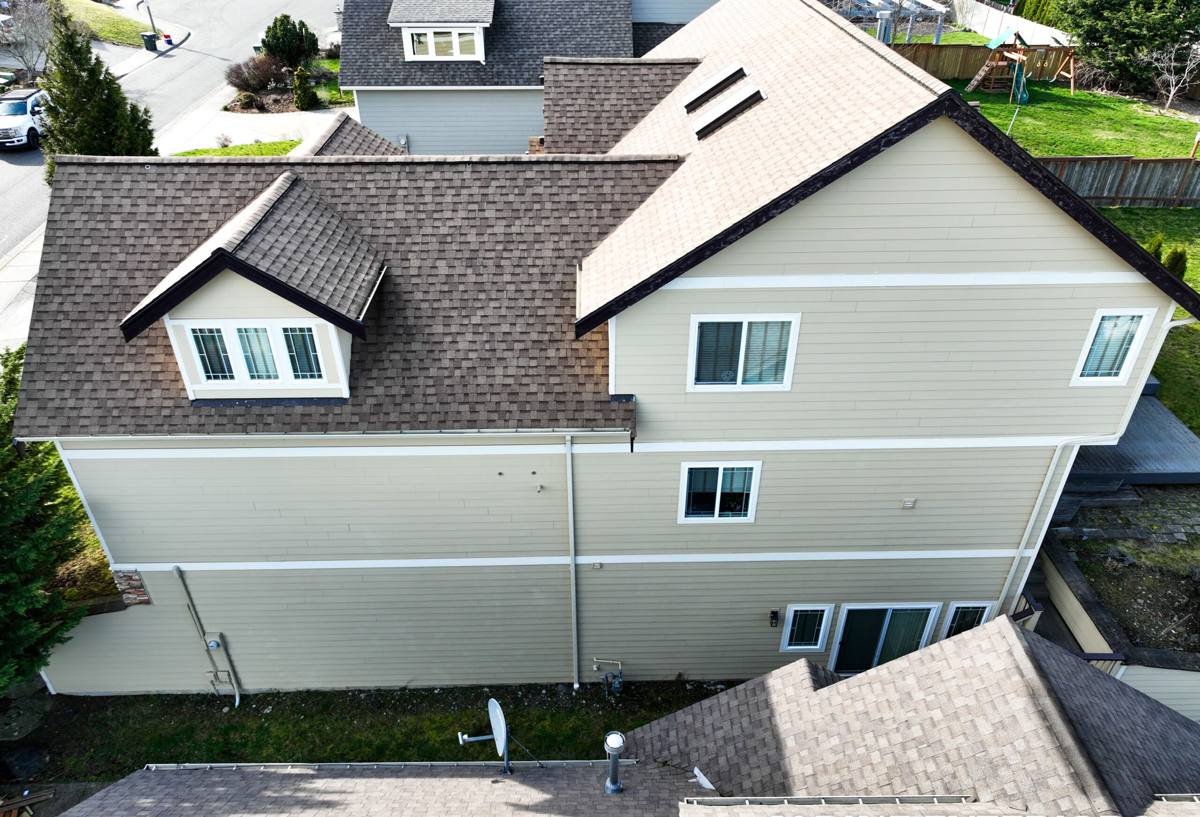
What Storm Damage Actually Looks Like on a Local Roof
Storm damage isn't always the dramatic, obviously-missing-shingles kind. On roofs in this area, it often shows up as slower, less visible problems that a storm accelerates or reveals.
Wind and Wind-Driven Rain
Sustained wind off the water can lift shingle tabs, crease ridge caps, and — more importantly — drive rain sideways under shingles and flashing that would otherwise shed water fine in a normal downpour. This is a big one locally: the damage isn't the wind itself, it's the water that gets pushed in behind materials that were never designed to handle rain coming in at an angle.
Impact Damage
Fir and cedar are common in yards throughout Whatcom County, and both drop limbs in windstorms. Impact damage can range from a few cracked or punctured shingles to a compromised section of decking, depending on the size of what came down and where it landed.
Flashing Failures
Flashing around chimneys, skylights, and roof-to-wall transitions is usually the first thing to give when a storm pushes rain at an unusual angle. Salt air accelerates corrosion on lower-grade or aging flashing, so a joint that held fine for years can fail during one storm once corrosion has thinned the metal.
Moss-Related Damage Exposed by Storms
Moss holds moisture against the roof surface year-round, and over time it lifts shingle edges and breaks down the granule surface that protects them from UV and rain. A roof with heavy moss buildup often looks fine from the ground right up until a storm finds the spot moss has already weakened, and then it leaks.
Gutter and Drainage Damage
Heavy rain events can overwhelm gutters that are already partly clogged with moss and debris, causing water to back up under the roof edge or drip wash down the fascia. It's rarely the storm alone — it's the storm plus a drainage system that wasn't keeping up beforehand.
What a Correct Storm Damage Repair Actually Involves
A repair that just patches the visible damage and ignores everything around it tends to fail again in the next storm. A correct repair covers the full chain of what let water in.
Full Inspection, Not Just the Reported Spot
We start by inspecting the whole roof plane, not only the area where damage or a leak was reported. Wind and rain damage often has more than one point of entry, and it's common to find a second weak spot near the first once we're up there.
Decking Check
If water has been getting in for any length of time, we check the decking underneath for soft spots or rot before doing any surface repair. Replacing shingles over compromised decking doesn't solve anything — it just hides the problem for another season.
Underlayment and Flashing
Damaged underlayment gets replaced, not patched over, and flashing is rebuilt to correctly shed water rather than just resealed with caulk. Caulk is a temporary fix at best in this climate — it breaks down under UV and repeated wet-dry cycles far faster than proper flashing work.
Shingle Matching and Tie-In
We match replacement shingles as closely as possible in style, profile, and color, and tie the new section into the surrounding roof so water flows correctly across the repair rather than pooling at the edges.
Moss and Algae Treatment Where Relevant
If moss contributed to the damage, we address it as part of the repair rather than leaving it to undo the work within a season or two.
| Response Type | What It Solves | What It Doesn't Solve |
|---|---|---|
| Emergency tarp | Stops active water intrusion right away | Not a repair — buys time until proper work can be done |
| Targeted repair | Fixes the specific storm-damaged area, decking, flashing, and underlayment | Won't address unrelated wear elsewhere on an older roof |
| Full replacement | Resets the whole roof system, including materials near end of life | Larger cost and project scope than most storm damage calls for |
Our Storm Damage Repair Process
- Inspection and documentation. We assess the damage, photograph it, and put together clear documentation — useful for your records and for an insurance claim if you're filing one.
- Temporary protection if needed. If a roof is actively leaking or has an open section, we get it tarped or otherwise protected before anything else, so the damage doesn't spread while repairs are scheduled.
- Written scope and estimate. You get a clear explanation of what's damaged, what needs to be repaired, and what it will cost — no vague line items.
- The repair itself. Decking, underlayment, flashing, and shingles are addressed in that order, not just patched at the surface.
- Cleanup and walkthrough. We clear debris and walk the completed repair with you so you know exactly what was done.
Repair vs. Replacement: How We Make That Call
Not every storm-damaged roof needs to be replaced, and we're not going to tell you it does. The decision usually comes down to a few honest factors.
| Factor | Leans Toward Repair | Leans Toward Replacement |
|---|---|---|
| Roof age | Roof is under roughly two-thirds of its expected service life | Roof is near or past its expected service life |
| Extent of damage | Damage is localized to one section or slope | Damage is spread across multiple areas or planes |
| Underlying condition | Decking and underlayment elsewhere are sound | Widespread moss, granule loss, or soft decking found beyond the storm damage |
| Material availability | Matching shingles are readily available | Discontinued or badly weathered materials make a seamless match unrealistic |
We'll tell you plainly which category your roof falls into and why, including when a repair is genuinely the right call and a full replacement would be overkill.
Working With Your Insurance Company
Wind and storm damage claims are common in this part of Washington, and having clear documentation makes the process go smoother. When we inspect storm damage, we photograph it thoroughly and describe the cause plainly — which matters, since adjusters distinguish between storm-caused damage and damage from ordinary wear, age, or lack of maintenance.
We're happy to meet an adjuster at the property, answer questions about the scope of repair, and provide our written estimate as part of your claim documentation. We don't handle the claim itself or make coverage promises — that's between you and your insurer — but we make sure the roofing side of the paperwork is accurate and complete.
Why a Crew That Already Works Bellingham and Ferndale Matters
Storm damage repair isn't just a technical skill — it's a familiarity skill. A crew that regularly works roofs in this part of Whatcom County has already seen how salt air corrodes specific flashing types, how moss builds up differently on north-facing versus south-facing slopes here, and which materials hold up to driving coastal rain versus which ones look fine on paper but underperform in this climate.
That familiarity also means faster, more accurate diagnosis. We're not guessing at how a Bellingham-area storm typically moves through a roof system — we've already repaired plenty of roofs after similar weather and know where to look first. And when a storm rolls through the county, having a local crew means a faster response for temporary protection, rather than waiting on a company that has to travel in from farther away.
Signs Your Roof Needs a Storm Damage Inspection
You don't need to wait for an obvious leak to have your roof checked after a storm. Look for:
- Shingle tabs, pieces, or granules in the yard or gutters after high wind
- Visible creasing, lifting, or curling on any roof slope
- Water stains on ceilings or upper walls, even faint ones
- Dented or dislodged flashing around chimneys, vents, or skylights
- Sagging or soft-feeling sections when walked, viewed from a ladder, or seen from the attic
- Sudden increase in moss growth in one concentrated area
- Debris or a fallen limb that made contact with the roof, even without visible damage from the ground
If you notice any of these after a storm, it's worth having it looked at before the next round of rain finds the weak point.
After the Repair: Keeping Salt Air and Moss From Coming Back
A good storm repair holds up longer with a bit of ongoing attention, especially in a climate that never really gives a roof a dry season to reset. Keeping gutters clear so water isn't backing up under the roof edge, watching for early moss regrowth on shaded slopes, and having flashing and fastener condition checked periodically all go a long way toward keeping the next storm from becoming the next repair call. We're glad to point out what to watch for on your specific roof once the repair is done.
If a recent storm has left you with damage, or you're just not sure whether what you're seeing needs attention, we'll come take a look. Fill out the form below for a free, no-pressure estimate — we'll tell you honestly what we find and what it would take to fix it right.