 Ferndale Roofing
 Siding That Has to Work Year-Round in Whatcom County
Bellingham and Ferndale sit in a tough spot for exterior siding. You've got salt-laden air rolling in off Bellingham Bay and the Strait of Georgia, driving rain that comes in sideways for months at a stretch, and a moss and algae season that seems to run longer every year. Add in the freeze-thaw swings we get in the winter and the UV exposure on the long summer days, and you have a climate that will find every weak point in a siding system within a few years, not a few decades.
We install fiber cement siding on homes throughout the Bellingham and Ferndale area, and this page is about what that specific job requires here — not a generic overview of siding in general. If you're comparing materials or contractors for a home near the bay, in the county's low-lying neighborhoods, or up in the hills where wind exposure is higher, the details below are what actually matter.
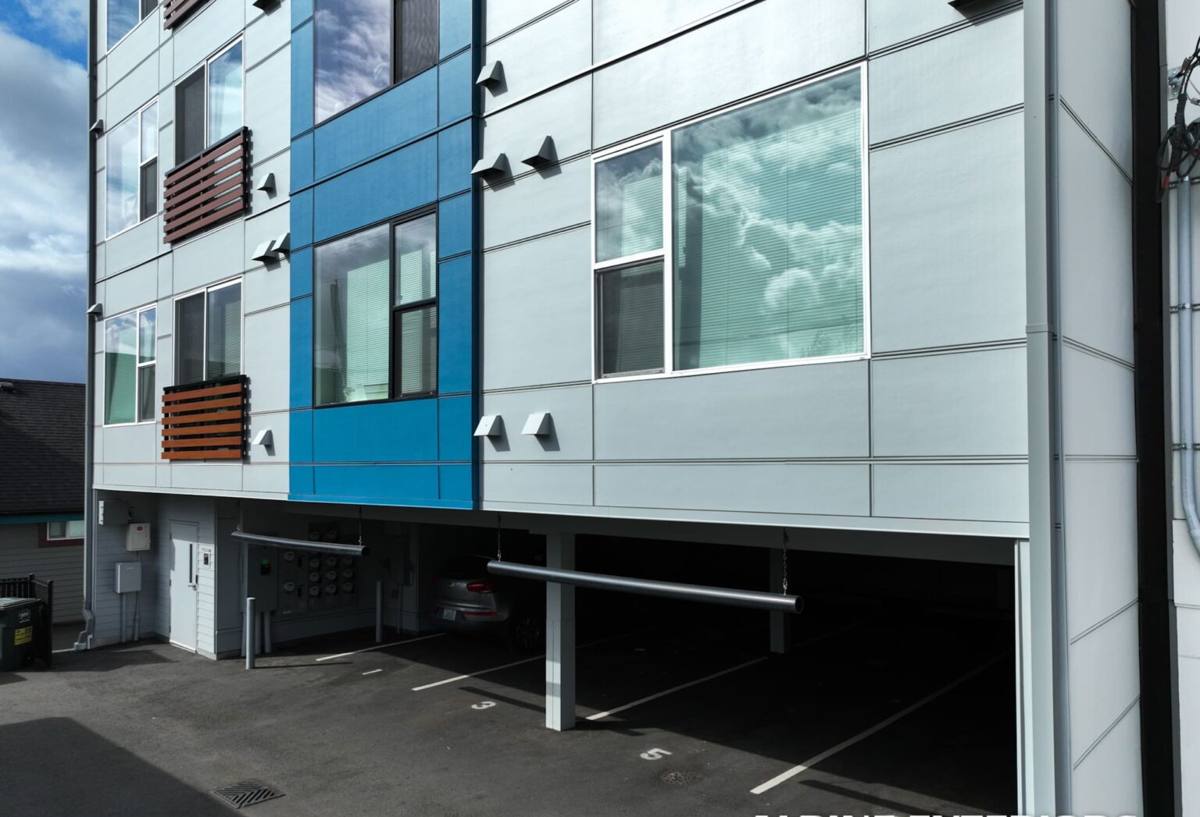
What Bellingham's Climate Does to Siding
Salt Air and Moisture
Homes closer to the water deal with airborne salt that accelerates corrosion on fasteners, trim, and any metal components in a siding system. It also keeps surfaces damp longer after rain, which matters a lot for materials that swell, rot, or absorb moisture. Fiber cement doesn't rot and doesn't feed mold the way wood-based products can, but the installation details — flashing, fastener choice, caulking — still have to account for a salt environment or you'll see premature corrosion at the weak points.
Driving Rain
Whatcom County doesn't just get a lot of rain — a good portion of it comes in wind-driven, which pushes water sideways into laps, seams, and penetrations that would stay dry in a calmer climate. This is where a lot of siding failures actually start: not from the material itself, but from water getting behind it through gaps that were never sealed or flashed correctly in the first place.
Moss and Algae Season
Between the shade from mature trees common in Bellingham and Ferndale neighborhoods and the extended damp season, north-facing walls and anything under tree cover are prone to moss and algae growth. This is mostly a maintenance and appearance issue rather than a structural one, but the type of siding finish you choose has a real effect on how much of that growth shows and how hard it is to keep clean.
Why We Only Install James Hardie Fiber Cement
We standardized on James Hardie products for every siding job we do, including here in the Bellingham and Ferndale area, and we don't install vinyl, LP SmartSide, primed wood, cedar, or other fiber cement brands. That's not a marketing position — it's a decision built around what holds up in this specific climate over the long haul.
- Non-combustible core. Fiber cement doesn't burn, which matters for wildfire-adjacent risk and is simply a better safety profile than wood or vinyl siding.
- Moisture-resistant by composition. The cement-based material doesn't absorb and swell with moisture the way engineered wood products can, which is a real advantage in a region with our rain totals.
- ColorPlus factory finish. The color is baked on at the factory under controlled conditions, which holds up better against fading and moisture intrusion than field-applied paint, and it's backed by its own finish warranty.
- Climate-engineered HZ product lines. Hardie makes region-specific formulations (HZ5 for our zone) engineered for wet, moderate climates like ours rather than a one-size-fits-all product.
- Strong transferable warranty. A meaningful, transferable warranty matters to resale value, which is relevant if you plan to sell in the years after a siding project.
We're upfront that this means we say no to some jobs where a homeowner specifically wants a product we don't stock. We'd rather be honest about that up front than install something we don't believe holds up here.
What a Correct Fiber Cement Install Actually Involves
Fiber cement siding is only as good as the installation behind it. In a climate like ours, the details below are where jobs succeed or fail over a 10-20 year horizon — and they're the same details that separate a rushed install from one that's built to last.
Flashing and Water Management
Every window, door, and roof-to-wall transition needs proper flashing and house wrap integration before a single piece of siding goes up. This is the single biggest factor in whether driving rain stays out of your wall assembly. Skipping or shortcutting this step is invisible on install day and expensive five years later.
Fastener and Clearance Standards
James Hardie specifies fastener types, spacing, and minimum clearances from grade, roofing, and decks. In a salt-air environment, using the right fastener material isn't optional — the wrong fastener corrodes and stains the siding face long before the siding itself would ever fail.
Caulking and Sealant Joints
Butt joints, trim intersections, and penetrations need the right sealant, applied correctly, or they become the entry point for the exact wind-driven rain this region is known for.
Ventilation Behind the Siding
A properly vented rainscreen gap lets any moisture that does get behind the siding dry out instead of sitting against the wall sheathing. This is especially important on shaded, north-facing walls where moss and algae growth signal that a surface stays damp longer.
Cost Factors for a Bellingham-Area Siding Project
Every home is different, but the factors below are what typically move the price on a fiber cement siding job in this area. We give firm numbers after walking the specific house, not before.
| Factor | Why It Matters Locally |
|---|---|
| Home size and wall complexity | More corners, gables, and trim details mean more cutting, flashing, and labor time |
| Existing siding removal | Older homes near Bellingham and Ferndale often have layers or trapped moisture damage that needs addressing first |
| Water management upgrades | Homes with prior flashing shortcuts may need additional house wrap or flashing work before new siding goes on |
| Trim and accessory choice | Hardie trim, soffit, and fascia packages add cost but keep the whole exterior system consistent |
| Access and site conditions | Slopes, tree cover, and tight lot lines common in this area can affect staging and labor time |
Why Local Experience in Bellingham and Ferndale Matters
A crew that installs siding all over the country will build to a generic spec. A crew that works Whatcom County regularly knows which walls in this area take the worst wind-driven rain, which neighborhoods deal with heavier moss and algae growth from tree cover, and how salt exposure near the water changes fastener and flashing choices. That local pattern recognition is the difference between a technically-correct install and one that's actually tuned to what this climate throws at a house.
We also know the practical side of working here: permitting expectations in Ferndale and Whatcom County, scheduling around our wet season, and sequencing a job so open wall sections aren't sitting exposed during a stretch of driving rain.
Signs Your Current Siding Is Losing the Battle
- Soft spots, bubbling, or visible swelling, especially on north-facing or shaded walls
- Persistent moss or algae staining that comes back within weeks of cleaning
- Visible rust or staining streaks running down from fasteners or trim
- Paint that's failing faster than it should, or peeling in sheets rather than fading evenly
- Gaps opening up at butt joints, corners, or trim intersections
- A musty smell or visible staining on interior walls that share an exterior wall with problem siding
Any one of these on its own isn't necessarily an emergency, but a combination of a few is usually a sign that moisture has been getting behind the siding for a while.
What to Expect From Our Process
We start with an on-site walk of the whole exterior, not just the section you called about, because siding problems are often connected to flashing or ventilation issues elsewhere on the house. From there we'll talk through what's actually needed: full replacement, targeted repair, or in some cases just better water management around existing siding. If replacement makes sense, we'll walk through Hardie's plank, panel, and shingle profiles along with the ColorPlus palette so you're choosing based on what actually fits the home, not just what's in stock.
During the install, we handle the water management details — flashing, house wrap, fastener spacing, ventilation — as the foundation of the job, not an afterthought behind the visible siding. That's the part that determines whether the project holds up through another twenty Whatcom County winters.
If your Bellingham or Ferndale home's siding is showing its age, or you're planning ahead for a replacement, we're glad to walk the exterior with you and give you a straight, no-pressure estimate — just fill out the form below.