 Ferndale Roofing
 Metal Roofing in Bellingham: A Material That Fits This Climate
Bellingham homes take a specific kind of beating year after year. There's salt-tinged air moving in off Bellingham Bay and the Salish Sea, rain that gets pushed sideways and up under roof edges by wind instead of just falling straight down, and a moss season that runs long on shaded, north-facing slopes almost regardless of the time of year. Asphalt shingles handle that combination reasonably well when they're installed correctly, but metal roofing handles it better in most of the ways that actually matter over the life of the roof: it sheds water off a smooth surface instead of trapping it in a porous mat, and it gives moss far less to grip onto in the first place.
We're based in Ferndale and work Bellingham regularly, which means we're not learning this climate from a manual — we're seeing it on real roofs, on real houses, across a full year of weather. This page is specifically about metal roofing for Bellingham properties: what the climate actually asks of the material, what a correct installation involves, and what our process looks like from first estimate to final walkthrough.
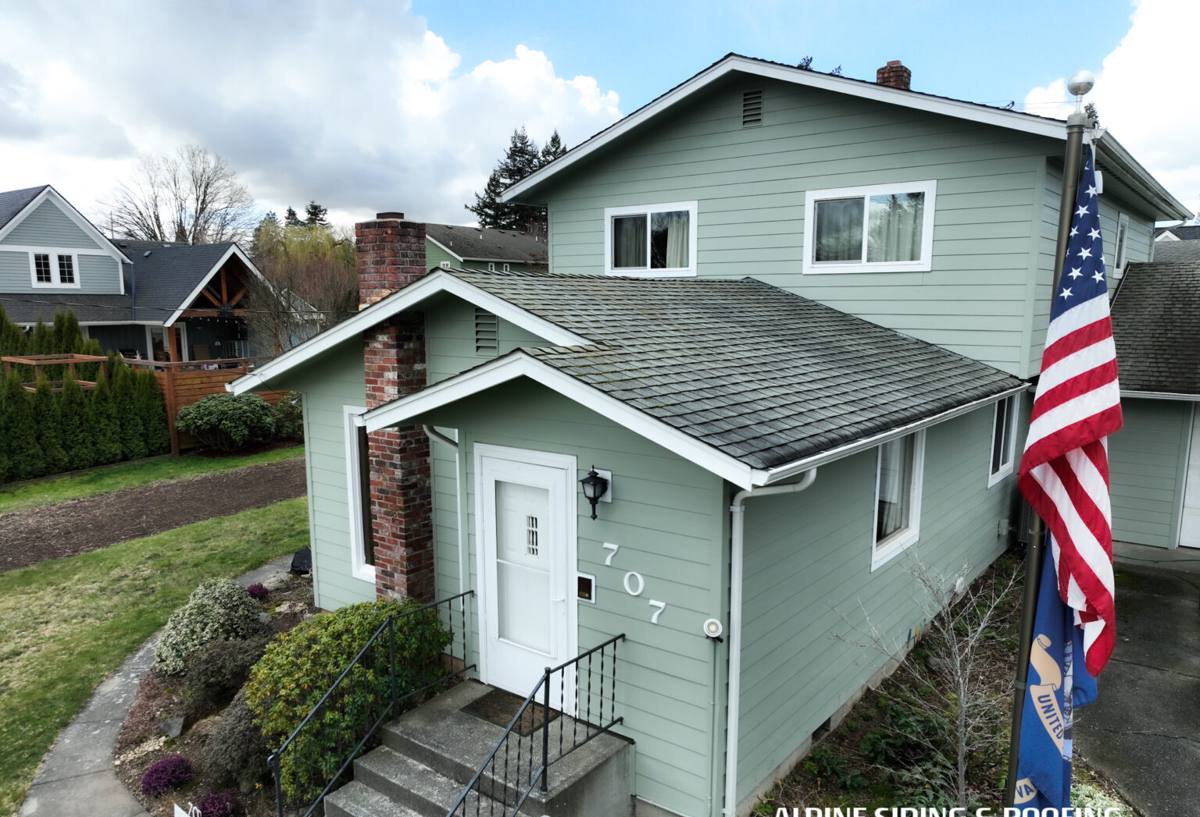
Why Bellingham's Climate Favors Metal Roofing
Salt Air and Corrosion Resistance
Homes closer to the bay deal with a steady drift of moisture-laden, salt-tinged air, not just occasional storm exposure. That kind of sustained contact is hard on cheap fasteners, exposed metal trim, and lower-grade flashing over time. Quality metal roofing systems are engineered specifically around corrosion resistance — proper substrate coatings, compatible fastener metals, and finishes built to hold up against sustained coastal air — which is a meaningfully different design problem than a roof built for an inland, drier climate.
Wind-Driven Rain
Rain in this part of Whatcom County doesn't arrive politely straight down. Wind pushes it sideways and drives it up under shingle edges, lap joints, and trim seams from angles a purely vertical rainfall assumption wouldn't account for. A metal roof's continuous panel runs and mechanically seamed or overlapped joints give water far fewer entry points to exploit, provided the underlayment, flashing, and fastening details underneath are done right — which is very much not automatic just because the material on top is metal.
A Long Moss and Mildew Season
Mild temperatures, tree cover, and near-constant dampness add up to extended moss and mildew growth on shaded and north-facing roof slopes across Bellingham. Asphalt's granular, porous surface gives moss spores something to take hold in. Metal's smooth, non-porous surface gives them far less purchase, which is one of the most practical differences homeowners actually notice over time — less scrubbing, less staining, and less of the slow granule erosion that moss root systems cause on shingles.
What a Correct Metal Roof Installation Actually Requires
Metal roofing has a reputation for longevity, and that reputation is earned, but only when the installation matches the material. A metal roof panel is only one part of a system, and the parts underneath it do most of the actual work of keeping water out.
- Compatible fastening system: Fasteners and any flashing metal need to be compatible with the panel material to avoid galvanic corrosion, which is a bigger concern in a salt-air environment than an inland one.
- Proper underlayment: A high-temperature synthetic or self-adhered underlayment underneath the panels is what actually protects the deck if wind-driven rain works its way past a seam or penetration.
- Panel expansion allowance: Metal panels expand and contract with temperature swings, and fastening or clip systems need to allow for that movement without buckling the panel or working fasteners loose over time.
- Flashing at valleys, penetrations, and wall intersections: Most roof leaks, on any material, start at a flashing detail rather than in the open field of the roof. Metal roofing doesn't change that fact; it just changes what correct flashing looks like.
- Ventilation: Trapped attic moisture works against any roofing material from underneath, and a metal roof needs the same attention to intake and exhaust airflow as any other system.
Skipping or rushing any one of these steps is how a genuinely good material ends up with a bad reputation it didn't earn. We treat the installation detail with the same seriousness as the panel choice itself.
Standing Seam vs. Exposed-Fastener Metal Panels
Not all metal roofing is the same system, and the difference matters in a climate like this one.
| System | How Water Sheds | Considerations for Bellingham |
|---|---|---|
| Standing seam (concealed fastener) | Interlocking raised seams with no exposed fasteners penetrating the panel face | Fewer penetration points for wind-driven rain to exploit; generally the stronger long-term choice this close to the bay |
| Exposed-fastener panel | Screws driven directly through the panel face into the deck or purlins | Lower upfront cost, but exposed fasteners and their washers are a maintenance item that needs periodic checking in a sustained-moisture, salt-air environment |
Both are legitimate systems, and the right one depends on budget, roof pitch, and how long you plan to stay in the home. We'll walk you through the honest trade-offs for your specific roof rather than pushing whichever system happens to be more profitable to install.
Repair, Recoat, or Full Replacement?
Not every issue on an existing metal roof means starting over. Isolated fastener backout, a damaged panel from impact, or a flashing detail that's come loose can often be repaired without touching the rest of the roof. But if corrosion has taken hold at multiple fastener points, or the panel system itself is an older, thinner-gauge product that's reached the end of its practical service life, patching usually just delays a bigger job rather than solving it. We'll tell you plainly which situation you're actually looking at before recommending anything.
Cost Factors for Metal Roofing in Bellingham
| Factor | What It Affects | Why It Matters Here |
|---|---|---|
| Panel system (standing seam vs. exposed-fastener) | Material and labor cost | Standing seam costs more upfront but has fewer long-term maintenance points in a salt-air, high-moisture environment |
| Roof pitch and complexity | Labor time, staging, and safety equipment | Bellingham's mix of hillside and older homes often adds dormers and roof intersections that complicate metal panel layout |
| Tear-off vs. new deck | Labor scope and hidden damage exposure | Removing old roofing reveals any deck rot from years of trapped moisture, common under aging roofs in this climate |
| Underlayment grade | Water resistance beneath the panels | A higher-grade synthetic or self-adhered underlayment matters more here than in a drier inland climate |
| Finish and coating | Long-term corrosion and fade resistance | Coastal salt exposure makes coating quality a bigger factor in how the roof looks and performs a decade in |
| Site access and terrain | Labor time and equipment needs | Sloped hillside lots and mature tree cover common in Bellingham can add staging time |
Real numbers depend on the specific roof, which is why we walk the property in person before quoting rather than pricing off square footage alone.
Signs Your Bellingham Roof Needs Attention
- Rust or corrosion spots forming at fastener heads or panel seams
- Moss or dark staining building up in shaded valleys or on north-facing slopes
- Panels that have visibly lifted, buckled, or shifted out of alignment
- Loose or backed-out fasteners on an exposed-fastener panel system
- Water staining on interior ceilings, especially after a wind-driven rain event
- Visible gaps or separation at flashing around chimneys, vents, or valleys
Our Process, Start to Finish
- In-person inspection: We walk the roof and the attic space where accessible, not just a drive-by look from the street.
- Honest assessment: We tell you whether you're looking at a repair, a partial replacement, or a full re-roof, and why.
- Written estimate: A clear, itemized bid covering panel system, underlayment, flashing scope, and ventilation, so you know exactly what you're paying for.
- Scheduled installation: Realistic timelines that account for this region's weather rather than promising a fixed date regardless of forecast.
- Final walkthrough: We review the finished work with you and handle cleanup before calling the job done.
Why Hiring a Crew That Already Works Bellingham Matters
Metal roofing rewards careful installation more than most materials do, because its long lifespan depends entirely on details that are invisible once the job is finished: fastener compatibility, expansion allowance, and flashing work that a rushed crew can get away with skipping for a year or two before it shows up as a leak. A crew that works Bellingham and the surrounding Whatcom County area regularly has already seen how salt air, wind-driven rain, and moss actually behave on real roofs across a full year, not just how a panel performs on a spec sheet. That experience shows up in small, practical decisions on install day — which valleys need extra flashing attention, which slopes hold moisture longest, and which details are worth the extra time so you're not dealing with a callback two winters later.
If you're weighing metal roofing for a Bellingham home, or you already have a metal roof that needs an honest look, we're glad to come take a look and walk you through what we find. Reach out using the form below to schedule a free, no-pressure estimate.