 Ferndale Roofing
 Windows Built for Bellingham's Marine Climate
Bellingham sits right up against Puget Sound, and that location shapes what a window has to survive here. Salt-laden air off the water, wind-driven rain that comes in sideways instead of straight down, and a moss season that can stretch from October into May all put steady stress on window frames, seals, and the wall assembly around them. A window that would hold up fine in a drier inland climate can fail early here if it wasn't installed with this specific environment in mind.
Window installation isn't just a measure-and-caulk job. It's flashing, drainage planes, sealant chemistry, and fastening choices working together so water has somewhere to go besides into your wall. We install windows across Whatcom County, and Bellingham homes in particular tend to show the same failure patterns over and over when the original install cut corners.
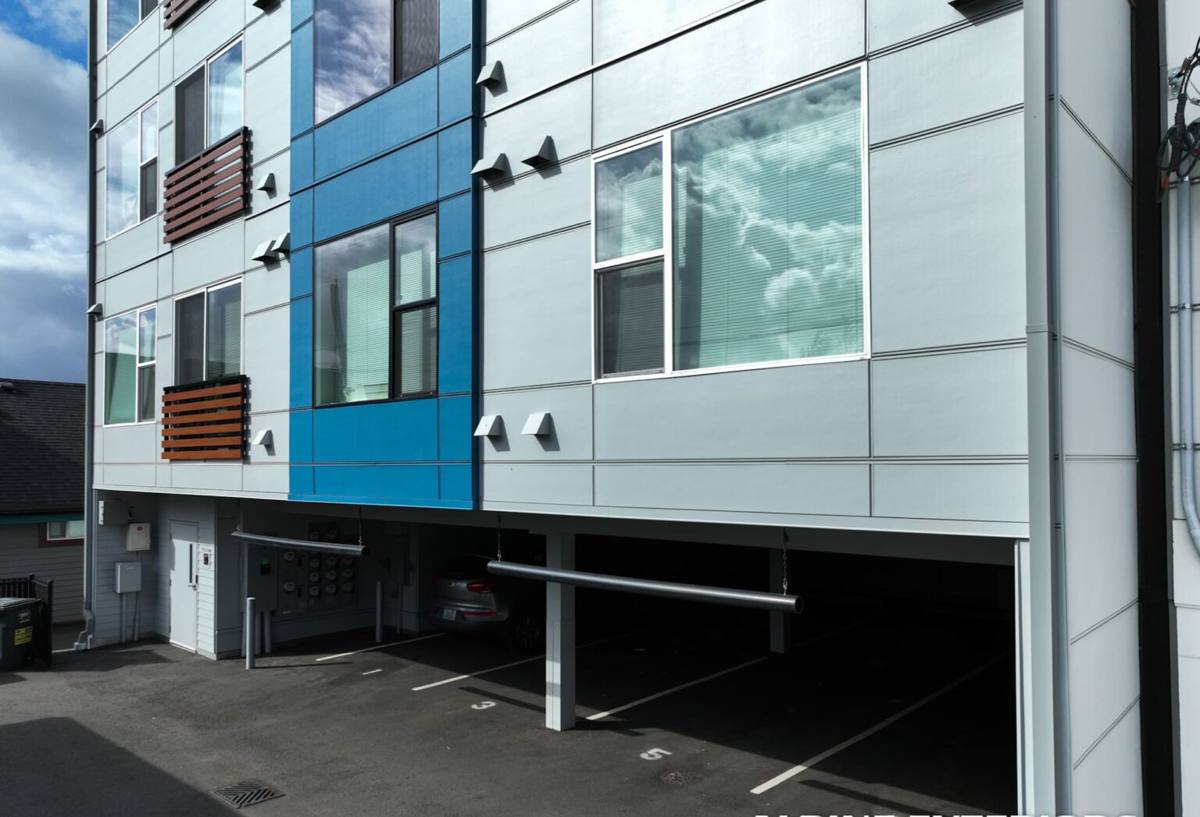
What the Local Climate Does to a Window Over Time
Salt Air and Corrosion
Proximity to the Sound means airborne salt settles on exterior surfaces, including window hardware, screen frames, and any exposed metal flashing or fasteners. Lower-grade fasteners and hardware corrode faster near the water than they would a few miles inland. It's a slow process, but over ten or fifteen years it shows up as stiff locks, pitted hardware, and streaking on the frame.
Driving Rain and Water Intrusion
Bellingham gets a lot of rain that arrives at an angle, pushed by wind off the water. That means water isn't just falling on a window, it's being driven against and under it. If the flashing details and sill pan weren't done correctly at install, wind-driven rain finds the path of least resistance, usually along the bottom corners of the frame, and works its way into the rough opening and wall cavity behind it.
Moss Season and Trapped Moisture
The long stretch of damp, low-light months every year isn't just a roofing issue. Moisture that gets past a poorly sealed window has nowhere to dry out for months at a time, which is when you start seeing soft trim, discolored drywall below a window, or a musty smell in a room that never quite airs out. Good drainage and sealing at install time is what prevents that slow-motion damage from ever starting.
Signs a Bellingham Home Needs New Windows
Most homeowners don't think about their windows until something is visibly wrong, but there are earlier warning signs worth catching before they become a bigger repair. Walk your exterior and interior window sills and look for:
- Fogging or a visible haze between panes of double- or triple-glazed glass, which means the seal has failed and the insulating gas is gone
- Soft, discolored, or bubbling trim and drywall around the interior frame, especially at the bottom corners
- Drafts you can feel with a hand near the frame on a windy day, even with the window closed and locked
- Windows that are difficult to open, close, or lock, which often points to a frame that's swelled, warped, or shifted
- Visible daylight or gaps around the frame from outside
- A noticeable jump in heating costs without any other explanation
- Condensation forming on the interior glass regularly, which can indicate poor seals or single-pane glass struggling against our damp winters
Any one of these on its own might just mean routine maintenance. Several together, especially on the side of the house that takes the most weather, usually means it's time to talk about replacement rather than repair.
What a Correct Window Installation Involves
Removing the Old Window Without Damaging the Opening
The rough opening around your window is only as good as its weakest point, and pulling an old window carelessly can crack sheathing or tear the existing weather-resistive barrier. We remove the old unit carefully and inspect the opening underneath before anything new goes in. If we find rot, soft framing, or a water-damaged sill, we address it before installing the new window, not after.
Sill Pans and Flashing
This is the detail that matters most in a climate like ours. A sloped sill pan under the window directs any water that gets past the glass or frame back out and away from the wall, instead of letting it pool and soak into the framing. Flashing tape integrates with the building's weather-resistive barrier in a shingle-lap pattern, so water is always directed downward and outward, never trapped behind a layer above it.
Insulation and Air Sealing
The gap between the window frame and the rough opening needs to be filled with a compatible low-expansion foam or backer rod and sealant, not packed tight with rigid foam that can bow the frame. Done correctly, this stops both air infiltration and the kind of moisture-laden drafts that lead to condensation on cold glass.
Interior and Exterior Finish Work
Exterior trim and caulking need to shed water, not just look finished. Interior trim gets reset cleanly, and we make sure the window operates smoothly, locks fully, and seals tight before we call the job done.
Choosing the Right Window Type for This Climate
There's no single "best" window material for every home. The right call depends on your budget, your home's style, and how much exposure that particular wall gets to wind and rain. Here's how the common options compare for a Bellingham home:
| Frame Material | Moisture Resistance | Maintenance | Typical Lifespan |
|---|---|---|---|
| Vinyl | Good — won't rot, handles moisture well | Low — occasional cleaning | 20-30 years |
| Fiberglass | Very good — dimensionally stable in wet/dry cycles | Low | 30-40 years |
| Wood-clad | Good on the exterior, but interior wood needs care | Moderate to high — finish maintenance matters | 20-30 years with upkeep |
| Aluminum | Prone to condensation without thermal breaks | Low | 20-30 years |
Vinyl and fiberglass tend to be the practical choice for most Bellingham homes because they don't rely on a painted or finished surface to keep moisture out. Wood-clad windows can look great and perform well, but they ask more of the homeowner in terms of upkeep, particularly on walls that take direct weather. We'll walk through the trade-offs honestly based on your home's exposure rather than pushing one option across the board.
Our Window Installation Process
- On-site assessment. We look at your existing windows, the exposure each wall gets, and any signs of past water intrusion before recommending anything.
- Measurement and product selection. We measure precisely and go over frame material, glazing options, and grille or hardware styles that fit your home.
- Opening inspection at removal. Each old window is removed carefully, and we check the framing and sheathing underneath before proceeding.
- Flashing and sill pan installation. This is done to shed water outward, integrated properly with the existing weather barrier.
- Window setting and shimming. The new unit is set level, plumb, and square, then fastened per manufacturer specifications.
- Insulation and sealing. The gap around the frame is filled and sealed correctly, inside and out.
- Trim and finish work. Interior and exterior trim is reinstalled or replaced, and every window is tested for smooth operation and a full seal.
- Final walkthrough. We go over the completed work with you before we consider the job finished.
What Affects the Cost of Window Installation
Every home is different, and we won't quote a number without seeing the actual openings, but these are the main factors that move the price up or down:
| Factor | Why It Matters |
|---|---|
| Frame material | Vinyl is typically the most budget-friendly; fiberglass and wood-clad cost more upfront |
| Window size and quantity | Larger openings and whole-house replacements naturally cost more than a single window swap |
| Insert vs. full-frame replacement | An insert reuses the existing frame where it's still sound; full-frame replacement is more involved but necessary when there's rot or damage |
| Glazing package | Double- vs. triple-pane and low-E coatings affect both price and energy performance |
| Existing damage | Rotted sheathing or framing discovered during removal adds repair time before the new window can go in |
| Access and site conditions | Second-story windows, tight landscaping, or removal of interior finishes can add labor |
As a general range, straightforward vinyl window replacements often run from roughly $500 to $1,200 per window installed, with fiberglass, wood-clad, larger openings, or full-frame work running higher. We'll give you a firm, itemized number after we've actually looked at your windows.
Why Choose a Crew That Already Works in Bellingham
A crew that works regularly in Bellingham and across Whatcom County has already seen how this climate treats window installations that were done without accounting for it. We know which details actually matter here: the sill pan slope, the flashing sequence, the sealant that holds up against salt air and constant damp rather than drying out and cracking after a few winters. That's different from following a generic install manual written for a drier region.
We're also familiar with local permitting requirements and typical construction in this area's homes, which keeps the job moving without surprises. Working with a crew based nearby also means we're accountable if something needs a follow-up look after the fact, not a call center hours away.
If you're seeing drafts, fogged glass, or water staining around your windows, or you're just ready to stop fighting old windows through another wet Bellingham winter, we're happy to take a look. Fill out the form below for a free, no-pressure estimate — we'll assess your windows honestly and tell you what we'd actually recommend.