 Ferndale Roofing
 Why Decks Take a Beating in the Bellingham Area
If you own a deck anywhere between Bellingham and Ferndale, you already know it doesn't age like a deck in a drier climate. Whatcom County sits close enough to the water that salt-laden air reaches yards that are nowhere near the beach, and it settles into fasteners, flashing, and end grain long before most homeowners notice anything wrong. Add in months of driving rain that finds every gap in a ledger board or a poorly flashed stair stringer, and then a moss season that can stretch from fall through spring, and you've got a structure that's under near-constant moisture pressure for most of the year.
None of that means a deck is doomed. It means repairs here have to account for things a repair crew in a dry inland climate never has to think about — how a board dries out between rain events, where moss is going to root itself again within weeks if it's just pressure-washed off, and which fasteners will keep holding after a few winters of freeze-thaw and salt exposure. This page is about deck repair specifically for the Bellingham area, not a general "we fix decks" pitch.
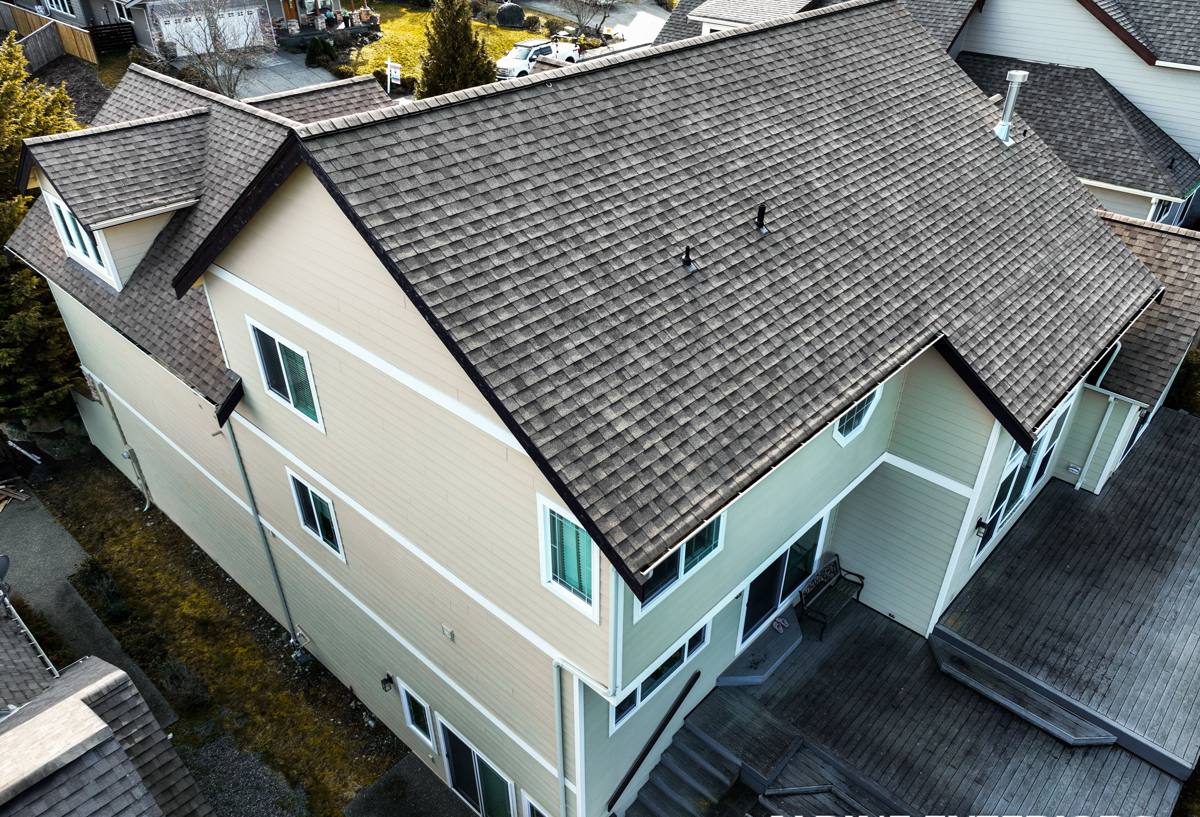
Signs Your Deck Needs Repair — Not Just a Wash
A lot of deck problems in this region get mistaken for cosmetic issues when they're actually structural warnings. Here's what we look for, and what it usually means:
- Soft or spongy decking boards — usually means moisture has been sitting under the board's finish longer than it should, and rot has started even if the surface still looks intact.
- Dark streaking or green film that returns fast after cleaning — a sign the deck isn't drying out between rains, often because of poor airflow underneath or boards laid too tight.
- Rust bleeding from fastener heads — coastal air corrodes standard fasteners faster than people expect; once you see rust streaks, the fastener underneath is usually already compromised.
- Wobbly railings or stairs — often a ledger board or post base issue, not just a loose screw, and it's a safety item we won't leave half-fixed.
- Gaps opening up at the ledger board where the deck meets the house — this is one of the most serious issues we see, because it's often where water has been getting behind the siding and framing for a while.
If you're only seeing one or two of these, it's very likely a repair job, not a full rebuild. That's actually the more common outcome we find once we're actually up on the deck looking at framing, not just guessing from the ground.
What a Correct Deck Repair Actually Involves
It Starts Underneath, Not on the Surface
A repair that only addresses what you can see from a lawn chair is a repair that fails again in a season or two. Before we touch a board, we get underneath the deck (or pull boards where we have to) to check the ledger connection, the joists, the post bases, and any flashing. In this climate, hidden rot at a ledger board or joist end is far more common — and far more dangerous — than surface damage that's obvious to the homeowner.
Matching Repair Scope to Actual Damage
Not every damaged board needs the whole deck rebuilt around it, and not every deck with a few soft boards is fine to just patch. Part of doing this correctly is being honest about where the line is — which we cover in more detail below.
Getting the Water Management Right
Most deck failures we see in Whatcom County trace back to water that had nowhere to go. Correct repair work means restoring or improving flashing at the house connection, making sure boards have proper gapping for drainage and airflow, and not just sealing over a moisture problem cosmetically.
Deck Materials We Commonly Repair in the Bellingham Area
What your deck is built from changes what a repair should look like. Here's how the common options behave in this climate and what that means for repair work:
| Material | How It Behaves Here | Repair Considerations |
|---|---|---|
| Pressure-treated wood | Affordable and repairable, but end grain and cut edges are vulnerable if not re-sealed after any repair | Board-by-board replacement is usually straightforward; framing underneath needs a close look for rot |
| Cedar | Naturally moisture-resistant but still needs regular sealing in this rainfall pattern, especially on horizontal surfaces | Matching weathered cedar color takes care; structural repairs are similar to treated lumber |
| Composite decking | Resists rot in the boards themselves, but moss and algae still grow on the surface in shaded, damp spots | Board replacement is simple if the discontinued-color issue doesn't apply; framing underneath (often still wood) still needs inspection |
| Older or mixed-material decks | Common on established homes — original framing paired with replaced decking over the years | Requires checking hidden framing that may be older and more weathered than the visible surface suggests |
We don't push composite over wood, or vice versa, as some kind of universal upgrade. Each has real trade-offs in maintenance, moisture behavior, and repair approach, and the right call depends on your existing structure and how the deck is used.
Our Repair Process
- On-site inspection. We look above and below the deck surface — framing, ledger, fasteners, and drainage — before recommending anything.
- Honest scope and estimate. You get a clear picture of what's damaged, what's still sound, and what it costs to fix, in plain language.
- Repair the source, not just the symptom. If water intrusion caused the damage, we address the flashing or drainage issue as part of the repair, not as an afterthought.
- Structural work before cosmetic work. Joists, ledger connections, and post bases get addressed before any board replacement or refinishing.
- Finish and protect. Cut ends and replaced boards get properly sealed or finished so the repair doesn't become the next weak point.
Repair or Replace? Cost Factors to Weigh
This is the question almost every homeowner asks, and the honest answer depends on a few specific factors rather than the age of the deck alone:
| Factor | Leans Toward Repair | Leans Toward Replacement |
|---|---|---|
| Framing condition | Joists and ledger are structurally sound | Widespread rot in joists, ledger, or posts |
| Extent of damage | Isolated boards or a single problem area | Damage spread across most of the deck surface |
| Age relative to material | Within expected service life for the material | Well past typical lifespan for that material and exposure |
| Code and safety issues | No major railing height, spacing, or attachment issues | Structure doesn't meet current safety requirements |
| Budget goals | Want to extend life affordably in the near term | Planning a longer-term investment or a layout change |
Exact pricing depends on square footage, material, and how much of the structure underneath needs work — we'll give you real numbers after we've actually looked at the deck, not a phone estimate.
Extending the Life of a Repaired Deck
A good repair is only half the equation in this climate — what you do afterward matters just as much given how much moisture and moss pressure the area sees. A simple seasonal checklist we recommend to clients:
- Clear leaves and debris from between boards before fall rains set in — trapped debris holds moisture against the wood.
- Check and re-seal any exposed cut ends or newly replaced boards each year until the finish is fully established.
- Treat moss and algae growth early in shaded or low-airflow areas rather than waiting for it to spread.
- Inspect fasteners and hardware annually for rust or loosening, especially on stairs and railings.
- Confirm gutters and downspouts near the deck aren't dumping extra water onto or under the structure.
- Keep an eye on the ledger board connection each spring — it's the single most common failure point we see.
Why a Local Crew Matters for Deck Repair
Deck repair isn't just carpentry — it's carpentry that has to account for how this specific region's weather attacks wood and hardware over time. A crew that works Bellingham and Ferndale regularly knows which fastener grades hold up against salt air, how far moss season typically stretches here, and what proper drainage and flashing details look like for homes dealing with sustained coastal rainfall. That's knowledge you build by doing the work locally, year after year, not something you get from a general repair checklist.
We're not going to recommend tearing out a deck that just needs a few boards and a flashing fix, and we're not going to patch over a structural problem to save an afternoon. Our goal is a repair that actually holds up through another Whatcom County winter.
Get a Free, No-Pressure Estimate
If your deck has soft spots, rust streaks, a wobbly rail, or you're just not sure whether it needs a repair or something more, we're happy to take a look and give you an honest assessment. Fill out the form below for a free estimate — no pressure, no upsell, just a straight answer about what your deck actually needs.