 Ferndale Roofing
 Bellingham's Siding Problem Isn't Like Everyone Else's
Ask a siding crew from Seattle or Spokane to explain why Bellingham siding fails, and you'll get a generic answer about "rain damage." That's not wrong, but it's incomplete. Homes near Bellingham Bay deal with a specific combination of stresses: salt-laden air moving off the water, driving rain that hits walls at an angle instead of falling straight down, and a moss season that runs longer here than almost anywhere else in the state. Each of those factors attacks siding differently, and a repair that doesn't account for all three usually fails again within a few years.
We're a Ferndale-based crew, so this isn't abstract for us. We drive these streets, we've pulled siding off homes in this exact corridor, and we've seen what actually causes failure here versus what homeowners assume is the cause. That local pattern recognition is the difference between a repair that solves the problem and one that just covers it up.
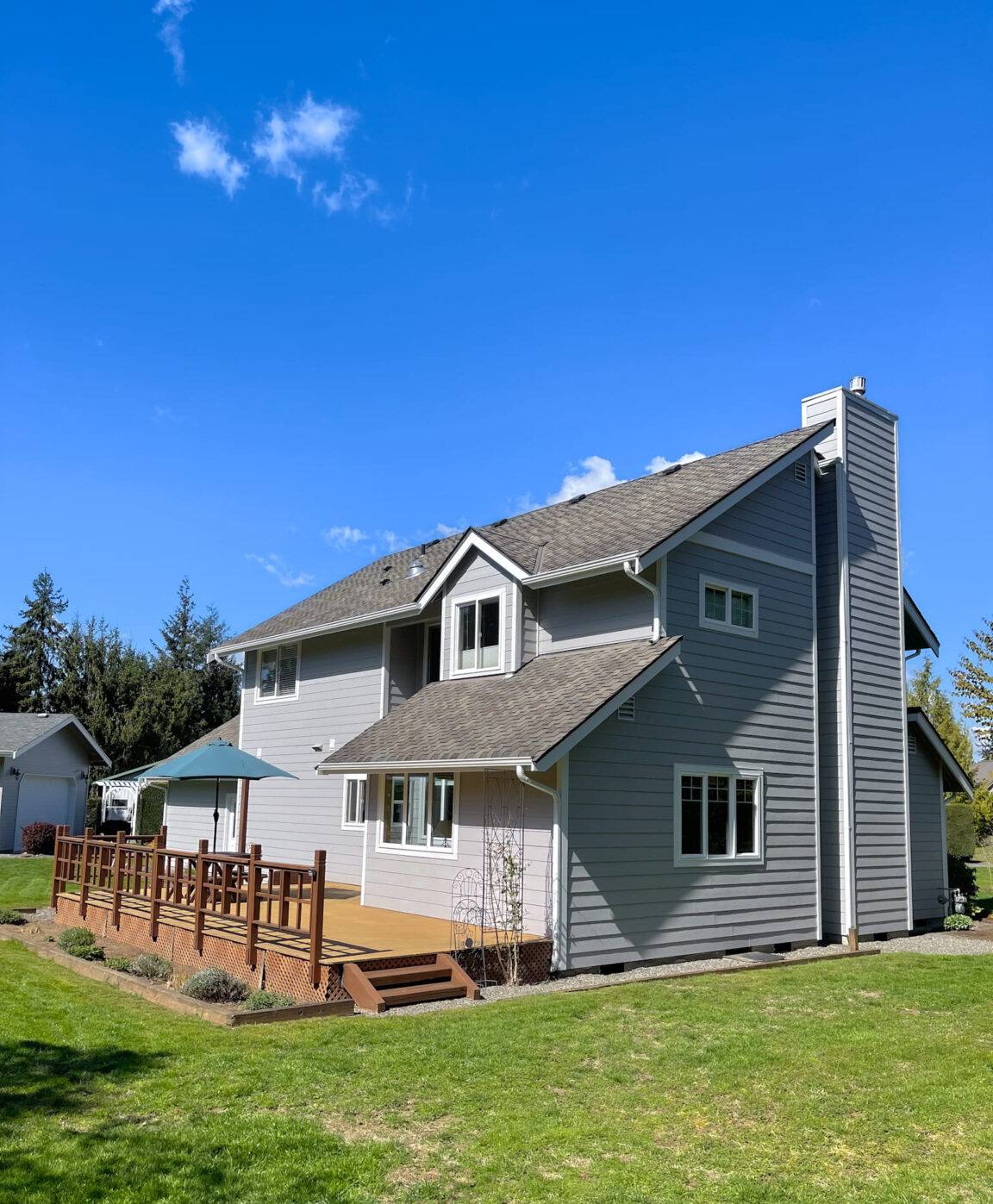
Why Salt Air, Rain, and Moss Age Siding Faster Here
Salt Air and Corrosion
Airborne salt from Puget Sound doesn't just affect metal — it accelerates the breakdown of caulking, fasteners, and paint film on siding. Nails and trim screws that would last decades inland can corrode faster near the water, and once a fastener weakens, the siding panel it's holding starts to move. Movement opens gaps, and gaps let water in.
Driving Rain and Wind-Driven Moisture
Whatcom County doesn't just get a lot of rain — it gets rain pushed sideways by wind coming off the water. That matters because siding systems are designed to shed water moving downward, not water being forced upward or sideways into laps, seams, and butt joints. A repair that doesn't restore the original overlap and drainage path will leak again the next time a storm comes through at the wrong angle.
Moss, Algae, and Trapped Moisture
Bellingham's long damp season is ideal for moss and algae growth, especially on north-facing walls and anywhere siding sits close to trees or shade. Moss itself doesn't eat through fiber cement, but it holds moisture against the surface far longer than bare siding would dry on its own. That extended dampness is what breaks down caulk, softens trim, and — on wood-based products — leads to rot underneath.
Signs Bellingham Homeowners Should Watch For
Most siding repairs we're called out for started as something small that got ignored for a season or two. Catching these early is the single biggest factor in whether a job stays a repair or turns into a replacement.
- Soft or spongy spots when you press on the siding, especially near the bottom courses
- Visible gaps or separation at butt joints and corners
- Peeling or bubbling paint that keeps coming back in the same spot
- Dark streaking or persistent moss growth that returns quickly after cleaning
- Nail heads popping out or visible rust bleeding through the finish
- Warping, bowing, or a wavy appearance across a section of wall
- Water stains on interior walls near exterior corners or window trim
- Increased pest activity — carpenter ants and similar pests often signal hidden moisture damage
If you're seeing more than one or two of these in the same area of the house, there's a good chance the damage extends further than what's visible from the outside.
What a Correct Siding Repair Actually Involves
A lot of "siding repair" in this region amounts to caulking a crack and repainting over it. That buys a season, maybe two, before the same spot fails again. A repair done correctly starts by figuring out why the damage happened in the first place, not just patching the symptom.
Diagnosing Before Repairing
We pull back the damaged section and check what's underneath — the house wrap or weather barrier, the flashing at windows and corners, and the framing itself. If water has been getting behind the siding, the surface damage is often the smallest part of the problem. Skipping this step is the single most common reason repairs don't hold up.
Restoring the Water Management System
Siding is one layer of a larger water management system that includes house wrap, flashing, and properly lapped seams. A repair has to reintegrate the new material into that system correctly — flashing tucked behind the layer above it, laps overlapping in the right direction, and fasteners placed where they won't create a new entry point for water.
Matching Material and Finish
Because we only install James Hardie fiber cement siding, repairs on Hardie siding are usually the cleanest to match — the ColorPlus factory finish and standard plank profiles make it possible to blend a repaired section into the surrounding wall. Repairs on other materials are more limited, which we explain in the next section.
Sealing and Finishing Correctly
The final step is sealing joints with a high-quality, paintable exterior sealant rated for the movement and moisture exposure this climate produces, then finishing with paint or factory-matched color so the repair doesn't stand out as an obvious patch.
Why We Repair and Recommend James Hardie, Not Other Siding Materials
We get asked fairly often why we won't repair a section of vinyl or LP SmartSide by simply patching in more of the same material, or why we steer homeowners toward a fuller Hardie repair instead. It comes down to what we've seen hold up in this climate versus what doesn't.
Vinyl siding can crack in cold snaps and warp in direct sun, and once a panel is damaged, exact color matches get harder to find as products age off the market — a patched section often looks visibly different within a year or two. LP SmartSide and other engineered wood products perform reasonably well when the factory finish is fully intact, but once that finish is breached — which is exactly what happens in a spot that needs repair — the wood-based core is vulnerable to the kind of sustained moisture Bellingham's moss season produces. Cedar and primed spruce have real aesthetic appeal, but they demand a maintenance schedule (re-staining, re-caulking, repainting) that most homeowners underestimate until they're dealing with rot at a butt joint or corner.
James Hardie fiber cement is what we install and repair with because it's non-combustible, dimensionally stable in wet-dry cycling, and holds its factory ColorPlus finish for years without the repaint cycle other materials require. When we repair a home already sided in Hardie, we can typically match the existing HZ5 product line and color for a seamless result. When a repair on another material has failed repeatedly, we'll walk you through an honest comparison of patch-again versus transition to Hardie on that section — no pressure, just the trade-offs as we see them.
Our Bellingham Repair Process, Start to Finish
- Inspection: We look at the damaged area and the surrounding wall, checking for hidden moisture, compromised flashing, and the true extent of the problem.
- Diagnosis and estimate: We explain what we found in plain terms, what's causing it, and what it will take to fix it correctly — including if a small section actually needs more than a patch.
- Removal: Damaged siding, trim, and any compromised house wrap or flashing come off carefully to avoid widening the affected area.
- Substrate repair: Any rotted sheathing or framing is addressed before new siding goes back on — covering up a rotten substrate is how repairs fail twice.
- Reinstallation: New flashing, house wrap integration, and matched siding material go in following manufacturer installation specs, not shortcuts.
- Sealing and finish: Joints are sealed with the right exterior-rated product, and color-matched to blend with the surrounding siding.
- Final walkthrough: We show you exactly what was done and why, and flag anything else on the exterior worth keeping an eye on.
Repair or Replace? What Actually Drives That Decision
Homeowners often ask us to just quote "the repair" before we've looked at the wall, but the right call depends on a handful of factors that vary house to house. Here's how we weigh it.
| Factor | Leans Toward Repair | Leans Toward Replacement |
|---|---|---|
| Extent of damage | Isolated to one wall or section | Recurring across multiple walls |
| Underlying moisture | Localized, caught early | Widespread rot in sheathing/framing |
| Age of existing siding | Siding is under 10-15 years old | Siding is near or past its expected service life |
| Material | Existing Hardie siding, matchable | Discontinued or unmatchable material |
| Cause of damage | One-time event (impact, isolated flashing failure) | Systemic issue (original install defects, chronic moisture path) |
We'll always tell you honestly which side of this table your home falls on rather than defaulting to the bigger job.
Why Hiring a Crew That Already Works Bellingham Matters
Siding repair looks straightforward on paper, but the details that make it hold up long-term are learned by working the same conditions over and over. A crew that regularly works Bellingham and the surrounding Whatcom County communities already knows which wall orientations take the worst weather, how moss behaves through a wet winter here, and what water intrusion patterns actually look like on homes exposed to Sound weather rather than working from a generic training manual.
There's also a practical side: a local crew can respond faster if a repair needs a follow-up visit, understands regional permitting norms, and isn't learning Whatcom County's climate on your dime. That familiarity shows up in fewer callbacks and repairs that are diagnosed correctly the first time.
Protecting the Repair After We Leave
A correct repair should last, but a few simple habits extend that life significantly in this climate:
- Keep gutters clear so overflow doesn't run down the siding face repeatedly
- Trim back vegetation that keeps a wall shaded and damp longer than the rest of the house
- Rinse visible moss or algae growth before it establishes rather than letting it build up over a season
- Re-caulk high-movement joints (around windows, at corners) on the manufacturer's recommended schedule
- Walk the exterior once or twice a year, especially after a hard windstorm, and flag anything that looks off early
Catching a small issue in year two is a five-minute fix. Catching it in year six, after moisture has had time to work, is a much bigger job.
Get an Honest Look at Your Siding
If you're dealing with a soft spot, a recurring stain, or siding that just doesn't look right in one section of your Bellingham home, it's worth having someone look at it before another wet season sets in. We'll give you a straight answer on what's causing it, what it will take to fix correctly, and whether a repair or a bigger fix makes more sense for your situation — no pressure, no upsell. Reach out for a free, no-obligation estimate using the form below.