 Ferndale Roofing
 Roof Repair Built for Nooksack Homes
Nooksack sits inland along the Nooksack River, in the valley and foothill country that stretches east from Ferndale toward the Cascade foothills. It's a different setting than the coastal edge of the county, but the weather that drives roof damage here comes from the same source: wet Pacific storm systems that push driving rain up the valley, marine air off the Strait that carries a faint salt content even this far inland, and a mild, damp climate that keeps shaded roof slopes wet for months at a stretch. We do repair work in Nooksack regularly, and the way we diagnose and fix a roof here reflects what this specific stretch of Whatcom County actually does to roofing materials over time.
This page covers roof repair specifically — not a full tear-off and replacement. Most roof problems we're called out for in Nooksack are fixable without replacing the whole roof, provided the underlying deck hasn't been compromised by long-term hidden moisture. Knowing the difference, and doing the repair correctly the first time, is the whole job.
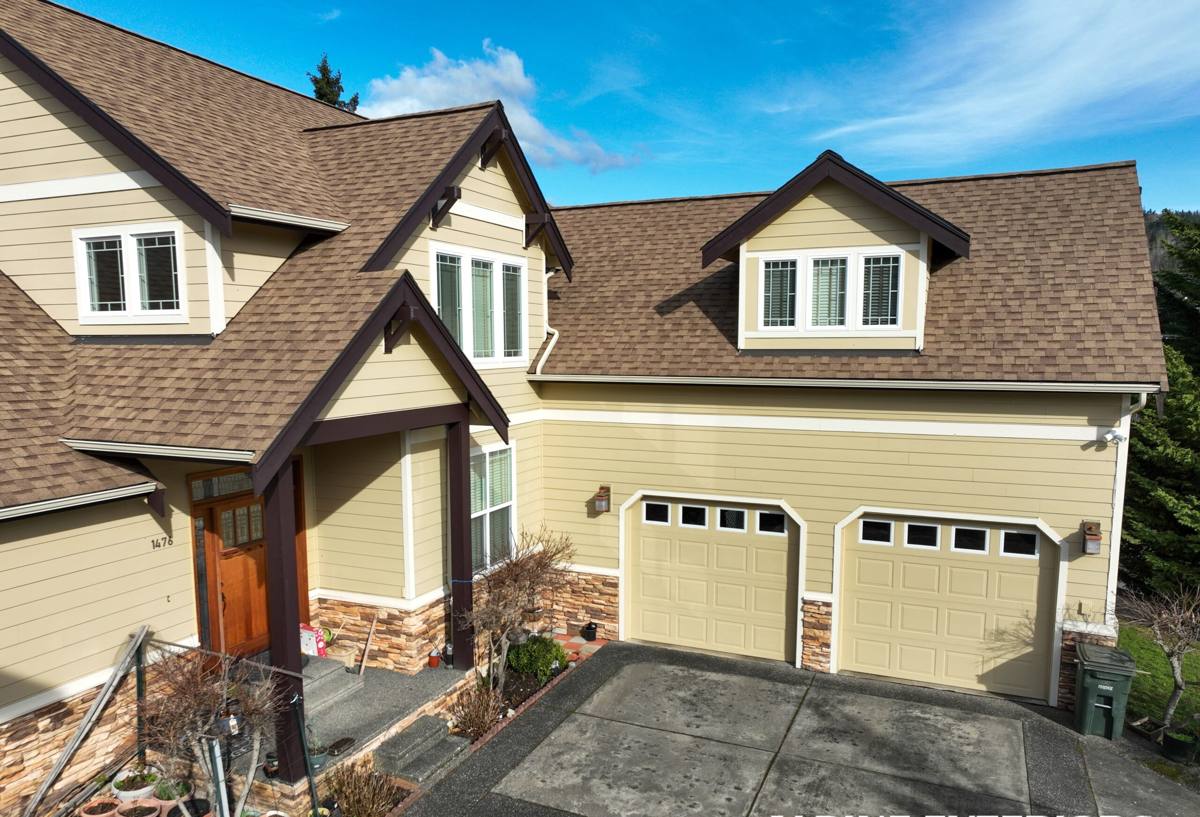
What the Nooksack Valley Climate Does to a Roof
Driving Rain and Wind-Pushed Water
Storms moving through this part of Whatcom County rarely drop rain straight down. Wind pushes it sideways and up under shingle edges, into valleys, and against flashing that was only ever detailed to shed water falling vertically. A roof that looks fine from the ground can still be taking on water at a valley, a step-flashed wall intersection, or a pipe boot that's lost its seal, simply because those details weren't built for wind-driven rain in the first place.
Marine Air That Reaches Up the Valley
Nooksack is further from the water than Ferndale itself, but the marine air that defines this whole region doesn't stop at the coastline. It moves inland with weather systems, and metal flashing, fasteners, and drip edge that aren't corrosion-resistant show it over the years in the form of rust streaks, loosened fasteners, and flashing seams that have opened up just enough to let water in.
A Long Moss and Organic Growth Season
Mild temperatures and sustained dampness add up to a moss season that runs long here, and many Nooksack properties sit on tree-lined or partially forested lots that shade roof slopes for much of the day. Moss and algae growth on a roof isn't just cosmetic — it holds moisture directly against the shingle surface, works its way under tabs and granule layers, and accelerates the kind of wear that eventually turns into a leak.
Shade From Mature Tree Cover
Heavier tree cover on many rural and semi-rural Nooksack lots means more debris on the roof — needles, cones, and leaf litter that collect in valleys and behind chimneys and vents. Left alone, that debris holds water against the roof surface long after the rest of the neighborhood has dried out, which is one of the more common repair calls we get in this area.
The Roof Repair Problems We See Most in Nooksack
Repair calls in this area tend to fall into a handful of recurring categories. None of these require a full replacement on their own, but each one gets worse the longer it sits.
- Flashing failures at valleys, chimneys, skylights, and wall intersections — the single most common source of an actual leak, far more often than the shingle field itself
- Wind-lifted or missing shingles after a storm, especially along ridges and exposed roof edges where wind uplift is strongest
- Deteriorated pipe boots and vent flashing, where rubber or plastic collars crack and shrink years before the shingles around them show any wear
- Moss and organic growth damage on shaded, north-facing slopes, where sustained moisture has degraded granule coverage or lifted shingle tabs
- Debris-clogged valleys holding standing water against the roof deck after storms, particularly on tree-covered lots
- Isolated storm damage from wind or falling branches that's damaged a section of an otherwise sound roof
Repair or Replace? How We Make That Call Honestly
The honest answer depends on the age of the roof, how widespread the damage is, and whether the deck underneath has taken on long-term hidden moisture. We walk the roof, look at the attic from the inside where we can, and give you a straight answer rather than defaulting to whichever job pays more.
| Factor | Leans Toward Repair | Leans Toward Replacement |
|---|---|---|
| Roof age | Well within expected service life | At or past the material's typical lifespan |
| Extent of damage | Isolated to one or two areas | Spread across multiple slopes or systemic |
| Deck condition | Solid, no soft spots found | Soft, stained, or rotted decking discovered |
| Repair history | First or second repair on this roof | Repeated patch jobs in the same areas |
| Material availability | Matching shingle or product still available | Discontinued product, poor color or profile match |
If a roof only needs one or two of these repairs, patching it is the right call and the honest one. If we find soft decking, widespread granule loss, or a pattern of repeated leaks in different spots, we'll tell you that plainly instead of stringing along a roof that's actually due for replacement.
What a Correct Roof Repair Actually Involves
A roof repair done right starts with finding where the water is actually getting in, which is often not where the stain shows up inside the house — water can travel along rafters or sheathing before it drips somewhere visible. Skipping that diagnostic step and just caulking the spot nearest the ceiling stain is how a "fixed" leak comes back within a season.
Once the source is confirmed, a proper repair means pulling back the shingles or flashing around the damaged area, replacing underlayment that's been compromised, and rebuilding the flashing detail correctly rather than sealing over it with caulk or roofing cement, which is a temporary fix at best. Replacement shingles need to be matched as closely as possible in profile, color, and manufacturer to the existing roof, and fastened using the correct pattern for the pitch and exposure of that section.
What We Check Beyond the Immediate Repair Area
- Attic ventilation, since poor airflow traps moisture that accelerates rot and moss growth from underneath the deck
- Adjacent flashing and shingles for early signs of the same failure spreading
- Gutter and downspout function near the repair area, since backed-up water can undo a good repair
- Overall roof condition, so you know honestly whether this repair buys years or just buys time
Our Roof Repair Process
- Inspection and diagnosis: We get on the roof and, where access allows, check the attic from inside to trace the actual source of a leak or damage rather than guessing from the ground.
- Written estimate: You get a clear explanation of what we found, what the repair involves, and a price before any work starts — no surprise add-ons.
- Material matching: We source shingles, flashing metal, and underlayment that match your existing roof as closely as possible, and we tell you upfront if an exact match isn't available.
- The repair itself: Damaged material comes out, underlayment and flashing get rebuilt correctly, and new material goes in fastened to spec for the pitch and exposure.
- Cleanup and walkthrough: We clear debris and old material off the property and walk you through what was done before we consider the job finished.
What Roof Repair Costs Depend On
| Cost Factor | What It Affects | Why It Matters in Nooksack |
|---|---|---|
| Type of repair | Labor complexity and material needed | Flashing rebuilds take more time than a straightforward shingle swap |
| Roof pitch and access | Staging, safety equipment, labor time | Steeper or harder-to-reach roofs on older valley homes add real time |
| Material match availability | Whether existing product is still made | Older roofs may need a close color or profile match rather than exact |
| Hidden decking damage | Whether repair scope grows once opened up | Long-term moisture under moss-covered shade areas can hide rot until uncovered |
| Site access | Equipment staging and travel time | Rural and tree-covered lots common in the Nooksack area can add setup time |
We won't know an exact number until we've actually seen the roof, which is why we walk every property in person before quoting a price rather than estimating over the phone.
Why a Crew That Already Works in Nooksack Matters
A repair crew that's already worked roofs in this part of the valley knows which flashing details tend to fail first on homes built here, how much debris a shaded, tree-covered lot actually generates over a season, and how far marine air reaches inland before it stops being a real factor in fastener corrosion. That local pattern recognition is the difference between a repair that gets diagnosed correctly on the first visit and one that takes two or three callbacks to actually solve. It also means we're not guessing at travel time or access on rural properties — we already know what a typical Nooksack job site looks like.
Signs Your Nooksack Roof Needs Repair
- Water stains on ceilings or upper interior walls, especially after a windy storm
- Visible moss or dark streaking concentrated on shaded or north-facing slopes
- Shingles that are curling, cracked, or missing granules in patches
- Flashing around a chimney, skylight, or vent pipe that looks separated, rusted, or caulked-over repeatedly
- Debris buildup sitting in roof valleys or behind chimneys that never fully dries out
- Daylight visible through the roof deck from inside the attic
- A noticeable jump in attic humidity or a musty smell after wet weather
If you're seeing any of these signs, or you just want an honest opinion on a roof before a small problem turns into a bigger one, we're glad to take a look. Reach out using the form below for a free, no-pressure estimate on roof repair for your Nooksack home.