 Ferndale Roofing
 Window Installation in Nooksack: Built for This Corner of Whatcom County
Nooksack is a small community out along the Nooksack River in the farmland stretch of Whatcom County, closer to Sumas and Everson than to the water. It's a different setting than the in-town Ferndale lots and the waterfront properties closer to Bellingham Bay, but it sits inside the same regional weather system that shapes exterior work across this whole part of Washington. Marine air moves inland off the Sound, driving rain comes through sideways more often than it falls straight down, and mild, damp conditions give moss a long season to work on anything shaded or slow to drain. Windows sit right at the seam between the inside of a house and all of that weather, and we work in Nooksack regularly enough to know exactly what that seam needs to hold up over time.
We install and replace windows as one piece of a broader exterior practice that also covers roofing and siding, because a window rarely fails as an isolated product. It's one component of a wall assembly that has to work together with the siding, flashing, and framing around it. In Nooksack specifically, that means every installation gets built around driving rain, salt-tinged marine air, and a moss season that runs longer here than in drier parts of the state.
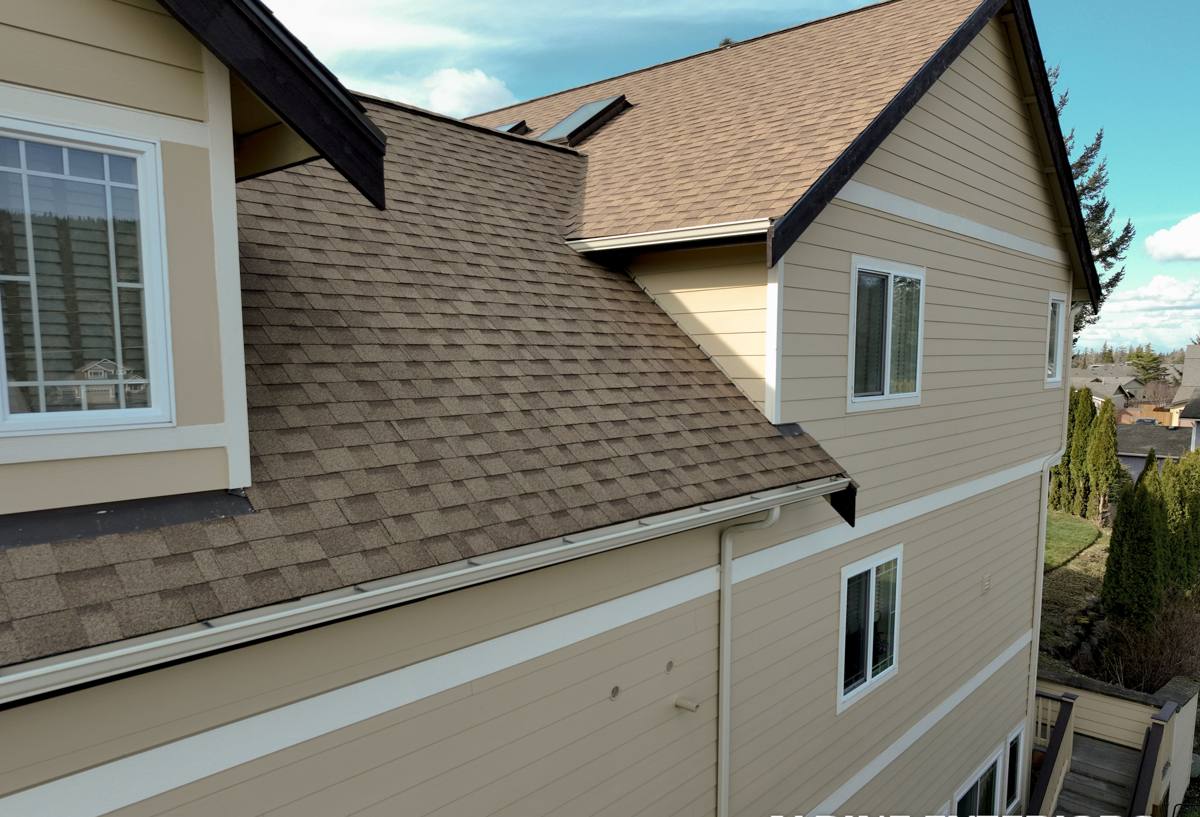
What This Climate Does to Nooksack Windows
Driving Rain and Flashing Failures
Rain in this part of the county rarely falls straight down. Storms push it sideways into window head trim, jamb flashing, and the sill pan under the frame, and that sideways load tests the installation far more than it tests the window product itself. A modest window installed with a correctly pitched sill pan and properly lapped flashing will usually stay dry. A premium window with sloppy flashing will leak. Most of the water damage we find around windows in this area traces back to how the opening was detailed, not to the window brand.
Salt-Tinged Air, Even This Far Inland
Nooksack doesn't take direct salt spray the way a waterfront property does, but Whatcom County's marine-influenced air still carries salt content well inland, and it reaches window hardware, screen frames, and lower-grade fasteners over time. The effect is slower here than on a coastal lot, but it's not absent — corrosion and stiffness on hardware are often the first sign that a window's finish wasn't specified for the actual air this region delivers, not just the air a spec sheet assumes.
A Long Moss and Sill-Rot Season
Shaded elevations and window sills that don't drain cleanly hold moisture longer here than they would in a drier climate, and that sustained dampness supports moss and mildew growth and, on wood-framed windows, slow rot at the sill and lower corners. It's gradual — most homeowners don't notice until paint starts failing or a sill feels soft underfoot, by which point the moisture has usually been working on the wood for a while.
Window Materials: What Actually Holds Up Here
There's no single correct answer for every home. Budget, sun exposure, and how long you plan to stay in the house all factor into the decision. What matters is understanding the real trade-offs for a climate with this much sustained moisture before committing to a frame material.
| Frame Material | Moisture & Corrosion Behavior | Typical Maintenance | Realistic Lifespan Here |
|---|---|---|---|
| Vinyl | Won't rot; seams and welds depend heavily on installation quality | Low; occasional track and weep-hole cleaning | 20-30 years |
| Fiberglass | Dimensionally stable, holds up well against moisture and corrosion | Low | 30-40+ years |
| Wood, painted or clad | Attractive but vulnerable at joints and sills without diligent upkeep | Higher; regular paint or finish maintenance | 15-30 years depending on upkeep |
| Aluminum | Conducts cold and can corrode over time in marine-influenced air unless well-finished | Moderate | 20-30 years |
We'll walk through which frame material fits your home's exposure, budget, and appearance goals rather than defaulting to whichever product is easiest to sell. A shaded, tree-lined lot and an open, sun-exposed one on the same street don't always call for the same answer.
Full-Frame Replacement vs. Insert Replacement
One of the first decisions on any window project is whether to do a full-frame replacement, which removes the old window down to the rough opening and rebuilds the flashing from scratch, or an insert replacement, which fits a new window into the existing frame. Insert replacement is faster and less disruptive to the surrounding siding and trim, and it works well when the existing frame is structurally sound and was properly flashed to begin with. Full-frame replacement takes more time and costs more, but it's the honest answer when there's already moisture damage at the sill or jambs, or when the original flashing was never done correctly. We'll tell you which situation you're actually in rather than defaulting to the cheaper option and sealing a moisture problem up behind a new window.
Installation Fundamentals We Don't Treat as Optional
Most window failures in this climate aren't failures of the window itself — they're shortcuts in the flashing and sealing details that don't show up until a wet season or two later. On every job in Nooksack, that means:
- A properly pitched sill pan that sheds water outward instead of letting it pool under the frame
- Head flashing integrated with the housewrap or building paper above the window, lapped correctly for water to shed downward and outward
- Jamb flashing tied into the surrounding wall assembly rather than relying on caulk alone
- Weep holes and drainage paths left clear and functional, not sealed shut during installation
- Corrosion-resistant fasteners and hardware appropriate for a consistently damp, marine-influenced climate
- Insulation and air sealing around the frame that doesn't trap moisture against the framing
None of these add meaningfully to the cost of a job relative to the window itself, but skipping any one of them is exactly what turns a window that should last decades into one that's leaking behind the wall within a few wet seasons.
Local Code and Permit Basics
Window replacement in Whatcom County generally requires a permit when the rough opening is being altered, and bedroom windows have to meet current egress requirements for opening size and sill height. Straight swap-in replacements that keep the same opening dimensions are often more straightforward, but every project still needs to be checked against current code rather than assumed. We handle that verification as part of the job instead of leaving it for the homeowner to sort out.
Signs a Nooksack Home Needs Window Attention
- Visible fogging or condensation between panes, usually meaning a failed seal on a double- or triple-pane unit
- Drafts or a noticeable temperature difference near a closed window
- Soft, discolored, or spongy trim and sill material, especially on shaded or weather-facing walls
- Difficulty opening, closing, or latching a window that used to operate smoothly
- Peeling paint or bubbling finish on wood-framed windows
- Visible gaps, cracked caulk, or daylight around the frame from inside
- Water staining on interior wall or ceiling surfaces near a window
Any one of these is worth a professional look. Caught early, most point to a repair or resealing job. Left through another wet season, several of them point to water damage already working on the surrounding wall framing.
Repair, Reseal, or Replace? How We Help You Decide
Not every window problem calls for full replacement, and we don't default to recommending one. We look at the age and condition of the existing window, whether a seal failure or draft is isolated or shows up across the house, and whether there's already moisture damage in the surrounding frame or wall. A single window with a failed seal on an otherwise sound, well-flashed house is often a straightforward repair or reseal. A house with several aging windows, visible sill rot, or a history of past leaks is usually more honestly addressed with a broader replacement plan, done in phases if the budget calls for it, instead of patching individual units one at a time. We'll explain what we find and why, and lay out the real trade-offs rather than steering toward whichever option is more profitable for us.
Cost Factors for Nooksack Window Projects
| Factor | What It Affects | Why It Matters Here |
|---|---|---|
| Full-frame vs. insert | Labor scope and disruption to siding/trim | Sound frames on well-built homes can often skip a full tear-out; sill or jamb rot changes that |
| Number of openings | Total material and labor cost | Whole-house replacements typically run more efficiently per window than piecemeal jobs |
| Frame material | Upfront cost and long-term maintenance | Higher-upfront materials like fiberglass often cost less over time in a climate this wet |
| Existing rot or damage | Repair costs before the new window goes in | Long-term moisture intrusion around older windows can reach sheathing and framing, not just trim |
| Egress and code requirements | Rough opening size, permitting | Bedroom windows and altered openings must meet current Whatcom County code |
Exact costs depend on the specific home and its exposure, which is why we walk the property in person before giving a real number instead of quoting off a generic price sheet.
Why a Local Crew That Already Works Nooksack Matters
A crew that installs and repairs windows across this part of the county through every season sees how driving rain, marine air, and moss actually behave on real houses over years, not just how a product performs on a spec sheet. That shows up in practical decisions on install day: how much attention a given wall orientation needs because of tree shade or prevailing wind, how a sill pan should be pitched for the amount of water a specific elevation actually sees, and which flashing details are worth the extra time so you're not dealing with a leak two winters later. It also means working with someone who understands the difference between a farmland property along the river and an in-town or waterfront lot, and doesn't apply the same approach to all three.
Get a Free, No-Pressure Estimate
If your Nooksack home has windows that are fogging, drafty, hard to operate, or simply past their useful life, we're glad to take a look and give you a straightforward, honest read on what it actually needs. Reach out using the form below to schedule a free estimate — no pressure, no upsell script.