 Ferndale Roofing
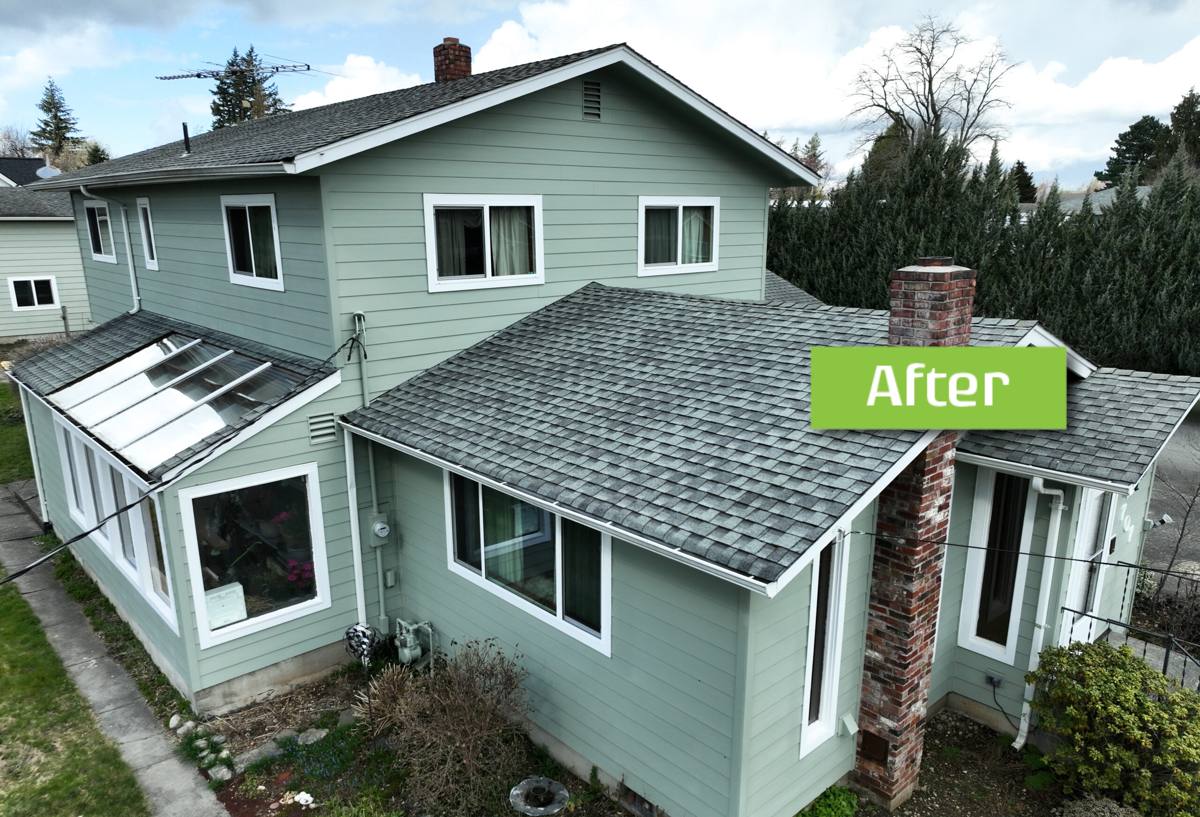
 New Roof Installation in Nooksack
Nooksack sits inland along the Nooksack River, tucked into farm and valley country northeast of Ferndale. It doesn't take the same direct wind and salt exposure as homes closer to Bellingham Bay, but it makes up for that with its own set of roofing challenges: heavy, sustained rainfall off the Cascade foothills, thick morning fog that settles in the river valley, and shaded tree lines that keep roofs damp long after a storm has passed. Add in Whatcom County's broader coastal climate — moisture-laden air, driving rain events, and a moss season that can run eight months or longer — and a roof out here needs to be built and installed with drainage and ventilation as the top priority, not an afterthought.
When a roof in Nooksack is failing, it's rarely one dramatic problem. It's usually years of trapped moisture, undersized flashing, or moss roots working into the shingle mat. A correct new roof installation addresses all of that from the deck up, not just the shingles on top.
What Nooksack's Climate Actually Does to a Roof
Before talking about materials or process, it helps to understand the specific stresses a roof faces in this part of the valley:
- Prolonged dampness: Valley fog and tree cover mean roof surfaces, especially north-facing slopes, can stay wet for days after rain stops. That's ideal territory for moss, algae, and moisture intrusion at aging flashing.
- Driving rain, not just steady rain: Wind-driven storms push water sideways and uphill under shingle edges, valleys, and around penetrations — spots a rushed installation often shortcuts.
- Debris load: Properties near trees and hedgerows collect needles and leaves in valleys and gutters, which hold water against the roofing material and accelerate moss growth.
- Freeze-thaw swings: Whatcom County winters bring occasional hard frosts. Water that's soaked into an aging roof deck can freeze, expand, and worsen existing damage.
None of this is unusual for the region, but it does mean a "standard" installation isn't good enough. The roof has to be detailed for sustained moisture, not just occasional rain.
What a Correct New Roof Installation Involves
Tear-Off and Deck Inspection
We remove the existing roofing down to the deck rather than layering over it. This lets us actually see the plywood or plank sheathing underneath — which, on older Nooksack homes, has often absorbed moisture around chimneys, skylights, or old nail penetrations. Soft, delaminated, or stained decking gets replaced before anything new goes down. Skipping this step is the single most common reason a "new" roof fails early.
Underlayment Built for Wet Climates
We use synthetic underlayment as a standard base layer, and in vulnerable areas — eaves, valleys, low-slope sections, around chimneys and skylights — we add self-adhering ice-and-water membrane. In a river valley with long damp stretches, this second layer of protection at the roof's weak points matters more than it does in drier climates.
Flashing Detail Work
Flashing failure, not shingle wear, is behind most roof leaks we find in this area. Step flashing at walls, counterflashing at chimneys, and properly formed valley metal all need to be installed correctly the first time, since they're what actually stops driving rain from finding its way under the roofing material.
Ventilation
A roof deck that can't breathe stays damp from the inside, which accelerates rot and voids most manufacturer warranties. We balance intake at the eaves with exhaust at the ridge so moisture has somewhere to go, rather than condensing against the underside of the sheathing.
Final Roofing Material
Whether it's asphalt shingles or a metal roofing system, the material goes on last — after the parts nobody sees are done right. A quality shingle on a poorly prepped deck will still fail early; a modest shingle on a well-built deck and flashing system will hold up for its full service life.
Choosing the Right Roofing Material for Nooksack
There's no single "best" roofing material for every property — it depends on the home's slope, tree cover, budget, and how much moss and maintenance the owner wants to deal with long-term.
| Material | Moisture & Moss Behavior | Typical Lifespan | Best Fit |
|---|---|---|---|
| Architectural asphalt shingles | Good performance with proper ventilation; needs periodic moss treatment on shaded slopes | 25–30 years | Most single-family homes; balances cost and durability |
| Standing seam metal | Sheds water and moss debris fast; minimal moisture retention | 40–50+ years | Steep or heavily shaded roofs, owners wanting low moss maintenance |
| Synthetic/composite shingles | Resists moisture absorption well; performance varies by product | 30–40 years | Homes wanting a shake or slate look without wood's moisture issues |
| Cedar shake | Attractive but retains moisture in damp shade; needs regular upkeep to resist rot and moss | 20–30 years with maintenance | Owners committed to routine treatment and inspection |
We're upfront about trade-offs. Cedar shake, for example, can look excellent on the right property, but in a shaded, damp valley setting it demands more consistent maintenance to keep moisture and moss from shortening its life. We'd rather tell a homeowner that up front than sell a product that turns into a maintenance burden two years in.
Our Installation Process
- On-site assessment: We walk the roof and attic (where accessible) to check deck condition, ventilation, existing moisture damage, and any shade or drainage issues specific to the property.
- Written estimate: A clear scope covering tear-off, deck repair allowances, underlayment, flashing, ventilation, and material choice — no vague line items.
- Scheduling around weather: Given how much rain moves through this part of Whatcom County, we plan installs for realistic weather windows and protect the open deck if conditions shift mid-job.
- Tear-off and deck repair: Old roofing removed, deck inspected and repaired as needed before anything new is installed.
- Underlayment, flashing, and ventilation installed to spec: This is where roof longevity is actually decided.
- Final roofing material installation: Installed per manufacturer specifications to keep warranty coverage intact.
- Walkthrough and cleanup: We review the finished roof with the homeowner and clear the site of debris and old material.
Signs a Nooksack Roof Needs Replacing, Not Patching
- Granule loss heavy enough that shingles look bald or patchy in spots
- Soft or spongy decking felt underfoot during inspection
- Moss that keeps returning to the same areas within a season or two of cleaning
- Daylight visible through the attic roof deck
- Multiple past patch repairs in different areas rather than one localized issue
- Shingles curling, cupping, or cracking, especially on south- and west-facing slopes
- Roof age at or past 20–25 years for asphalt shingle systems
If a roof is showing one or two of these, a repair might still make sense. If it's showing several at once, patching usually just delays a full replacement while continuing to risk interior damage.
Why Local Experience with Nooksack Properties Matters
A roofing crew that regularly works Whatcom County knows how differently a coastal Ferndale property and an inland Nooksack property can behave, even a few miles apart. Valley fog patterns, tree-heavy lots, and river-adjacent humidity all change how a roof needs to be ventilated and detailed. A crew unfamiliar with the area might install a technically fine roof that still struggles with moss and moisture simply because it wasn't built with these specific conditions in mind.
Local experience also means straight talk about timelines. Rain doesn't stop for a construction schedule here, and a contractor who's worked through Whatcom County winters knows how to sequence a tear-off and install so the property isn't left exposed for longer than necessary.
What Affects the Cost of a New Roof
| Factor | Why It Matters |
|---|---|
| Roof size and pitch | Larger and steeper roofs require more material and labor time |
| Deck condition | Rotted or delaminated sheathing found during tear-off adds repair cost |
| Material choice | Asphalt, metal, and composite products vary widely in material cost |
| Number of penetrations | Chimneys, skylights, and vents each need individual flashing work |
| Accessibility | Tree cover, steep grades, or tight access can affect labor and staging |
| Tear-off layers | Removing multiple existing layers takes more time than a single-layer tear-off |
We won't quote a number without seeing the roof — anyone who does is guessing. What we can say is that decking repairs found mid-tear-off are the most common reason a project's final cost shifts from the initial estimate, which is why we build a clear allowance into the estimate up front rather than surprising a homeowner later.
Get a Free, No-Pressure Estimate
If your Nooksack home has a roof that's showing its age — persistent moss, granule loss, or a few too many past patch jobs — it's worth getting a straight assessment before committing to anything. We'll walk the roof, tell you honestly what condition it's in, and lay out your options with a written estimate. No pressure, no upsell. Use the form below to request your free estimate.