 Ferndale Roofing
 Why Decks in Nooksack Wear Out Faster Than People Expect
Nooksack sits close enough to the water and the marine weather patterns that roll through Whatcom County that decks here take a different kind of beating than decks inland. It's not one big storm that does the damage — it's the daily grind. Salt-laden air moves through on the wind, driving rain gets pushed sideways under railings and into ledger connections, and a long stretch of gray, wet months every year gives moss and algae plenty of time to take hold on any surface that doesn't dry out quickly. None of that is dramatic on its own. But stacked up over ten or fifteen years, it's exactly why we see so many decks in this area that look fine from the yard but are quietly failing where it counts — at the ledger board, the footings, and the fasteners.
A deck built without that reality in mind will usually survive the first several years just fine. It's the second decade where the shortcuts show up: soft spots near the house, rust streaks bleeding out of screw heads, railing posts that wiggle, and a green film that comes back within weeks of being pressure washed. If any of that sounds familiar, you're not dealing with a maintenance problem anymore — you're dealing with a structure that was never quite matched to this climate.
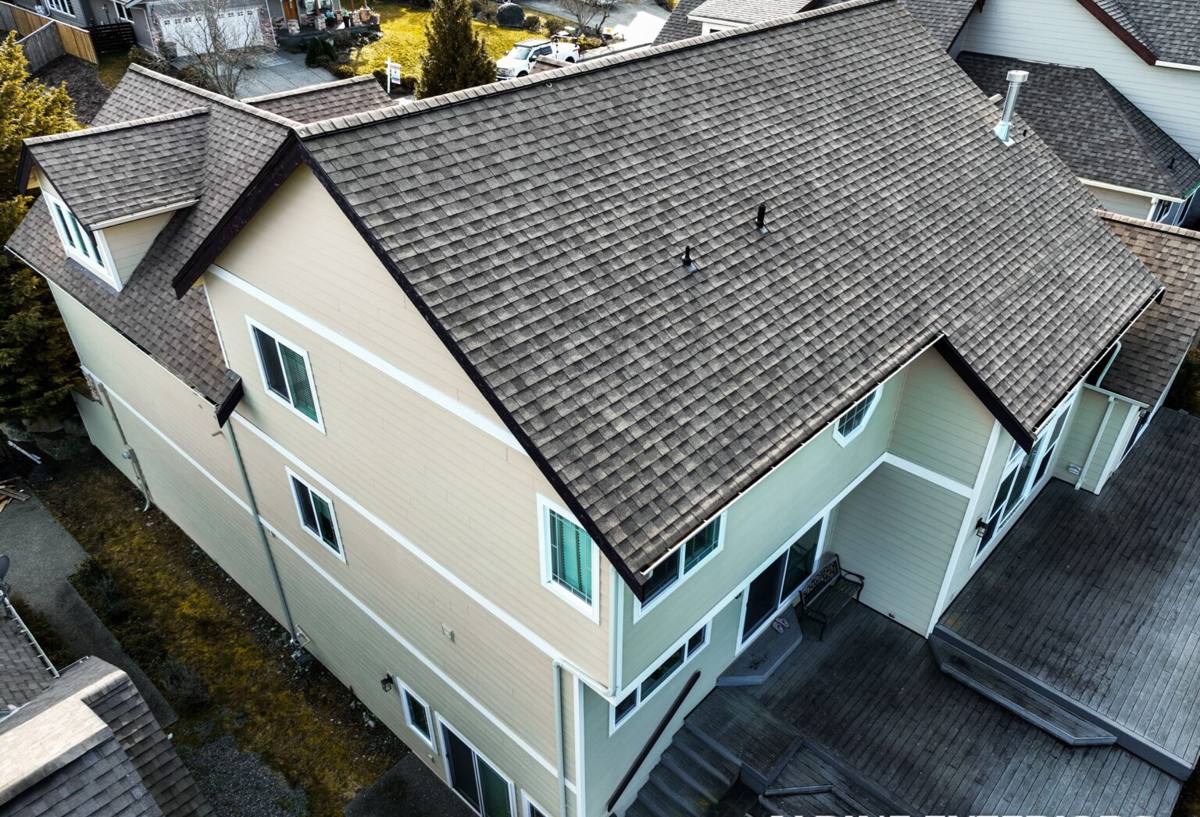
Repair or Replace? Reading the Real Signs
Not every tired-looking deck needs a full replacement. But there are specific signs that tell us the structure itself — not just the surface boards — has been compromised by moisture and time.
Signs that usually mean repair is enough
- A few individual boards that are cupped, splintering, or soft, while the rest of the deck feels solid underfoot
- Surface graying or light moss on boards that are otherwise structurally sound
- Loose railing balusters or a handrail that needs re-securing but doesn't move at the post
Signs that point to replacement
- Soft or spongy decking near the house, especially close to the ledger board connection
- Visible rot or dark staining at joists, beams, or posts when you look underneath
- Railing posts that flex or rock when pushed — this is a fall-hazard issue, not cosmetic
- Rust streaking from fastener heads, which usually means the hardware underneath is failing too
- A deck more than 15-20 years old built with older fastener standards or undersized footings
When the framing, ledger connection, or footings are in question, patching the surface just delays a bigger problem — and in a climate that never really lets wood dry out for long, that problem tends to move faster than homeowners expect.
What Actually Fails First in This Climate
Driving rain in Whatcom County rarely falls straight down — wind pushes it sideways, which means water gets forced into places a dry-climate deck design never has to deal with: behind rim joists, under railing base plates, and into the gap where the deck meets the house. Add in salt air moving inland off the water and you get accelerated corrosion on any fastener or bracket that isn't rated for it. Moss and algae growth adds a third factor — a deck surface that stays damp longer grows a biofilm that holds even more moisture against the wood, which is why the shaded, north-facing side of a deck is often the first place trouble shows up.
The three things we check hardest on every Nooksack deck we replace are the ledger board flashing (where the deck attaches to the house — the single most common source of hidden rot), the fastener and hardware grade, and whether the footings are set deep and solid enough to stay put through wet winters and freeze-thaw cycles.
Choosing Decking Material for Salt Air and Long Wet Seasons
There's no single "best" decking material for every homeowner — it depends on budget, how much upkeep you want to do, and how long you plan to stay in the home. What matters is picking a material with your eyes open about how it behaves in this specific climate, not a showroom in Arizona.
| Material | How It Handles This Climate | Maintenance | Typical Lifespan Here |
|---|---|---|---|
| Pressure-treated wood | Affordable, but needs consistent sealing to resist moisture and moss; end grain and fastener holes are the weak points | Annual cleaning, re-sealing every 1-2 years | 10-15 years with upkeep |
| Cedar | Naturally moisture- and insect-resistant, ages to a gray patina, but still needs care at high-moisture contact points | Periodic cleaning and oiling for color retention | 15-20 years with upkeep |
| Capped composite | Cap layer resists moisture absorption and moss staining much better than wood; performs well in wet, shaded areas | Occasional washing, no sealing or staining | 25-30 years |
| PVC decking | Fully synthetic, doesn't absorb water at all, best option where moss and algae are a persistent problem | Low — soap and water cleaning | 25-30+ years |
We're honest with homeowners about trade-offs rather than pushing one product. Wood costs less up front but demands real, ongoing maintenance to hold up here — skip a season of sealing and the moisture damage can outpace what a coating can fix later. Composite and PVC cost more initially but largely remove moss and rot from the equation, which matters a lot on shaded lots or decks close to tree cover. We'll walk through what fits your budget and how much maintenance you actually want to sign up for.
A Note on Fasteners and Hardware
The decking material gets all the attention, but in salt-air conditions the hardware often fails before the boards do. We use stainless steel or coated fasteners rated for coastal/marine exposure, along with corrosion-resistant structural connectors at the ledger and post bases. Standard interior-grade screws and brackets are a common cause of the rust staining and loosening we see on older Nooksack decks, and it's an easy thing to get wrong if a crew is used to building inland.
What a Correct Deck Replacement Actually Involves
A deck replacement is a chance to fix the things that caused the failure in the first place, not just install new boards on the same bones. On every full replacement we do, the work covers:
Ledger board and flashing
This is where the deck attaches to the house, and it's the number one point of hidden rot in this climate. Proper flashing — installed correctly, not just caulked — keeps water from wicking behind the ledger and into the house's rim joist and framing.
Footings and posts
Footings need to be set below frost depth and sized for the actual load of the deck, not just whatever was there before. Older decks in this area were sometimes built on undersized or shallow footings that shift over time in saturated soil.
Framing and joist protection
We use joist tape or an equivalent moisture barrier on top of the framing before decking goes down — a cheap step that dramatically slows rot at the point where fasteners penetrate the joist.
Drainage and airflow underneath
A deck that can't breathe underneath stays damp longer. Proper spacing, grading away from the house, and clearance underneath all help boards dry out between rain events instead of sitting wet.
Railings and stairs
Railing posts need to be through-bolted to the frame, not just screwed to the rim board — this is both a code issue and a safety issue, especially once wood starts to soften with age.
Our Deck Replacement Process
- On-site assessment — we look underneath the existing deck, check the ledger connection, footings, and framing condition, not just the surface
- Honest scope and estimate — we tell you what's actually needed, including whether repair could realistically work instead of full replacement
- Material selection — we walk through wood, cedar, composite, and PVC options against your budget and maintenance preference
- Permit and inspection coordination — handled before work starts so there are no surprises partway through
- Demolition and disposal — old decking, framing, and any compromised structural members removed and hauled off
- Rebuild — new footings, framing, ledger flashing, decking, and railings installed to current code, matched to this climate
- Final walkthrough — we go over the finished deck with you, including basic care guidance for whatever material you chose
Permits and Local Code Considerations
Deck replacements in Whatcom County typically require a permit, particularly for anything attached to the house or built above a certain height, and inspections usually check ledger attachment, footing depth, and railing height and spacing. Skipping this step is a common shortcut with some smaller outfits, but it creates real problems at resale and, more importantly, it's the inspection process that catches structural mistakes before they become safety issues. We handle the permit and inspection process as a standard part of the job, not an add-on.
Caring for a New Deck Through Whatcom County Winters
A well-built deck in this climate still needs some basic seasonal attention to get its full lifespan. This isn't a heavy maintenance list — it's the handful of things that actually matter.
- Clear leaves and debris from between boards and off railings before the wet season sets in, so moisture doesn't sit trapped
- Rinse off moss and algae buildup once or twice a year, especially on shaded or north-facing sections
- Check railing posts and stair connections annually for any looseness
- For wood or cedar decking, re-seal or re-stain on the schedule your material calls for — don't wait until it's visibly gray and dry
- Keep gutters and downspouts near the deck clear so runoff isn't dumping extra water onto or under the structure
Why It Matters to Hire a Crew That Already Works in This Area
Deck-building fundamentals don't change from town to town, but the details that determine whether a deck lasts 10 years or 25 do change with the climate. A crew that mostly works drier inland regions may not default to marine-grade fasteners, may under-flash a ledger board because it's rarely a problem where they usually build, or may not think twice about drainage underneath because moss isn't part of their daily reality. In Ferndale and the surrounding Whatcom County communities, including Nooksack, those details aren't optional extras — they're the difference between a deck that needs replacing again in a decade and one that doesn't.
We build and replace decks in this area regularly, which means the salt air, the driving rain, and the moss aren't surprises we're reacting to — they're baked into how we spec materials and detail the framing from the start.
If your deck is showing soft spots, rust staining, or just isn't holding up the way it should, we're happy to take a look and give you a straight answer about repair versus replacement. Reach out using the form below for a free, no-pressure estimate.