 Ferndale Roofing
 Storm Damage Roof Repair Built for the Nooksack Area
Homes along the Nooksack corridor outside Ferndale take a different kind of beating than roofs twenty miles inland. You're closer to open water and river bottomland, which means more wind funneling through the valley, more standing moisture in the shade of tall conifers, and a moss season that can run nine or ten months out of the year if a roof isn't kept ahead of it. When a windstorm or a hard rain event moves through Whatcom County, the roofs that fail first are usually the ones that were already compromised by that slow background wear — a lifted shingle tab that finally tears loose, a flashing seam that finally lets water past, a moss mat that finally holds enough water to rot the decking underneath it.
This page is specifically about storm damage repair for homes in and around Nooksack — not a general repair primer. If you've had a storm come through and you're looking at missing shingles, a leak that started during or right after high wind, or debris damage from a falling branch, here's what that repair actually involves in this climate, and what a correct job looks like versus a rushed one.
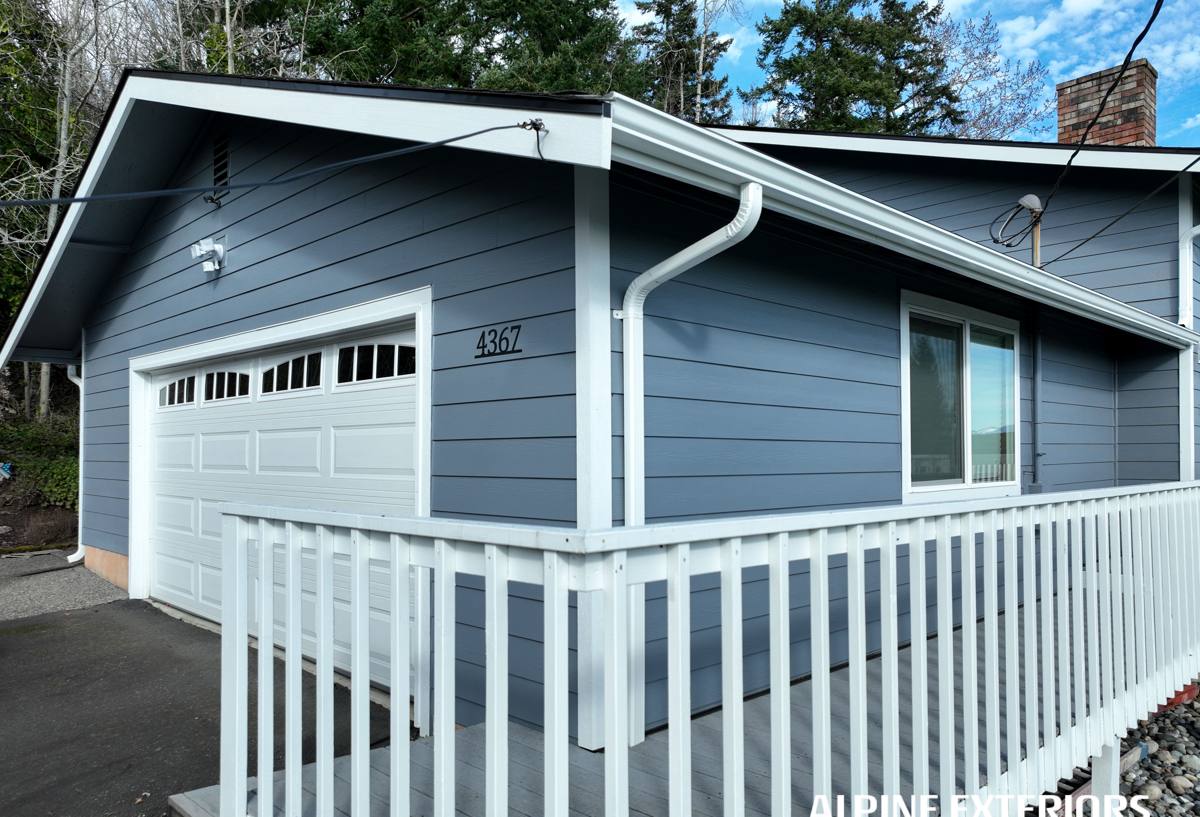
What Storm Damage Actually Looks Like Here
Storm damage in this part of Whatcom County rarely shows up as one dramatic hole in the roof. More often it's a combination of smaller failures that a storm exposes all at once:
- Wind-lifted or torn shingle tabs — especially on roof edges and rakes, where wind gets underneath and works a shingle loose over multiple storms before it finally tears away.
- Flashing separation around chimneys, skylights, and roof-to-wall transitions, where driving rain gets pushed sideways under the flashing instead of running off it.
- Moss-related decking damage — moss holds water against the roof surface long after a storm passes, and on north-facing or tree-shaded slopes that moisture can work into the sheathing over a season or two before it's visible from the ground.
- Debris impact from branches or wind-blown material, which can crack shingles or dent metal roofing without an obvious hole.
- Gutter and edge damage that lets water dump against the fascia and soffit instead of away from the house, which turns a roof problem into a siding and trim problem fast.
The salt air off the nearby water adds another layer: it accelerates corrosion on exposed fasteners, flashing, and metal roofing edges, so hardware that would last decades further inland can start showing rust and weakening years sooner here.
Why "Just Patch It" Often Isn't Enough
A lot of storm repair calls we get started as a small patch job from someone else, or a homeowner's own tarp-and-caulk fix, that didn't hold. The reason is usually the same: storm damage rarely stays contained to the spot you can see. Wind-driven rain travels sideways and downhill under roofing materials before it shows up as a stain on your ceiling, so the visible damage point and the actual entry point aren't always the same spot. A repair that only addresses what's visible from the ground — or from a quick look with a ladder at the obvious spot — can leave the real problem in place.
What a Correct Storm Damage Repair Involves
Done right, storm damage repair on a Nooksack-area home is a sequence, not a single step:
1. Full-Slope Inspection, Not a Spot Check
We look at the entire affected slope, not just the point of visible damage — checking shingle attachment, flashing condition, decking firmness underfoot, and moss buildup, since storm winds and driving rain typically stress a whole section of roof, not one square foot of it.
2. Water Path Tracing
If there's an active leak, we trace it from the interior stain or drip point back up through the attic or roof structure to the actual entry point, which is often higher up the slope or off to the side of where the water is showing indoors.
3. Decking Assessment
Any spot with sustained moisture — from moss, from a long-standing flashing leak, or from the storm itself — gets checked for soft or delaminated decking. Roofing material only performs as well as what it's fastened to, so replacing shingles over compromised sheathing just delays the same repair.
4. Matched, Correctly Fastened Repair
Repairs use materials that match the existing roof's type and, where possible, its wear pattern, fastened per manufacturer spec — not just enough nails to hold it down for now. In a high-wind, high-moisture area like this, under-fastening is one of the most common reasons storm repairs fail again in the next windstorm.
5. Flashing and Edge Detail Review
Since flashing failure is one of the top causes of storm-related leaks here, we check and, where needed, re-seal or replace flashing at every penetration and transition on the repaired slope — not just the specific spot that leaked.
Our Process, Start to Finish
| Step | What Happens | Why It Matters Here |
|---|---|---|
| Initial contact & scheduling | We get a description of the damage and timing, and prioritize active leaks and safety hazards. | Storm season can mean multiple calls at once; active leaks and exposed decking jump the queue. |
| On-site inspection | Full slope walk, water path tracing, decking check, photo documentation. | Salt air and moss mean damage is often more extensive than the visible spot. |
| Temporary protection | Tarping or temporary sealing if rain is expected before the permanent repair. | Whatcom County storms often arrive in waves — one storm exposes the roof for the next. |
| Written estimate | Clear scope and cost range before any repair work starts. | You know what you're approving and why. |
| Repair | Matched materials, correct fastening, flashing review, decking replacement if needed. | A repair that only addresses the visible symptom tends to fail in the next windstorm. |
| Final walk-through | We show you what was done and where. | You should never be left guessing what was actually repaired. |
Insurance and Documentation
Most storm damage claims hinge on documentation of the damage close to when it happened, and a clear description of cause versus pre-existing wear. When we inspect storm damage, we photograph the affected areas and note what appears storm-related versus what appears to be longer-term wear (like moss damage that predates the storm) — that distinction matters to an adjuster, and it's better to have it documented honestly up front than to have a claim questioned later. We're happy to provide a written scope of damage and repair that you can submit alongside your own claim; we don't handle claims on your behalf, but we make sure you have what you need to support one.
What to Check After a Storm
Before calling anyone, a safe visual check from the ground can tell you a lot:
- Shingle pieces or granules in the gutters, downspouts, or on the ground around the house
- Visible gaps, lifted edges, or missing sections on the roof slopes you can see
- Sagging or dented gutters, especially where a branch may have fallen
- New or worsening ceiling stains, especially near chimneys, skylights, or exterior walls
- Damp smell or visible moisture in the attic if you can safely check
- Debris resting directly on the roof surface — don't remove it yourself if it's large; that's a call for us
If you see active dripping indoors or structural sag, that's a same-day call, not a wait-and-see situation. Moisture that sits against decking for even a few days in this climate can turn a shingle repair into a decking replacement.
Materials and Our Standard for This Climate
We match repair materials to your existing roof type, but our fastening and flashing standards don't get relaxed just because it's "only a repair." In a climate with this much wind-driven rain and salt-air exposure, we use corrosion-resistant fasteners and flashing on repair work, not just on full replacements — a repair done with standard hardware can start showing rust and losing grip years before it should. Where moss has been a contributing factor, we'll point out where zinc or copper strips or a treatment could reduce regrowth, but that's a conversation about your roof's specific exposure, not a blanket upsell — plenty of roofs here just need a good cleaning on a normal schedule.
Why a Crew That Already Works Nooksack Matters
Storm response is partly about speed and partly about knowing what you're looking at. A crew that regularly works roofs in and around Nooksack and Ferndale already has a feel for how wind moves through this part of the valley, which slopes typically take the worst of driving rain off the water, and how aggressively moss builds back in shaded, river-adjacent lots. That local pattern recognition means a faster, more accurate read on a damaged roof — and it means when we say a repair should hold, it's based on how similar repairs have actually performed on similar roofs nearby, not a generic assumption.
It also means a shorter response window when storms hit multiple homes in the area at once, since we're not driving in from across the county for the first look.
Get a Free, No-Pressure Estimate
If your Nooksack-area home has storm damage — or you're not sure whether what you're seeing is storm-related or long-term wear — we'll come take an honest look, document what we find, and give you a straightforward estimate with no pressure to move forward. Use the form below to get started.