 Ferndale Roofing
 Siding in Nooksack Has a Harder Job Than It Looks Like
Nooksack sits in a part of Whatcom County where siding takes a beating most homeowners underestimate until they're dealing with the results. It's not one big dramatic weather event that wears siding out here — it's the steady combination of moisture-laden air moving in off the water, long stretches of driving rain through fall and winter, and a moss and algae season that can run most of the year on shaded or north-facing walls. Add in the salt content that rides inland on coastal air, and you've got a slow, cumulative stress test running on every exterior wall of a house, year after year.
Most siding materials can survive a season or two of that without obvious problems. The real question is what happens at year eight, year twelve, year twenty — after the caulk has aged, after the paint film has thinned, after moss has been sitting against a wall long enough to hold moisture there. That's where the material and the installation quality either hold up or start to fail. This page is about what that means specifically for James Hardie fiber cement siding, and what a correct installation looks like for a Nooksack home.
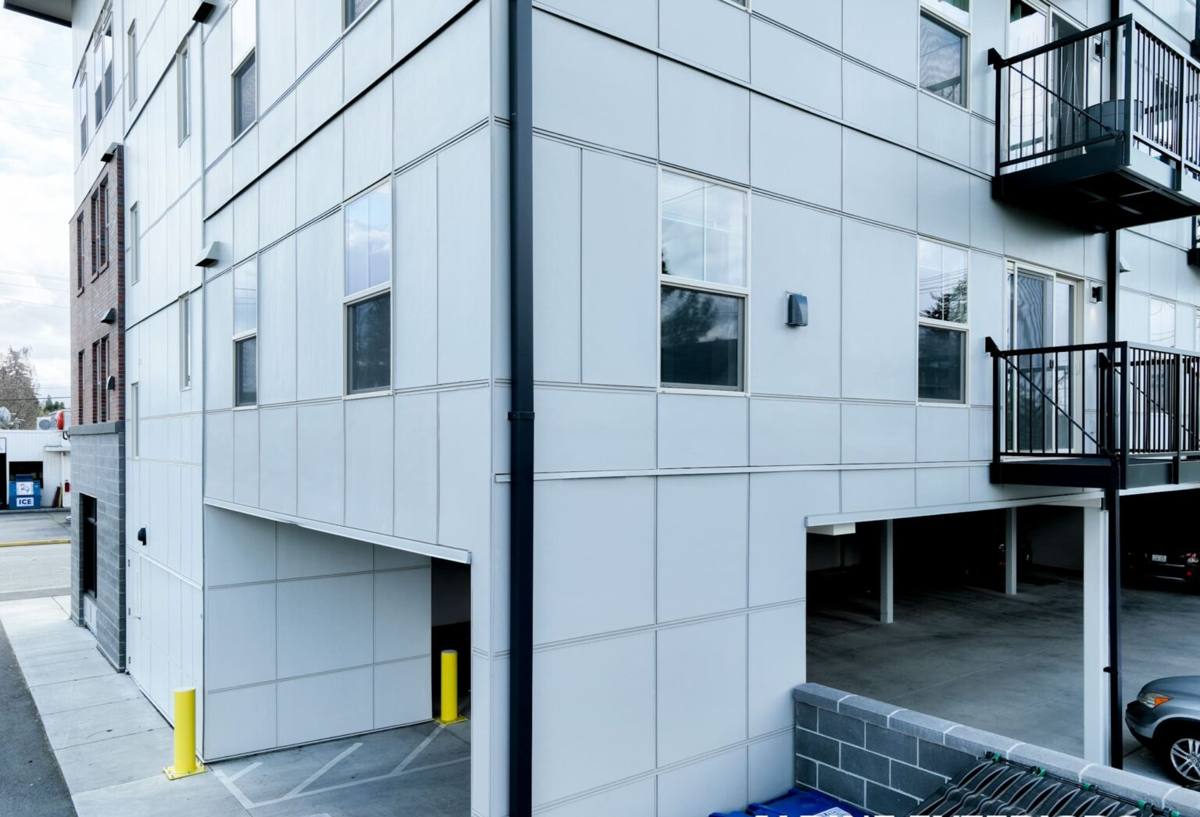
Why We Only Install James Hardie Fiber Cement
We don't install vinyl, LP SmartSide, primed spruce, cedar, or other fiber cement brands. That's a deliberate standard, not a sales pitch. Every one of those products has legitimate uses and, in some cases, a lower upfront price — but every one of them also comes with a real-world trade-off in a climate like this one: vinyl expands and contracts with temperature swings and can warp or crack in cold snaps; engineered wood products are more sensitive to sustained moisture exposure at seams and cut edges; cedar and primed wood need active, ongoing maintenance to keep water out once the finish starts to break down. James Hardie fiber cement is the one product in that lineup engineered specifically to resist moisture intrusion, hold paint and color longer, and stand up to insect and rot pressure without the maintenance schedule the wood-based options require.
HZ5 Engineering for the Pacific Northwest
James Hardie makes climate-specific product formulations, and the HZ5 line is engineered for the wetter, colder regions of the country — which includes western Washington. That means the moisture resistance and freeze-thaw performance built into the board is matched to what Whatcom County actually throws at a house, rather than a one-size-fits-all national product. It's a small distinction on paper but a meaningful one over a fifteen- or twenty-year timeline.
ColorPlus Factory Finish vs. Field-Painted Siding
A big part of why Hardie holds up better in this climate comes down to the finish, not just the board underneath it. ColorPlus is a baked-on, factory-applied finish that's more consistent and more resistant to fading and moisture absorption than paint applied on-site after installation. Field-painted siding — whether it's fiber cement, wood, or engineered wood — depends heavily on weather conditions during application and tends to show wear at a different rate than a factory finish. For a Nooksack home, where the paint film is going to be tested by rain and damp air for most of the year, that difference shows up in how the siding looks ten years out.
How James Hardie Compares to Other Siding Materials Here
It helps to see the trade-offs side by side rather than take our word for it. This is a general comparison based on how these materials typically perform in a wet, salt-air coastal climate like Whatcom County's — not a claim about any specific product being defective.
| Material | Moisture Resistance | Maintenance Burden | Typical Finish Longevity |
|---|---|---|---|
| James Hardie Fiber Cement | Engineered for wet climates (HZ5) | Low — no repainting cycle for years | Long, factory ColorPlus finish |
| Vinyl Siding | Moderate — seams and expansion joints are weak points | Low, but prone to cracking/warping | Fades over time, not repaintable easily |
| Cedar / Wood Siding | Absorbs moisture without diligent upkeep | High — regular sealing/painting | Short without maintenance |
| LP SmartSide (Engineered Wood) | Sensitive at cut edges and seams | Moderate — field-applied finish | Moderate, finish-dependent |
None of these are "bad" products in the abstract. But when we weigh moisture resistance, upkeep, and long-term appearance for a house that has to deal with driving rain and salt air for decades, fiber cement with a factory finish is consistently the safer bet — which is why it's the only siding we put our name behind.
What a Correct James Hardie Installation Involves
James Hardie siding is only as good as the installation behind it. The board itself resists moisture well, but if water gets trapped behind the siding due to poor detailing, you can still end up with rot in the sheathing and framing underneath — the siding will look fine while the real damage happens where you can't see it. This is the part of the job that separates a correct install from a fast one.
Water Management Behind the Siding
A correct install starts before the first board goes up. That means a proper weather-resistive barrier, correctly lapped and taped, and — ideally — a drainage plane or rain screen gap that lets any moisture that does get behind the siding drain and dry out instead of sitting against the wall assembly. Flashing at windows, doors, and roof-to-wall intersections has to be detailed so water is directed out and away, not funneled behind the siding. This is invisible once the job is done, which is exactly why it matters who's doing it.
Fasteners, Clearances, and Caulking
James Hardie publishes specific fastener spacing, fastener type, and clearance requirements — including minimum clearance from grade, roof lines, and decks — and those specs exist because they're tied to warranty coverage and real moisture performance, not just manufacturer preference. Butt joints and trim intersections need to be caulked with the right product, applied correctly, and touched up over time as it ages. Skipping or rushing any of this is exactly the kind of shortcut that shows up as a callback five or ten years later.
Common Failure Points We See on Older Siding Jobs
Most of the siding problems we get called out to look at in this region trace back to installation, not the material choice. The pattern is usually one of a few things: siding installed too close to grade or a deck surface, trapping moisture at the bottom edge; missing or poorly lapped house wrap at seams; caulk that was never applied at critical joints, or applied and never maintained; or fasteners driven at the wrong depth, which can crack the board over time or let water track in around the fastener head. On homes near shaded, moss-prone walls, we also see moss and organic buildup left to sit against siding for years, which keeps that section of wall damp far longer than the rest of the house.
None of these are exotic problems. They're avoidable with correct technique and a crew that treats the water-management details as non-negotiable rather than optional steps to speed through.
Our Process for a Nooksack Siding Project
Inspection and Estimate
We start by looking at the existing siding, sheathing, and trim condition — not just measuring square footage. If there's evidence of trapped moisture, rot, or prior repairs done incorrectly, we flag it before any board goes up, because covering a moisture problem with new siding just hides it for a while. From there we walk through product line, color, and trim options and put together a written estimate.
Installation and Cleanup
Once the job starts, that includes removing old siding and inspecting the sheathing underneath, correcting any water-management issues we find, installing the weather-resistive barrier and flashing details properly, and then installing the Hardie boards to manufacturer spec — correct clearances, fastener pattern, and joint treatment. We keep the site reasonably clean throughout and do a final walkthrough with the homeowner before calling the job done.
Maintenance: What to Actually Expect Afterward
One of the real advantages of ColorPlus-finished Hardie siding is how little ongoing maintenance it needs compared to wood or field-painted alternatives — there's no repainting cycle to plan for in the first several years. That said, "low maintenance" doesn't mean "no maintenance," especially in a climate with a real moss season. An occasional gentle rinse to keep organic growth from building up on shaded walls, a visual check of caulked joints every year or two, and prompt attention if you ever notice a section that stays damp longer than the rest of the house will keep the siding performing the way it's designed to for the long haul.
Why It Matters That We Already Work in Nooksack
A crew that only occasionally works this far into Whatcom County is learning the local conditions on your house. A crew that already does regular work around Ferndale and the surrounding area already knows what this climate does to a wall assembly over time, has already seen what happens when flashing or clearance details get skipped, and isn't guessing at how the product performs here versus somewhere drier. That familiarity shows up in the details — the ones that don't show up on the surface the day the job finishes, only years later.
If you're vetting siding contractors for a Nooksack home, here's a practical checklist worth working from:
- Ask whether they install James Hardie specifically, and whether they're familiar with its published installation specs — not just siding in general
- Ask how they handle the weather-resistive barrier and flashing details, not just the visible board installation
- Ask about clearance requirements from grade, decks, and roof lines, and why those matter
- Ask what they do if they find existing moisture or rot damage once old siding comes off
- Ask for a written estimate that specifies product line, color, and trim details, not just a lump-sum price
- Ask how caulked joints and trim intersections will be treated, and what maintenance they'd recommend afterward
If you're weighing a siding project on a Nooksack home and want a straight answer on what it actually needs, we're happy to take a look and put together a free, no-pressure estimate — no obligation either way.