 Ferndale Roofing
 Roof Replacement for Nooksack Homes
Nooksack sits inland along the Nooksack River, in the flat, low-lying farmland that runs through this part of Whatcom County. It's a different setting than the waterfront towns closer to Bellingham Bay, but the roofs here answer to the same regional weather pattern that shapes exterior work across this corner of the Pacific Northwest: driving rain that gets pushed sideways and up under shingle edges more often than it falls straight down, a long moss season that runs across most of the year on shaded slopes, and salt-tinged marine air that reaches farther inland than most homeowners assume. We replace roofs in Nooksack and the surrounding river-valley communities regularly, and the way we spec and install a roof here is built around what that combination actually does to a roof system over the years.
A roof replacement is one of the largest single investments a homeowner makes in a house, and it's also one of the hardest to judge from the ground. This page walks through what a Nooksack home actually needs from a new roof, what correct installation looks like, and how our process works from first call to final walkthrough.
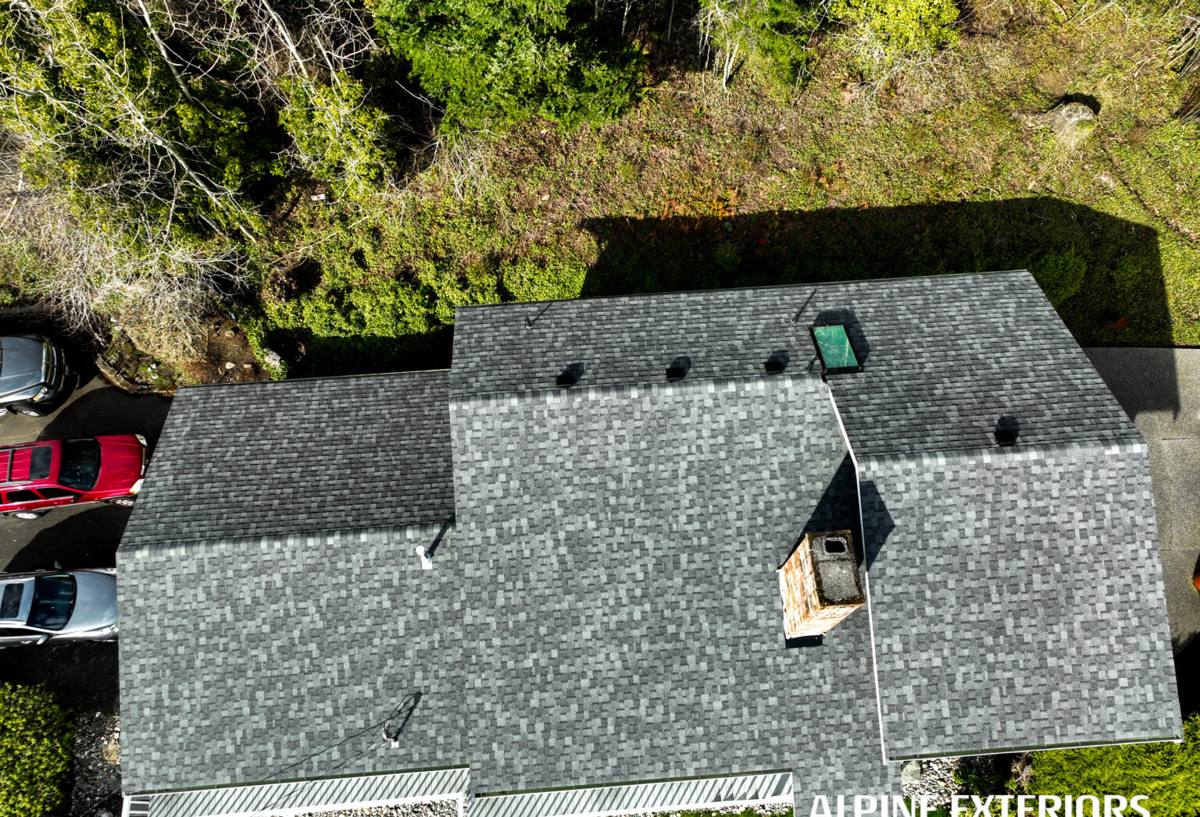
What Nooksack's Climate Does to a Roof
Driving Rain on a Low, Damp Valley Floor
Nooksack sits low in flat agricultural terrain near the river, and low ground holds moisture differently than a hillside lot does. Storms moving through the valley push rain sideways into eaves, valleys, and flashing rather than letting it run cleanly off the roof surface, and on flat, low-lying ground that moisture lingers longer than it would on a well-drained hillside property. A roof that isn't detailed to shed wind-driven rain — not just rain falling straight down — tends to show its first leaks at valleys, chimney flashing, and anywhere shingles weren't lapped tight enough for the wind this area actually sees.
A Long Moss and Mildew Season
Persistent valley dampness, mild temperatures, and the mature tree cover common on larger Nooksack lots add up to a moss and mildew season that stretches across most of the year. It shows up first on shaded, north-facing roof slopes as dark streaking or visible growth, and it's more than a cosmetic problem — moss holds moisture directly against the shingle surface and works its way under tabs and granule layers, which shortens the life of even a well-installed roof if it's never cleaned or addressed.
Salt Air Reaches Farther Inland Than Expected
Nooksack isn't a waterfront property, and it doesn't take the direct salt spray that homes right on Bellingham Bay or the Strait deal with. But Whatcom County's marine air moves inland with weather systems, and roofs here still see more salt-related corrosion on fasteners, flashing, and metal roof accessories than a truly dry inland climate would produce. It's a lighter version of the same exposure the coastal towns deal with, not a different problem entirely, and it's still worth accounting for in the hardware a roof is built with.
Tree Cover, Debris, and Roof Drainage
Larger lots and mature tree canopy are part of what makes this area attractive, but they also mean more organic debris landing on the roof and collecting in valleys and gutters. Needles, leaves, and moss spores build up fastest in low-slope valleys and behind chimneys, and when debris dams up against a roof-to-wall intersection, water backs up under shingles instead of draining away. Keeping drainage paths clear matters more on a tree-shaded Nooksack lot than it does on an open, exposed roof.
Signs Your Nooksack Roof Needs Replacement, Not Just a Repair
Not every roof problem calls for a full tear-off. Isolated storm damage, a failed flashing detail around one penetration, or a handful of damaged shingles can often be repaired without touching the rest of the roof. But when the underlying material has reached the end of its service life or water has been getting past the surface for a while, patching individual symptoms usually just delays a bigger job while hidden damage keeps spreading underneath.
- Shingles that are cupping, curling, or losing granules across large sections of the roof, not just one isolated spot
- Moss or dark staining that returns quickly after cleaning, especially on shaded or north-facing slopes
- Soft, spongy decking felt underfoot during an inspection, or visible sagging along a roofline
- Daylight visible through the roof deck from inside the attic, or water staining on attic sheathing and insulation
- Rusting fasteners, corroding flashing, or granules collecting heavily in gutters and downspouts
- A roof that's at or past the expected service life of its material, especially if it's never had a full tear-off inspection
- Rising energy bills that may point to failing attic ventilation or insulation no longer performing under a compromised roof
What a Correct Roof Replacement Involves
Tear-Off vs. Overlay
Installing new shingles directly over an old layer is sometimes technically allowed and does lower upfront labor cost, but it skips the one step that matters most in this climate: actually seeing what's happening on the deck underneath. A full tear-off removes the old roofing down to the sheathing, which lets us inspect for rot, soft spots, and hidden moisture damage that's common after years of valley dampness working its way under aging shingles. We treat tear-off as the standard for a full replacement, not an upgrade, because it's the only way to verify the deck is actually sound before new material goes on top of it.
Underlayment and Flashing
The underlayment is what protects the deck if wind-driven rain gets past the shingle surface, which happens more often here than in a calmer, drier climate. Synthetic or self-adhered underlayment at eaves, valleys, and other vulnerable areas handles that intrusion far better than older felt products. Flashing at valleys, chimneys, skylights, and wall intersections deserves just as much attention as the shingle field — most roof leaks in this region start at a flashing detail, not in the open field of the roof.
Ventilation
Attic ventilation controls moisture that would otherwise condense against the underside of the deck, and poor ventilation accelerates both deck rot and moss growth working its way up from underneath. On a roof replacement, checking and correcting ventilation is part of the job, not an optional add-on, especially on older Nooksack homes where ventilation may never have been brought up to a modern standard.
Material Choice
Asphalt shingles remain the most common and cost-effective choice for Nooksack homes, and algae-resistant shingle formulations are worth the modest upcharge given how long the local moss season runs. Metal roofing has real advantages in longevity and wind resistance and is a reasonable option for the right home and budget, but it comes with a higher upfront cost and different maintenance and fastening considerations. We'll walk through what fits your roof's pitch, your budget, and how long you plan to stay in the home rather than defaulting to one answer for every property.
Our Process, Start to Finish
- An in-person roof inspection, including the attic where accessible, before we quote anything
- An honest assessment of whether the roof needs a repair, a partial section replaced, or a full tear-off
- A written, itemized estimate covering tear-off, underlayment, flashing scope, ventilation, and material — no vague one-line pricing
- A clear schedule with realistic weather contingencies built in, since delays during wetter months are common in this region
- Daily cleanup and a magnetic nail sweep of the property as work progresses
- A final walkthrough before we consider the job complete, so you can see the finished work and ask questions before we leave
Cost Factors for a Nooksack Roof Replacement
| Factor | What It Affects | Why It Matters in Nooksack |
|---|---|---|
| Tear-off vs. overlay | Labor scope and ability to inspect the deck | Valley dampness makes hidden deck rot common under roofs that have never had a full tear-off |
| Underlayment type | Water resistance if rain gets past the shingle surface | Wind-driven rain off the valley finds gaps in older felt underlayment faster than synthetic products |
| Shingle grade and algae resistance | Expected lifespan and appearance over time | A long moss season makes algae-resistant granules a practical upgrade, not a cosmetic one |
| Flashing scope | Valleys, chimneys, skylights, and wall intersections | Most leaks in this climate start at flashing details rather than the open roof field |
| Ventilation upgrades | Attic moisture control and deck longevity | Poor ventilation compounds the moisture that valley dampness already puts on the deck from below |
| Tree cover and access | Debris management and labor time | Mature tree canopy common on larger Nooksack lots adds valley debris and can complicate staging |
Exact pricing depends on your roof's size, pitch, and condition once we've actually inspected it, which is why we give a real number after walking the roof rather than quoting off a generic price sheet.
Why a Crew That Already Works Nooksack Matters
A roofing crew that works this part of Whatcom County regularly knows how valley dampness behaves differently than it does closer to the water, how far inland salt-related corrosion actually reaches, and which roof slopes hold moss longest through a wet Nooksack winter. That experience shapes practical decisions on install day — where extra flashing attention pays off, which fastening details matter given the wind this valley sees, and how to sequence work around weather that can shift quickly here. A crew that's only worked drier inland climates, or a storm-chasing outfit passing through after a weather event, can still do competent work and still miss the details that determine whether a roof lasts its full expected life in this specific setting.
Ready for an Honest Look at Your Roof
If your Nooksack home needs a full roof replacement, a second opinion on a repair estimate, or just a straightforward inspection to understand where things actually stand, we're glad to take a look. Reach out using the form below to schedule a free, no-pressure estimate.