 Ferndale Roofing
 Why Board & Batten in Nooksack Takes More Than a Standard Siding Job
Nooksack sits close enough to tidal water and river bottomland that homes here deal with a specific combination of weather most inland siding crews rarely see day to day: salt-laden air moving in off the water, long stretches of driving, wind-pushed rain, and a moss season that can run from fall through spring. Board and batten siding — with its vertical panels and raised battens covering every seam — looks great on this style of home, but it also has more seams, more fastener penetrations, and more places for water to find a way in than a flat lap profile does. Done right, it's one of the most durable-looking sidings you can put on a house in this area. Done wrong, it's one of the fastest ways to trap moisture behind the wall.
This page is about that one job, in this one area: what board and batten needs to hold up here, what a correct installation actually looks like, and why we only do it in James Hardie fiber cement.
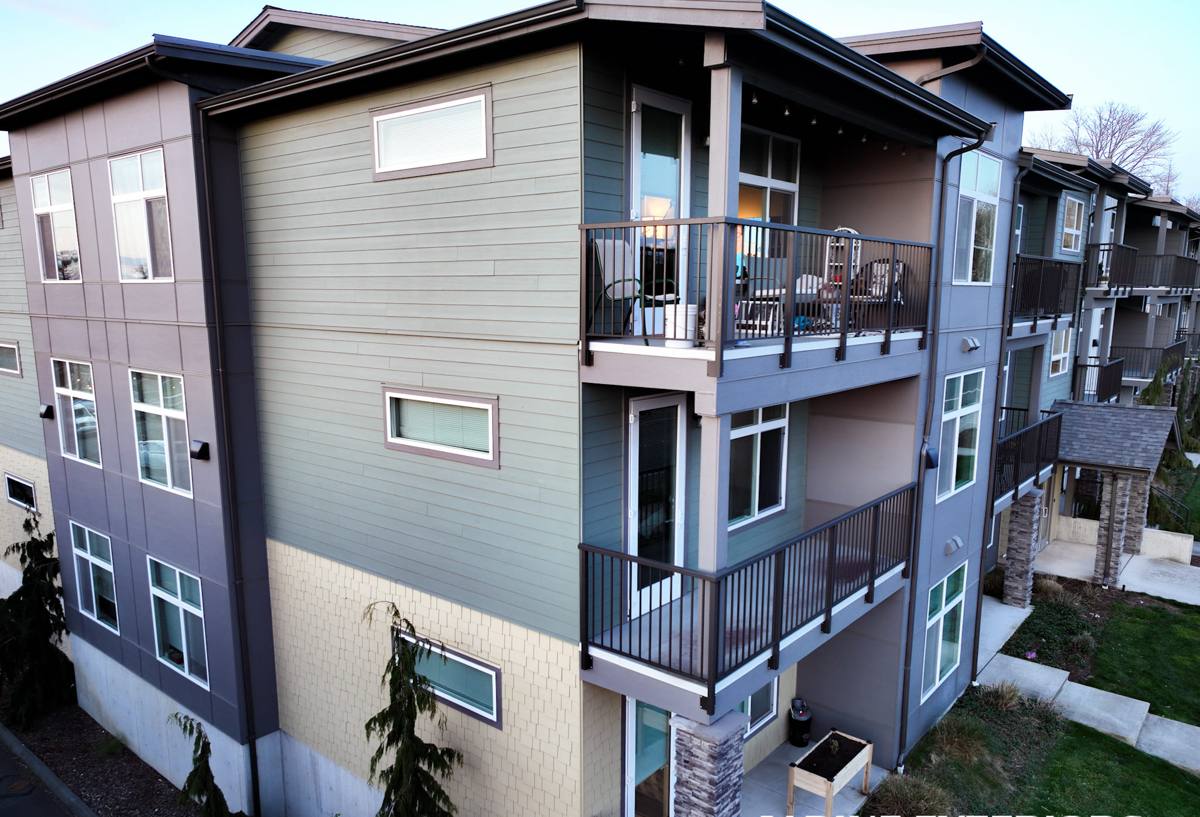
What Whatcom County's Climate Actually Does to Vertical Siding
Three things matter most for board and batten specifically:
Salt Air
Homes closer to Bellingham Bay and the broader Puget Sound corridor deal with airborne salt that accelerates corrosion on exposed metal fasteners and flashing, and slowly breaks down finishes that aren't formulated to handle it. Board and batten has more exposed fastener lines than lap siding, which makes fastener quality and placement more important, not less.
Driving, Wind-Pushed Rain
Rain that falls straight down is easy to shed. Rain that's being pushed sideways by wind off open water finds horizontal battens, window returns, and corner boards and tests every seam. A board and batten wall needs a real drainage plane behind it, not just caulk on the face, or wind-driven rain will eventually get behind the boards.
Moss and Sustained Dampness
Whatcom County's wet season is long, and shaded north- and east-facing walls near mature trees or riverbank vegetation stay damp for extended stretches. Any siding material that holds moisture at the surface — real wood especially — becomes a growth surface for moss and algae over time, which then holds even more moisture against the wall.
What a Correct Board & Batten Installation Actually Involves
A Real Rainscreen Gap
Vertical siding should be installed over furring strips that create a drainage gap between the back of the panel and the weather-resistant barrier. That gap lets any water that gets past the battens drain out and dry, instead of sitting against the wall sheathing. Skipping this step is one of the most common corners cut on board and batten jobs, because it's invisible once the siding is up — and it's the single biggest reason board and batten sidings fail early in wet climates.
Batten Spacing and Fastening
Battens need consistent spacing over sound backing, with fasteners set at the depth and pattern the manufacturer specifies — not just wherever there's framing behind the furring strip. Overdriven or underdriven fasteners are a common cause of cracking and premature wear on vertical panels.
Flashing at Every Transition
Windows, doors, outside corners, and the base of the wall all need proper flashing and z-flashing details, installed in the correct order relative to the weather barrier. Board and batten's vertical seams make flashing sequencing even more important than it is on horizontal lap siding, since water tracking down a batten line has a straight shot at any gap in the flashing below it.
A Quick Checklist for Homeowners Comparing Bids
- Ask whether furring strips and a rainscreen gap are included, or if the plan is direct-to-sheathing
- Confirm what weather-resistant barrier is being used and how seams are taped
- Ask how corners, window returns, and the base trim will be flashed
- Get the specific product line and fastener type in writing, not just "board and batten siding"
- Ask what the finish warranty covers versus the installation warranty
Why We Only Install James Hardie for This Look
Board and batten can be built in several materials, and each one has a real, honest trade-off. We install James Hardie fiber cement exclusively, and here's the reasoning, product by product.
Cedar Board & Batten
Real wood board and batten has a genuine, warm look that's hard to replicate. The trade-off in a climate like this one is maintenance: cedar needs regular refinishing to keep water out, and in shaded, damp spots it's exactly the kind of surface that grows moss and algae if it isn't kept up. End grain at cuts and battens is especially vulnerable to rot over time.
Vinyl Board & Batten
Vinyl panels are affordable and low-maintenance in the sense that they don't need repainting, but they're thin, they expand and contract with temperature swings, and they can crack in a hard cold snap. Vinyl also can't be painted a different color down the road without voiding warranties on most products, which limits homeowners long-term.
Engineered Wood (LP-Style) Board & Batten
Engineered wood products perform reasonably well when every cut edge is sealed exactly per spec, but that sensitivity to field sealing is a real installation risk in a climate with this much sustained moisture — a missed or degraded seal at a cut edge is where these products start to swell and fail.
James Hardie
Hardie fiber cement is non-combustible, doesn't swell or rot from moisture the way wood-based products can, and holds a factory-applied ColorPlus finish that's baked on and warranted against fading and peeling — no repainting cycle to keep up with. Hardie's HZ product lines are engineered for specific climate zones, which matters in a region that sees this much sustained rain and humidity. It's a heavier, more rigid board than vinyl, which also means straighter batten lines and less flexing over time.
Material Comparison for Board & Batten in This Climate
| Material | Moisture / Moss Resistance | Ongoing Maintenance | Typical Lifespan |
|---|---|---|---|
| James Hardie fiber cement | Strong — non-combustible, doesn't swell or rot | Low — factory finish, no repainting cycle | Decades with correct install |
| Cedar (real wood) | Weak in shaded/damp areas without upkeep | High — regular refinishing, moss treatment | Shorter without diligent maintenance |
| Vinyl | Doesn't rot, but seams and panels can warp or crack | Low, but limited repair/repaint options | Moderate, weather and UV dependent |
| Engineered wood | Depends heavily on sealed cut edges | Moderate — edge sealing must be maintained | Moderate, install-sensitive |
Cost varies by project scope, home size, trim detail, and existing wall condition, so we don't quote board and batten pricing in the abstract — it's worth a walkthrough and a written estimate for your specific home.
Our Process on a Nooksack Board & Batten Project
We start with an on-site assessment of the existing wall — checking for hidden moisture, sheathing condition, and any areas that have already been affected by prior water intrusion, which is common on older vertical siding in this area. From there we build a moisture management plan for the wall before a single new board goes up: correct weather-resistant barrier, taped and lapped properly, furring strips set for a real rainscreen gap, then Hardie board and batten installed to spec with the right fastener pattern and flashing at every transition. We finish with a walkthrough so you know exactly what was done and what to watch for going forward.
Maintenance That Actually Matters Once It's Installed
- Rinse pollen, salt residue, and debris off the siding a couple of times a year
- Check caulking at trim and window returns annually — caulk is a maintenance item even on Hardie
- Keep gutters clear so overflow isn't running down the wall face during heavy storms
- Watch shaded, damp corners of the house for early moss growth and address it before it spreads
- After any major windstorm, do a quick visual check of corner trim and flashing
Why It Matters That We Already Work in Nooksack
A crew that regularly works this area already understands how wind-driven rain behaves on homes exposed to the water, which walls tend to stay damp longest through the moss season, and what it takes to keep a rainscreen detail tight in this climate rather than just on paper. That familiarity shows up in the small decisions on a job — where extra flashing attention matters most, how a wall has weathered so far, what's worth flagging before it becomes a bigger repair. It also means a shorter response time if you ever need us back for a warranty question.
If you're weighing board and batten siding for a Nooksack-area home, we're happy to walk the property, look at what's there now, and give you a straight, no-pressure estimate using our fill out the form below to get started.