 Ferndale Roofing
 Siding Built for the Nooksack River Corridor Near Ferndale
Homes along the lower Nooksack River near Ferndale sit in one of the more demanding microclimates in Whatcom County. The river corridor stays low, shaded, and damp for much of the year, and its proximity to the saltwater of Bellingham Bay means siding here deals with a mix of salt-laden air, wind-driven rain, and heavy tree cover that keeps walls from drying out between storms. That combination is harder on exterior materials than a typical inland Ferndale lot, and it shows up first in the siding — moss creeping up north-facing walls, paint failing early, and seams that never quite dry before the next system rolls through.
We work this area regularly, and the siding failures we get called out for tend to follow a pattern: moisture getting behind the cladding rather than shedding off the face of it. A correct siding replacement in this part of our service area has to account for that from the first day of tear-off through the final caulk line, not just swap old panels for new ones in the same style.
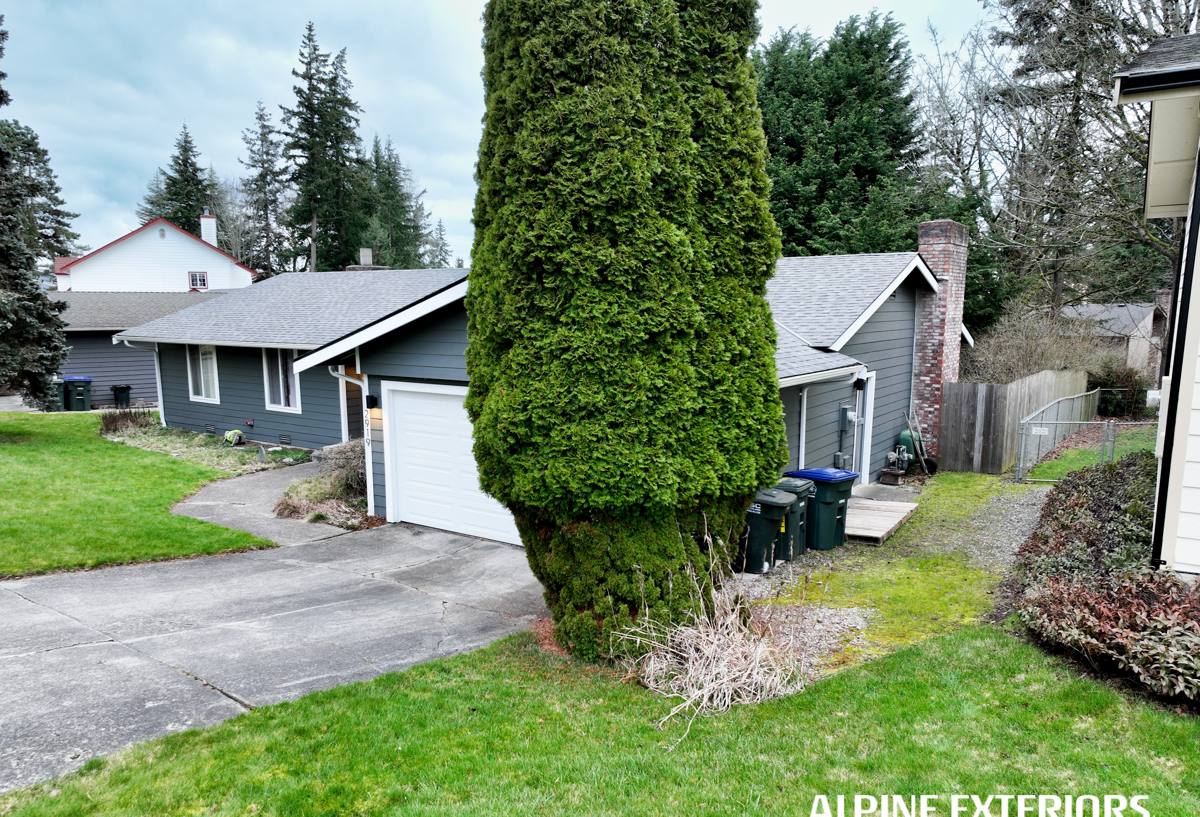
What Salt Air, Driving Rain, and Moss Do to Siding Over Time
Three separate stresses compound on Nooksack-area homes, and each one attacks siding differently.
- Salt air accelerates corrosion on fasteners, flashing, and any exposed metal trim, and it can degrade lower-grade paint and coatings faster than inland exposure.
- Driving rain, pushed by wind off the water and funneled along the river valley, forces water sideways into seams, laps, and butt joints that would stay dry in a calm rain.
- A long moss season — shaded, damp conditions that can run most of the year under tree cover — lets moss and algae colonize siding surfaces, holding moisture against the material long after the rain stops.
Wood-based and engineered-wood siding products are the most vulnerable to this trio, since they rely on intact paint and sealant to keep moisture out of a material that will swell, rot, or delaminate once water gets in. Vinyl doesn't rot, but it flexes and gaps at seams over time, giving wind-driven rain a path behind the panel with no real drainage plane to manage it. Fiber cement handles all three stresses better by design, which is a large part of why we standardized on it.
Why We Install Only James Hardie Fiber Cement Here
We install James Hardie fiber cement exclusively — not vinyl, not LP SmartSide, not Cemplank or Allura, not primed spruce or cedar. That's a deliberate standard, not a lack of options. Fiber cement is non-combustible, dimensionally stable when it gets wet, and doesn't feed moss or mildew the way wood fiber does. Hardie's HZ5 product line is specifically engineered for climates like ours — freeze-thaw cycling, sustained moisture exposure, and coastal-influenced weather — and the ColorPlus factory finish is baked on under controlled conditions, which holds color and resists moisture far better than field-applied paint on wood or engineered-wood products.
None of that means Hardie siding is maintenance-free or immune to moss. It means the material itself won't rot, swell, or delaminate if moss does take hold, and a proper wash restores it instead of masking damage that's already happening underneath. That's the difference we're selling — not a product that ignores the climate, but one engineered to survive it long term, backed by a transferable warranty on both the substrate and the finish.
What a Correct Siding Replacement Actually Involves
Replacing siding in a wet, shaded, salt-influenced area is as much about what happens underneath the new siding as the siding itself. A rushed job that skips the wall assembly details will fail in this climate faster than almost anywhere else in the county.
Before the New Siding Goes On
Old siding comes off entirely so the sheathing underneath can be inspected — not spot-checked from the outside, but actually looked at. Any rot, soft sheathing, or water-staining gets cut out and repaired before anything new goes up. Covering damaged sheathing with new siding just hides a problem that keeps growing.
The Details That Determine Whether It Lasts
- A weather-resistant barrier installed correctly, lapped shingle-style so water sheds down and out, not into seams
- Proper flashing at every window, door, and penetration — the single most common failure point we find on older homes in this area
- A drainage gap or rain screen strategy so any moisture that does get behind the siding has somewhere to go and can dry out
- Correct fastener placement and type, sized and spaced to Hardie's installation instructions rather than "close enough"
- Factory-cut and factory-primed edges kept intact, with field cuts properly sealed per manufacturer spec
- Caulking only where Hardie's install guide calls for it — over-caulking traps moisture just as badly as under-caulking lets it in
Skip any one of these and you can still end up with moisture problems behind brand-new siding. This is the part of the job that doesn't show up in a driveway photo but decides whether the siding is still performing in fifteen years.
Hardie Fiber Cement vs. Other Siding Materials in This Climate
| Factor | James Hardie Fiber Cement | Vinyl | Wood / Engineered Wood (LP-style) |
|---|---|---|---|
| Moisture absorption | Minimal; dimensionally stable when wet | None, but seams leak behind the panel | Absorbs moisture; swells and can delaminate |
| Moss / mildew resistance | Doesn't feed growth; surface can be washed | Doesn't feed growth; can trap moisture behind it | Organic material feeds moss and mildew directly |
| Coastal / salt air durability | High — factory finish resists salt exposure | Can chalk and become brittle over time | Paint and sealant degrade faster near salt air |
| Fire resistance | Non-combustible | Melts and can contribute to fire spread | Combustible |
| Typical field lifespan here | Multiple decades with routine care | Shorter before warping/fading in this exposure | Shorter without diligent repainting and sealing |
Our Process for Nooksack-Area Siding Replacements
The process is the same discipline on every job, adjusted for what the individual house needs:
- On-site assessment — we look at the existing siding, sheathing condition where accessible, moss and moisture patterns on each elevation, and trim/flashing condition
- Written estimate — scope, materials, and any anticipated sheathing repair called out honestly, not buried in a lump sum
- Tear-off and inspection — full removal of old siding, sheathing repair where needed, before any new material is installed
- Barrier, flashing, and drainage installation — the underlying assembly that determines long-term performance
- Hardie siding and trim installation — installed to manufacturer spec for fastening, gapping, and finishing
- Final walkthrough — checking caulk lines, paint touch-up on cut edges, and site cleanup before we call it done
What Affects Your Siding Replacement Cost
We don't quote blind pricing on a page — every home is different — but these are the factors that actually move the number on a Nooksack-area project:
| Factor | Why It Matters |
|---|---|
| Sheathing condition | Rot repair behind old siding is common in shaded, damp exposures and adds labor and material |
| Home size and number of stories | More surface area and taller elevations affect both material and labor |
| Trim and architectural detail | Corners, window surrounds, and multiple rooflines take more time to flash and finish correctly |
| Number of window and door openings | Each opening needs proper flashing, which is labor-intensive but non-negotiable |
| Site access | Tree cover, fencing, and tight lot lines near the river can slow staging and tear-off |
| Old siding removal difficulty | Multiple layers of old siding or extensive rot add disposal and labor time |
Why Hiring a Crew That Already Works This Area Matters
Siding is not a one-size-fits-all install, and a crew that mostly works dry, open, inland lots won't automatically get the details right on a shaded river-corridor home. We already know what to look for on Nooksack-area houses: where moss tends to build first, which elevations take the worst wind-driven rain, and how much drainage detailing a given wall assembly actually needs versus the minimum code requires. That local pattern recognition shortens the assessment and reduces the chance of a callback for a moisture problem that a generic install would have missed.
It also matters for responsiveness. If a flashing detail needs a second look after a hard winter storm, a crew that's already established in Ferndale and the surrounding river-corridor communities can get back out to a job site without the delay of dispatching from across the county.
Keeping Hardie Siding Looking Good Through Moss Season
Fiber cement doesn't need the upkeep wood siding does, but it isn't zero-maintenance in this climate. A yearly gentle wash — garden hose pressure or a soft-bristle brush, not a high-pressure washer aimed directly at seams — keeps moss and algae from building up on shaded elevations. Trimming back overhanging branches improves airflow and sun exposure on the walls that stay damp longest, and keeping gutters clear reduces the splash-back that feeds moss at the base of the siding. None of this is complicated, but it's the difference between siding that still looks new at year fifteen and siding that looks tired at year five, regardless of how good the material is.
If your siding in the Nooksack area is showing moss buildup, failing paint, or soft spots you can't quite explain, we're glad to take a look and give you a straight answer — including whether replacement is actually necessary yet. Reach out for a free, no-pressure estimate and we'll walk the property with you.