 Ferndale Roofing
 Decks Built for the Wet Side of Whatcom County
Nooksack sits in a part of Whatcom County where weather does most of the talking. Between the rain that rolls in off the Pacific, the humid lowlands along the river valley, and the salt-tinged air that drifts inland from Bellingham Bay and the Puget Sound, an outdoor deck here works harder than it would almost anywhere else in the country. A deck built without that reality in mind will look fine for a season or two and then start showing problems — soft spots, black streaks, loose railings — well before it should.
Ferndale Roofing Co builds custom decks for homeowners in and around Nooksack, and we treat this as a local project every time, not a generic build dropped into a different climate. That means picking materials, fasteners, and framing details based on what actually holds up here, not just what's cheapest to install.
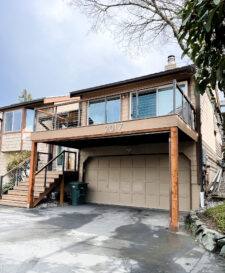
What This Climate Does to an Outdoor Deck
Moisture That Never Fully Dries
Whatcom County doesn't get brief downpours followed by dry stretches — it gets long, low-intensity rain that soaks into wood grain, settles into fastener holes, and sits under railings and ledger boards for days at a time. Decking that isn't detailed for drainage traps that moisture instead of shedding it, and trapped moisture is the root cause of almost every deck failure we see: rot, delamination, and fastener corrosion all start there.
Moss and Algae in Shaded, Tree-Lined Yards
Nooksack's tree cover and river-valley humidity create ideal conditions for moss and algae on any horizontal wood surface that stays damp. Once moss takes hold on a deck board, it holds even more water against the wood and turns the surface slick — a real slip hazard on stairs and landings, not just a cosmetic issue.
Salt Air and Metal Fatigue
Homes closer to the bay and open water pick up airborne salt that accelerates corrosion on anything metal — fasteners, brackets, railing hardware. Standard coated screws that would last decades in a drier inland climate can start rusting and staining decking within a few years out here.
Freeze-Thaw Cycling
Whatcom County doesn't see deep winter freezes often, but it gets enough freeze-thaw swings each year to matter. Footings that aren't poured to proper depth, or that sit in poorly drained soil, can shift slightly over repeated freeze cycles — enough to throw a deck out of level over several seasons.
Choosing the Right Decking Material for This Area
There's no single "best" decking material — there's a best fit for how much upkeep you want to do and how the deck will be used. Here's how the common options compare specifically for a wet, moss-prone climate like this one.
| Material | Moisture Behavior | Moss/Algae Resistance | Maintenance | Typical Lifespan Here |
|---|---|---|---|---|
| Pressure-treated wood | Absorbs water; needs sealing to shed it | Low — needs regular cleaning | Annual cleaning + resealing every 1-2 years | 10-15 years with upkeep |
| Cedar | Naturally moderate resistance, still absorbs over time | Moderate | Periodic cleaning and oil/stain | 12-20 years with upkeep |
| Composite decking | Doesn't absorb water into the core | Better, but surface can still grow algae in constant shade | Occasional washing, no sealing/staining | 20-30 years |
| PVC/capped composite | Fully sealed surface, sheds water | Best of the group | Low — occasional rinse | 25+ years |
Wood costs less up front and can look great with regular care, but it demands that care every year to hold up in this climate. Composite and capped composite cost more initially but trade ongoing maintenance for consistency — worth weighing against how much time you actually want to spend on deck upkeep each spring.
Getting the Structure Right: Footings, Framing, and Drainage
The decking surface is the part everyone sees, but the structure underneath is what determines whether the deck is still solid in fifteen years. A few details matter more here than in drier climates:
- Footing depth: Footings need to be poured below the local frost line and bear on undisturbed, well-draining soil — shortcuts here show up as settling or shifting later.
- Ledger flashing: Where the deck attaches to the house, proper flashing and a drainage gap keep water from working its way behind the ledger board and into the house framing — one of the most common rot points on any deck.
- Joist protection: Self-adhering joist tape over the top of each joist keeps water from soaking into end grain and fastener holes, which is where rot typically starts first.
- Drainage slope: A slight slope away from the house keeps water moving off the deck surface instead of pooling against siding or door thresholds.
- Fastener and hardware grade: Hot-dip galvanized or stainless-steel hardware resists the corrosion that salt air and constant moisture cause in standard coated fasteners.
Railings, Stairs, and Hardware That Actually Hold Up
Railings and stairs take the most direct wear on any deck — they're gripped, leaned on, and exposed to weather from every angle. Guardrail height and baluster spacing follow Washington's residential building code regardless of style, and beyond code minimums, the hardware choice matters as much as the material choice. Loose railings are almost always a fastener problem, not a design problem — usually undersized or corroded fasteners that never should have been used this close to open water and salt air.
On stairs specifically, we pay close attention to tread surface texture and drainage, since a mossy or slick stair tread is a real fall hazard, not just a maintenance annoyance.
Our Process: From First Visit to Final Walkthrough
1. Site Visit and Assessment
We look at sun exposure, shade patterns, drainage, and how close the site is to open water or exposed weather — all of it affects material and hardware recommendations.
2. Design and Material Selection
We walk through the material comparison above in the context of your specific yard, budget, and how much upkeep you actually want to commit to.
3. Permitting
We handle the permit application and coordinate any required inspections through the local jurisdiction, so footing depth, framing, and guardrail details are signed off correctly.
4. Construction
Footings, framing, ledger flashing, and joist protection go in first and get inspected before decking goes down — the parts you won't see later are the parts that matter most.
5. Final Walkthrough
We go over the finished deck together, including what maintenance (if any) the material you chose will need going forward.
Keeping a Nooksack-Area Deck Looking and Working Right
Whatever material you choose, a little seasonal attention keeps a deck performing the way it should for its full lifespan. A practical yearly routine looks like this:
- Sweep off leaves and debris regularly, especially in fall — trapped organic matter holds moisture and feeds moss growth
- Wash the deck surface at least once a year with a deck-safe cleaner to remove early moss and algae before it takes hold
- Check and re-tighten railing hardware annually — this is the fastest way to catch corrosion before it becomes a safety issue
- Inspect ledger flashing and the gap where the deck meets the house for any signs of water staining
- For wood decking, plan on resealing or restaining on the schedule the product calls for — skipping a cycle in this climate compounds fast
- Keep gutters and downspouts near the deck clear so runoff isn't dumping extra water onto the deck surface
Permits and Local Considerations Around Ferndale and Whatcom County
Most deck construction in this area requires a building permit, with requirements tied to the deck's height, size, and attachment to the house. Footing depth and guardrail specifications are set by Washington's residential building code and enforced through the local jurisdiction's inspection process. Skipping permitting on a deck project isn't just a compliance issue — it can complicate things later at resale, and it removes the inspection checkpoints that catch structural problems before they're buried under decking.
Why a Crew That Already Works in Nooksack Matters
A deck builder who works this specific corner of Whatcom County regularly already knows which yards sit in constant shade, which properties get more salt exposure off the bay, and which soil conditions in the area need extra attention at the footing stage. That's the difference between a deck detailed for the climate it's actually in and one built to a generic spec sheet. It also means someone who already knows the local permitting process and inspectors, which keeps the project moving instead of stalling on paperwork.
A few questions worth asking any contractor you're considering for a deck project in this area:
- Are you licensed, bonded, and insured to do residential construction in Washington?
- Will you pull the permit and coordinate inspections, or is that left to me?
- What fastener and hardware grade do you use, and why?
- How do you detail the ledger connection and joist protection against moisture?
- Can you walk me through why you're recommending a specific decking material for my yard specifically?
A straight answer to all five is a good sign. Vague answers, especially around fasteners and ledger detailing, are worth pausing on.
If you're planning a new deck or replacing an aging one in the Nooksack area, we're happy to take a look and put together a free, no-pressure estimate — just fill out the form below and we'll follow up to schedule a visit.