 Ferndale Roofing
 Composite Decking in Cordata: Built for the Weather We Actually Get
Cordata sits close enough to the water and low enough in the Nooksack valley fog belt that decks here take a beating most of the year. Salt-tinged air off the Strait, driving rain that comes in sideways more often than straight down, and a moss season that can run from October clear through April all work against outdoor structures. A deck that looks fine in July can be growing algae in the shady corners by January if it wasn't built with drainage and airflow in mind from day one.
Composite decking exists precisely for this kind of climate. It doesn't absorb water the way wood does, it won't rot from the inside out, and it resists the slow moss creep that colonizes anything damp and shaded. But composite decking is not maintenance-free or installation-proof. A composite deck installed poorly will still trap moisture underneath, still grow slime on the walking surface, and still fail early — just in different ways than a wood deck fails. The material only performs as well as the install underneath it.
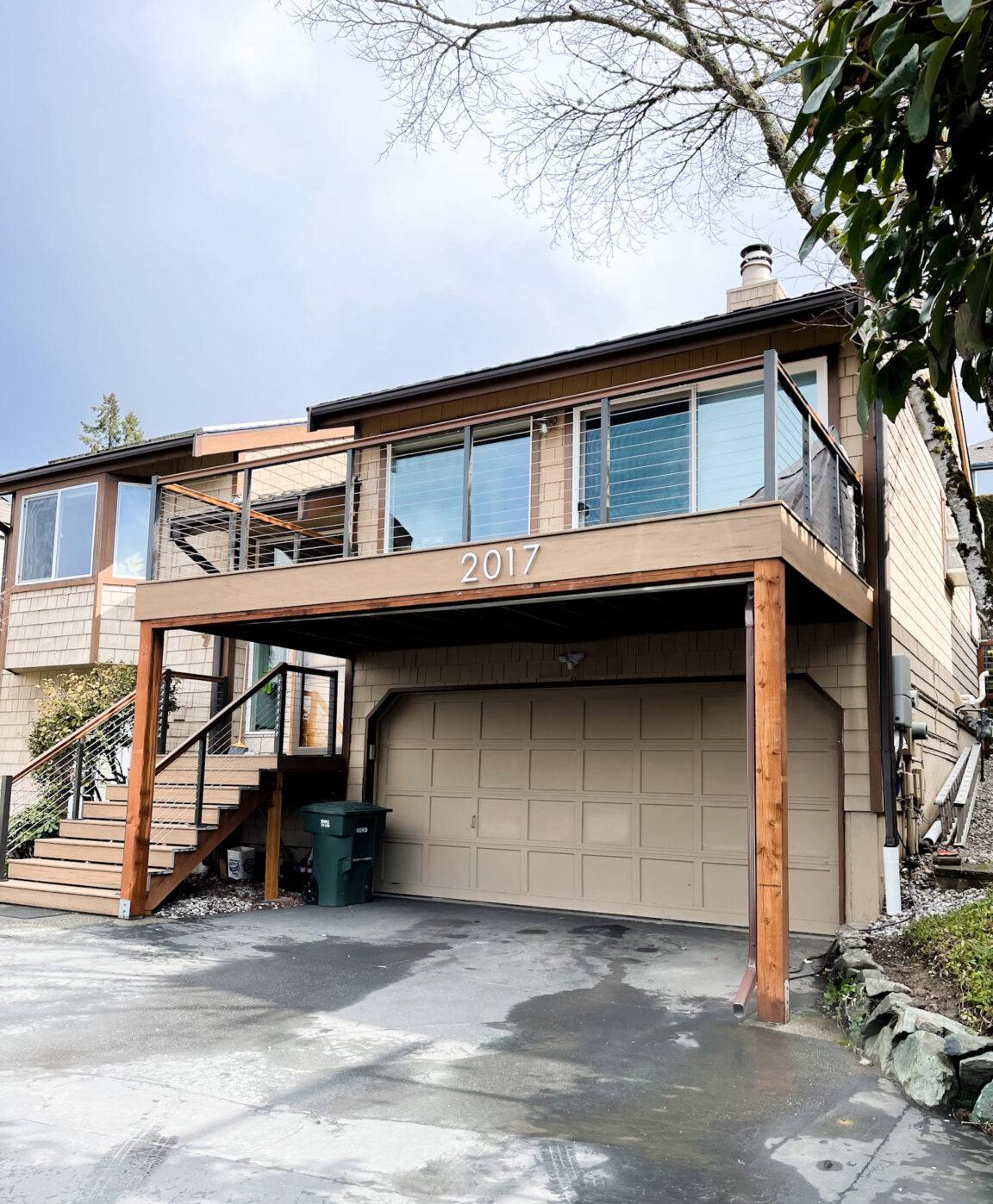
Why Composite Makes Sense for a Cordata Property
Most of the homes we work on in and around Cordata are dealing with one or more of the same conditions: partial shade from mature trees, a north- or east-facing deck that doesn't get much sun to dry out between storms, and gutters or downspouts that dump extra water near the deck footprint. Wood decking in those conditions needs yearly cleaning, re-staining, and eventually board replacement as rot sets in at fastener points and end grain. Composite decking sidesteps most of that:
- No annual staining or sealing cycle
- Consistent color and texture even after years of wet exposure
- Resists the surface fuzzing and splintering that wet wood develops
- Slower moss and algae colonization on the walking surface, especially with capped boards
- No risk of boards cupping or warping from repeated wet-dry cycles the way lower-grade lumber can
It's not a magic material, though. Composite boards still need a substructure that drains, still need airflow underneath, and still need the right fastener system for our climate. Homeowners who assume "composite means no maintenance and no installation care" are the ones who end up disappointed a few years in.
Where Composite Still Needs Attention
Even with a capped composite board, a shaded, low-airflow deck in Whatcom County will collect organic debris — needles, pollen, leaf litter — and that debris holds moisture against the surface long enough for algae and light moss to take hold. Composite doesn't rot from it, but it can look dirty and get slick underfoot if it's never rinsed or swept. We factor this into board selection and layout, especially on decks that sit under tree canopy or against the north side of a house.
What a Correct Composite Decking Install Actually Involves
The board itself is the visible part, but most of what determines whether a composite deck holds up in this climate happens underneath and around it.
Framing and Drainage
Joists need to be spaced correctly for the specific composite product being used — composite boards flex differently than wood and manufacturers publish minimum joist spacing for a reason. We also grade the ground or slope the framing slightly where possible so water sheds away from the house instead of pooling under the deck, which matters most on lower decks with limited ground clearance.
Fastening
Hidden fastener clip systems are standard on most composite jobs now, and they matter more here than in a dry climate: fewer surface penetrations mean fewer places for water to sit on top of a fastener head and start staining or seeding algae growth. Where face screws are used — around borders, stair treads, or certain board profiles — we use fasteners rated for the specific composite material to avoid the mushrooming or discoloration that happens with mismatched hardware.
Ventilation Underneath
A composite deck built tight to the ground or boxed in without any airflow traps humidity underneath year-round. That doesn't rot composite boards, but it does encourage mold and mildew in the framing lumber underneath (most substructures are still pressure-treated wood or steel joists, not composite), and it can shorten the life of the frame even while the decking on top looks perfect. We leave real ventilation gaps and, where skirting is wanted, use vented skirting rather than sealing the underside completely.
Board Layout and Expansion Gaps
Composite boards expand and contract with temperature more than people expect. Gaps at butt joints, picture-frame borders, and against the house need to follow manufacturer spec, not guesswork. Skip this step and boards can buckle or gap unevenly within a season or two, especially through the wider temperature swings we get between a foggy Cordata morning and a clear afternoon.
Comparing Decking Materials for This Climate
| Factor | Composite (capped) | Composite (uncapped) | Pressure-Treated Wood |
|---|---|---|---|
| Upfront cost | Higher | Mid-range | Lowest |
| Moisture/rot resistance | Excellent | Good | Fair — depends on maintenance |
| Moss/algae resistance on surface | Good, especially in sun | Fair — more porous surface | Poor without regular cleaning |
| Annual maintenance | Occasional wash | Occasional wash, more prone to staining | Cleaning, staining/sealing |
| Expected lifespan (this climate) | 25–30+ years | 15–25 years | 10–15 years before major repair |
| Slip resistance when wet | Good with textured profiles | Fair | Fair, worse when algae present |
These are general ranges based on how these material categories typically perform, not a guarantee for any specific product — actual results depend on the board profile, installation quality, and how much sun and airflow a given deck gets.
Our Process for Composite Decking Jobs in Cordata
- On-site assessment: We look at sun exposure, drainage, existing framing condition (if this is a replacement), and how the deck ties into the house — including where water from the roof or gutters lands.
- Material selection: We walk through board options and profiles that fit the budget and the site conditions, being upfront about where a lower-tier product will need more upkeep versus a capped board.
- Framing and structural work: Repair or build the substructure to correct spacing, slope, and ventilation before a single composite board goes down.
- Installation: Hidden fastener systems where the product supports them, correct expansion gaps, and attention to board orientation for drainage.
- Finish details: Fascia, stair treads, railing attachment points, and any transitions where water tends to collect are treated as their own detail, not an afterthought.
- Walkthrough: We go over basic care — what it needs and what it doesn't — so there are no surprises the first wet winter.
What We See Go Wrong on Existing Decks Nearby
A good share of the composite decking calls we get in this area aren't new builds — they're repairs or partial rebuilds on decks that were installed without accounting for our rain and moss patterns. Common issues include boards fastened directly to unventilated framing that then developed rot underneath even though the decking on top looked fine, drainage that was never sloped away from the foundation, and picture-frame borders installed without expansion gaps that buckled after a couple of temperature swings. None of these are failures of composite as a material — they're installation shortcuts that show up faster in a wet climate than they would somewhere dry.
Maintaining a Composite Deck in Whatcom County
- Sweep off leaves, needles, and pollen buildup regularly, especially in shaded areas and under tree canopy
- Rinse the surface a few times a year with plain water or a mild soap solution to prevent moss and algae from establishing
- Check gaps between boards for trapped debris that holds moisture against the edges
- Keep gutters and downspouts clear so runoff isn't dumping extra water directly onto or under the deck
- Inspect fastener points and railing connections annually for movement, especially after the first winter
- Confirm under-deck ventilation isn't blocked by stored items, plants, or added skirting
Why Hire a Crew That Already Works in Cordata
Whatcom County's microclimates vary more than people expect over a short distance — a deck a few blocks from the water deals with different salt exposure and wind-driven rain than one further inland, and shaded, tree-covered lots hold moisture longer than open ones. A crew that's already worked on decks in and around Cordata has a feel for which lots need extra drainage attention, which framing details tend to get skipped by out-of-area installers unfamiliar with our moss season, and how local permitting and setback requirements typically play out for deck projects in this area. That local knowledge shows up in fewer callbacks and a deck that's still performing well well past the first few wet winters.
We also stand behind the installation itself, not just the product warranty. If something about the framing, drainage, or fastening isn't right, that's on us to fix — not something the homeowner has to sort out with a manufacturer later.
Get a Free Estimate for Your Cordata Deck Project
Whether you're planning a new composite deck or replacing an aging wood deck that's finally given up to the rain and moss, we're happy to take a look and give you a straightforward, no-pressure estimate. Fill out the form below and we'll set up a time to assess your property and talk through the right approach for your specific lot and budget.