 Ferndale Roofing
 Why Siding in Cordata Has to Work Harder Than Siding Inland
Cordata sits in that stretch of Whatcom County where marine air off the Salish Sea meets the kind of steady, driving rain that defines a Pacific Northwest winter. It is not dramatic weather, and that is exactly the problem: it is relentless, low-grade moisture exposure, week after week, month after month, for most of the year. Add in a long moss season, where shaded north- and west-facing walls stay damp long after the rain stops, and you get an exterior environment that quietly punishes siding that was not built or installed for it. Homes in this area tend to sit close enough together, and close enough to mature trees and landscaping, that airflow across certain walls is naturally reduced — which only extends how long those walls stay wet after a storm passes through.
Homes in this area do not usually fail because of one bad storm. They fail because of small gaps, thin water management details, or the wrong material choice that let moisture in a little at a time, for years, until rot, staining, or paint failure finally show up on the surface. Siding installation here is less about surviving an extreme event and more about winning a slow, ongoing fight against salt-laden air and standing damp.
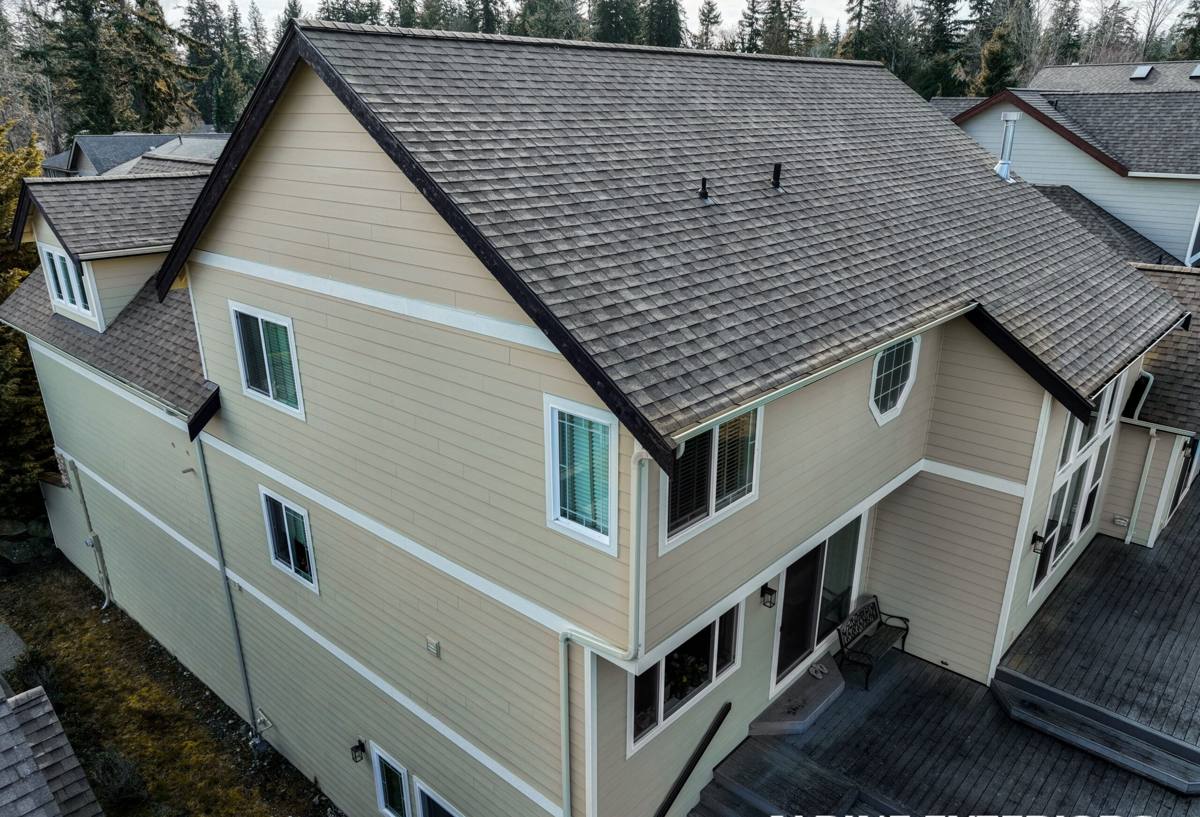
What Correct Siding Installation Actually Involves
A lot of siding problems in Whatcom County trace back to installation shortcuts, not the siding material itself. Getting it right means paying attention to the parts of the job nobody sees once it is painted and trimmed out.
Weather-Resistive Barrier and Flashing
Every wall needs a continuous weather-resistive barrier behind the siding, lapped correctly and sealed at every penetration — window and door openings, hose bibs, electrical boxes, vents. Flashing at windows, doors, and horizontal trim has to shed water outward, not funnel it behind the cladding. In a climate that gets sustained, wind-driven rain, a flashing detail that is "close enough" is not close enough.
Drainage Plane and Rainscreen Gap
On a lot of Cordata-area homes, we build in a small drainage gap between the weather barrier and the back of the siding rather than nailing siding tight to the sheathing. That gap gives any moisture that does get past the outer surface a path to drain and dry out instead of sitting trapped against the wall — a detail that matters far more here than it would in a dry climate.
Fastening and Clearances
Fiber cement siding has specific nailing patterns, fastener types, and minimum clearances from grade, roofing, and decks that manufacturers spell out for a reason. Skipping the ground clearance, for example, invites the exact kind of wicking moisture that rots siding from the bottom up. Correct fastener spacing also matters for how the siding handles our seasonal wet-dry cycling without cupping or popping loose.
Caulking and Joint Treatment
Butt joints, trim intersections, and any place two pieces of siding meet need the right sealant, applied correctly, or they become entry points for moisture within a few seasons. This is a small detail that has an outsized effect on how a home ages in salt air.
Why We Install Only James Hardie Fiber Cement Siding
We do not install vinyl, LP SmartSide, Cemplank, Allura, or bare cedar and primed spruce siding. That is a deliberate standard, not a limitation of what we know how to work with. Each of those products has real strengths, but in a climate defined by salt air, sustained rain, and a long moss season, each one also comes with trade-offs we are not willing to put our name behind:
- Vinyl is affordable and low-maintenance, but it can warp in temperature swings, fades over time, and does nothing to slow a fire — a real consideration with wildfire smoke seasons becoming more common even here.
- LP SmartSide and other engineered wood products perform well when the wood core stays dry, but any breach in the factory coating or a cut edge that is not properly sealed opens the door to moisture absorption, which this climate will find.
- Cedar and primed spruce look great on day one but need ongoing refinishing, and untreated cut ends are especially vulnerable to the kind of persistent damp that hangs around Whatcom County walls in winter.
James Hardie fiber cement is engineered around cement, sand, and cellulose fiber — it does not have an organic wood core to rot, and it is non-combustible. Hardie's ColorPlus factory finish is baked on and warrantied against fading and peeling far beyond what field-applied paint typically holds up to, and the HZ5 product line is engineered specifically for climates with sustained moisture exposure like ours. James Hardie also backs its products with a strong, transferable limited warranty, which matters to homeowners who may sell within the life of the siding — it is one less thing a buyer's inspector can flag. It is the one product line we have found consistently performs the way it is supposed to, for as long as it is supposed to, when installed to spec.
Our Siding Installation Process for Cordata Homes
Every property is a little different, but the process we follow stays consistent because the fundamentals of good water management do not change from house to house.
- On-site assessment. We look at existing siding condition, wall assembly, drainage patterns around the foundation, and any moss or moisture staining that hints at a chronic problem area.
- Removal and substrate check. Old siding comes off and we inspect the sheathing underneath for hidden rot or soft spots before anything new goes up. This is the point where problems that have been building for years actually get found.
- Weather barrier and flashing installation. A new, continuous weather-resistive barrier goes on, with flashing detailed at every window, door, and penetration before a single piece of siding is hung.
- Hardie panel or plank installation. Siding goes up following James Hardie's specified fastening patterns, clearances, and joint treatment for our region's exposure rating.
- Trim, caulking, and finish detailing. Corners, trim boards, and joints are sealed and finished so the whole system sheds water the way it is designed to.
- Final walkthrough. We go over the finished job with the homeowner and flag anything worth keeping an eye on going forward.
Signs Cordata Homeowners Should Watch For
Because moisture damage builds slowly here, the early warning signs are easy to miss until they become expensive problems. Worth checking for on a regular basis:
- Dark streaking or persistent moss growth on north- or west-facing walls that does not go away between rains
- Soft or spongy spots when you press on siding near the bottom courses or around window trim
- Paint that is bubbling, peeling, or chalking faster than the rest of the house
- Visible gaps or separation at butt joints, corners, or trim intersections
- A musty smell in an interior room along an exterior wall, especially after heavy rain
- Warped, cupped, or bowed siding panels, particularly on the side of the house that faces prevailing weather
Siding Options: How They Actually Compare Here
| Material | Moisture Behavior in This Climate | Maintenance Over 15+ Years | Fire Rating |
|---|---|---|---|
| Vinyl | Doesn't absorb water, but can warp and gap, letting moisture behind it | Low, but fading and brittleness increase with age | Combustible |
| Cedar / Primed Spruce | Absorbs moisture readily; cut ends and joints are chronic weak points | High — regular refinishing and caulk maintenance needed | Combustible |
| LP SmartSide / Engineered Wood | Good if coating stays intact; vulnerable at breaches and cut edges | Moderate — coating inspection and touch-up over time | Combustible |
| James Hardie Fiber Cement | Does not absorb or wick moisture into an organic core | Low — factory finish holds color and integrity for years | Non-combustible |
What Drives the Cost of a Siding Installation
Every home is priced individually after a walkthrough, but a few factors consistently move the number up or down:
| Factor | Why It Matters |
|---|---|
| Amount of existing rot or sheathing damage | Hidden damage found during tear-off adds repair work before new siding can go on |
| House size and wall complexity | More corners, dormers, and trim details mean more labor and material cuts |
| Siding profile (plank vs. panel, smooth vs. textured) | Different Hardie profiles carry different material costs and install time |
| Trim and accessory scope | Full trim replacement alongside siding changes the overall project size |
| Access and site conditions | Slopes, tight lot lines, and staging constraints affect labor time |
Because James Hardie siding is installed once and built to last for decades when done correctly, the honest way to think about cost is against the maintenance and replacement cycle you would otherwise be paying for with a shorter-lived material.
Why Hiring a Crew That Already Works This Area Matters
Siding installation is not just a materials decision — it is a set of hundreds of small judgment calls about flashing, clearances, and sequencing that either account for local weather or ignore it. A crew that installs siding across Whatcom County regularly already knows how prevailing weather patterns hit a given wall orientation, where moss tends to establish itself, and which details are worth extra attention versus which are truly cosmetic. That familiarity shows up in how the job holds up ten and fifteen years down the road, not just how it looks the week it is finished. It also means fewer surprises on permitting and inspection, since a crew working this area regularly already understands what local building departments expect to see on a residential siding replacement.
If your Cordata-area home is due for new siding, or you are seeing early warning signs on an existing wall, we are happy to take a look and give you a straight assessment. Reach out for a free, no-pressure estimate using the form below.