 Ferndale Roofing
 Windows in Cordata Work Harder Than People Realize
Cordata sits in the part of Whatcom County that gets the full package: damp marine air drifting in off the Salish Sea, driving rain that comes at windows sideways instead of straight down, and a moss season that seems to stretch longer every year. None of that is dramatic on its own. But year after year, it adds up on the parts of a house that don't get much attention until something goes wrong — and windows are near the top of that list.
A window is really a system: glass, frame, sealant, flashing, and the framing behind it all working together to keep water and air where they belong. When one part of that system starts to fail in a climate like Ferndale's, the others usually aren't far behind. That's the lens we bring to window replacement in Cordata — not just swapping glass, but making sure the whole system is built to hold up here specifically, not in some drier part of the state.
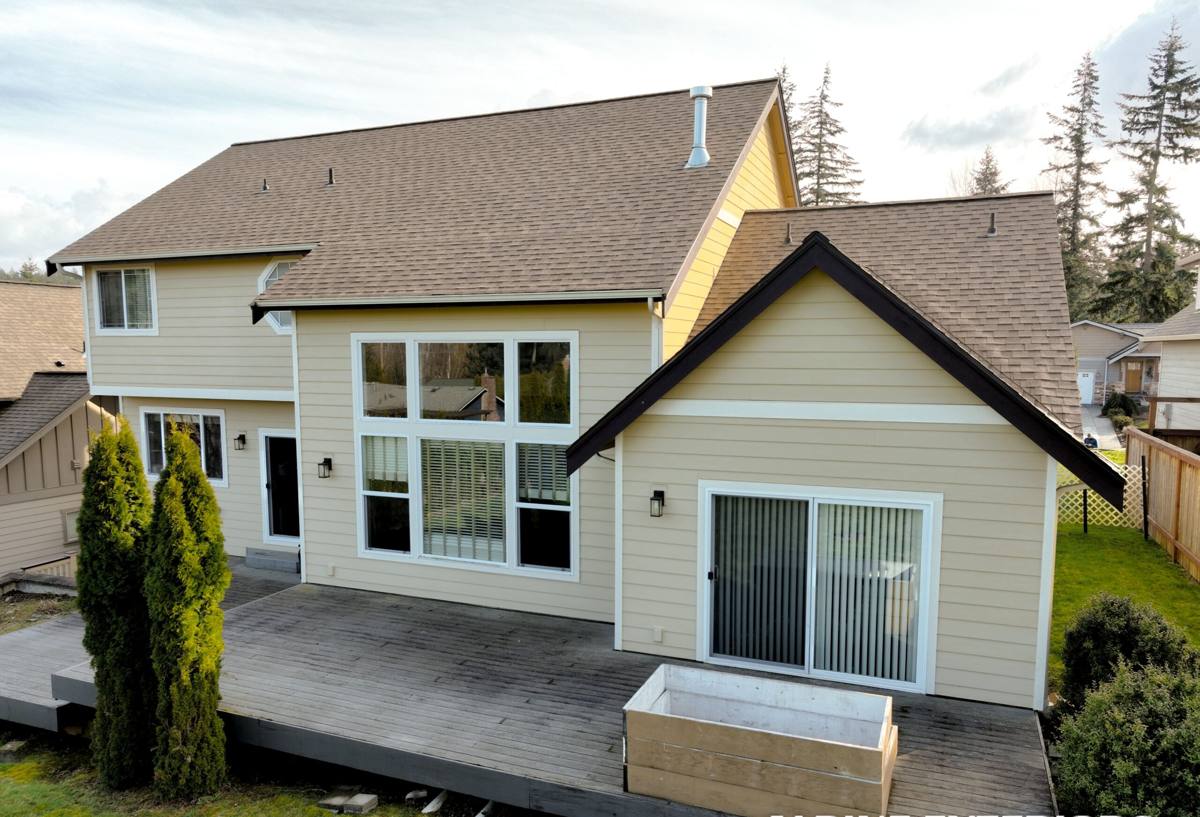
What Salt Air, Rain, and Moss Actually Do to a Window
Salt-Laden Air
Homes closer to the water pick up fine salt content in the air that settles on exterior surfaces. Over time it accelerates corrosion on hardware — hinges, locks, balance systems, and especially older aluminum frames or unprotected fasteners. It's slow, so it's easy to miss until a window won't latch smoothly or a lock starts sticking.
Driving, Wind-Driven Rain
Whatcom County storms don't just fall, they blow. Wind-driven rain finds any gap in flashing or sealant and pushes water sideways and upward, which is a different stress than most window products are designed and tested around. This is where a lot of window failures actually start — not bad glass, but water getting behind the frame through a joint that was never properly sealed or flashed in the first place.
Long Moss and Mildew Season
Extended damp periods keep moss, algae, and mildew active on north-facing and shaded walls for much of the year. On windows, that shows up as black streaking on sills, soft or discolored wood trim, and — in older installations — trapped moisture inside the wall cavity that you can't see until the interior trim starts to show it.
Signs a Cordata Home Is Due for Window Replacement
Most homeowners don't wake up one day and decide they need new windows — they notice a handful of small things that, together, point to it. Worth checking for:
- Sills or bottom corners that feel soft, spongy, or discolored to the touch
- Visible fogging or a permanent haze between panes of double-pane glass (a sign the seal has failed)
- Drafts you can feel near the frame even with the window fully closed and locked
- Windows that are difficult to open, close, or lock — especially after damp weather
- Paint or finish that's bubbling, peeling, or chalky right at the window frame
- Condensation forming consistently on the inside of the glass, even in mild weather
- Visible gaps between the window frame and the siding or trim around it
- A noticeable rise in heating costs with no other obvious cause
Any one of these on its own might just need a repair. Several at once, especially on the same window, usually means the underlying seal or flashing has already let water in.
What a Correct Window Replacement Job Actually Involves
Removal and Inspection
The old window comes out carefully so we can actually see the rough opening — the wood framing, sheathing, and any flashing that's already there. This is the step that gets skipped in a rushed job, and it's the one that matters most in a wet climate. If there's hidden rot or moisture damage behind the old frame, it needs to be dealt with before a new window ever goes in. Installing a new window over a compromised opening just hides the problem for a few more years.
Flashing and Weatherproofing
This is the part that separates a window that lasts from one that doesn't. Proper flashing directs water back out and away from the wall assembly, layered correctly with the house wrap or building paper so water always sheds downward and outward, never back into the wall. Given how much driving rain this area sees, we don't treat flashing as optional or interchangeable — it's sequenced the same way every time, sill pan first, then jamb flashing, then head flashing over the top.
Installation and Sealing
The window gets set plumb, level, and square, shimmed correctly so it isn't relying on the frame to hold its shape, then fastened per the manufacturer's specifications. Insulation goes around the frame to close air gaps without over-packing, which can bow the frame. Exterior sealant is applied at the right joints — not everywhere, since some gaps are intentionally left open to let any incidental moisture drain back out.
Choosing the Right Window Material for This Climate
There's no single "best" window material — the right choice depends on the home, the budget, and how much upkeep the homeowner wants to take on. In a marine climate with salt air and long wet seasons, here's how the common options generally compare:
| Material | Moisture & Salt Resistance | Maintenance | Typical Lifespan |
|---|---|---|---|
| Vinyl | Very good — won't corrode or rot | Low; occasional cleaning | 20-30 years |
| Fiberglass | Excellent — very stable in moisture and temperature swings | Low | 30-40+ years |
| Wood (unclad) | Poor without diligent upkeep in this climate | High — regular painting/sealing | Varies widely with maintenance |
| Wood-clad (exterior aluminum/vinyl shell) | Good on the exterior face; interior wood still needs some care | Moderate | 25-35 years |
| Aluminum | Prone to corrosion near salt air without quality coatings; poor insulator | Moderate | Varies; coating quality matters most |
We generally steer homeowners in this area away from bare, unclad wood exteriors and lower-grade aluminum unless there's a strong design reason for it — not because those products are bad in every climate, but because the maintenance burden and moisture sensitivity are a poor match for what Cordata weather actually delivers. Vinyl and fiberglass, with quality weatherstripping and hardware rated for coastal exposure, tend to be the more honest long-term fit.
Energy Performance and Moisture Control
Two numbers matter most on a spec sheet for this climate: the U-factor, which measures how well the window resists heat loss, and condensation resistance, which reflects how well it handles interior humidity against a cold, wet exterior. Newer window assemblies with warm-edge spacers and properly sealed insulated glass units cut down on the interior condensation that's common on older single-pane or early double-pane windows during Whatcom County's colder, wetter months. Lower condensation also means less moisture sitting on sills and trim — which directly slows the mildew and wood-softening problems that show up in this climate faster than in drier regions.
Our Process, Start to Finish
- On-site assessment — we look at each window individually, not just the house as a whole, since sun exposure and wind direction vary window to window on the same home
- Honest recommendation — full replacement where the frame or opening is compromised, or a more targeted fix where the window itself is still sound
- Clear written estimate — materials, scope, and timeline spelled out before any work starts
- Careful removal and opening inspection — checked for hidden moisture damage before the new unit goes in
- Correct flashing, insulation, and sealing — done in sequence, not shortcut
- Final walkthrough — every window opens, closes, and locks the way it should before we consider the job done
Why Local Experience in Cordata Matters
Window replacement done right looks almost identical whether the home is on the coast or fifty miles inland — right up until the first real Whatcom County storm hits. That's when the difference between a rushed install and a properly flashed one shows up. A crew that regularly works homes in and around Ferndale already knows which wall orientations take the worst wind-driven rain, how long the moss season really runs, and why salt air changes what "good enough" hardware looks like. That's not something you get from a manual — it's from doing this work, on these kinds of homes, in this specific weather, on a regular basis.
It also means we're not guessing on local permitting or code requirements for window replacement, and we're not far away if a question comes up after the install.
After Installation: Keeping Windows Performing
New windows still need a little seasonal attention in this climate. A soft brush and mild soap on sills and tracks a couple of times a year keeps moss and algae from getting a foothold. Wiping down hardware helps limit the slow corrosion that salt air causes over time. And a quick visual check of the exterior sealant once a year — especially after a hard winter — catches small cracks before they become a water intrusion problem. None of this is heavy maintenance; it's the kind of upkeep that protects the investment you just made.
If you're noticing drafts, fogged glass, sticking frames, or just want a straight answer on whether your windows are holding up the way they should, we're happy to take a look. Reach out for a free, no-pressure estimate using the form below.