 Ferndale Roofing
 Roof Replacement in Cordata: Built for What This Climate Actually Does to a Roof
Cordata sits close enough to the water and to the timber-heavy terrain around Ferndale that its roofs take a different kind of beating than roofs further inland. Salt-laden air off the Strait works into fasteners, flashing, and any exposed metal. Driving rain — the kind that comes in sideways during a fall or winter system — finds every weak seam instead of just running off the field of the roof. And the long, damp, mild-temperature stretch that defines a Whatcom County year is close to ideal growing conditions for moss and algae. None of these three things is dramatic on its own. Together, over years, they're what actually shortens a roof's life here, usually well before the shingles themselves would otherwise be "worn out."
A roof replacement in this specific area needs to be planned around those three stressors, not just installed to a generic spec. That means paying real attention to underlayment quality, fastener corrosion resistance, flashing detail at every penetration, and ventilation — because a roof that can't dry out between rain events is a roof that's already losing its fight against moss and rot.
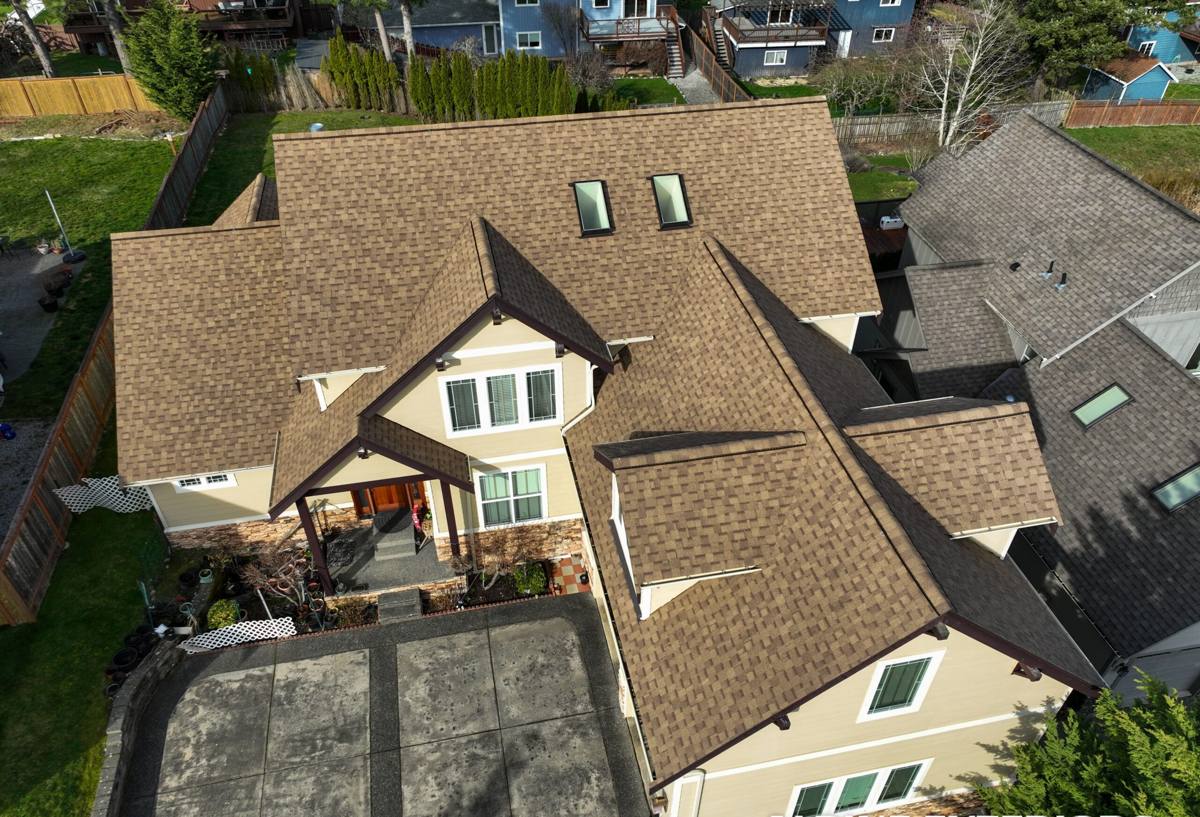
Signs a Cordata Roof Needs Replacing, Not Another Patch
Not every roof problem calls for a full tear-off. But there's a point where repair spending stops making sense and starts just delaying the inevitable while risking damage underneath. We look for:
- Shingles that are cupping, curling, or losing granules in large patches, not just a few spots
- Moss that keeps coming back within a season or two of cleaning, especially on north-facing slopes
- Soft or spongy decking felt underfoot during an inspection — a sign moisture has already gotten past the surface layer
- Repeated leak calls in different spots, rather than one isolated failure
- Flashing that's rusted, lifted, or was never properly step-flashed at a wall or chimney
- A roof that's 20+ years old on standard asphalt composition, which is close to the realistic end of service life in this climate even with good maintenance
If a roof is showing two or three of these at once, that's usually a sign the underlayment and decking are compromised in more places than are visible from a ladder, and a full replacement will end up costing less over time than chasing leaks one at a time.
What a Correct Roof Replacement Actually Involves
Tear-Off and Deck Inspection
Every layer comes off down to the decking. This is the point where hidden problems — rotted sheathing, old leak damage, undersized or missing flashing — get found and fixed, not covered up. Skipping a full tear-off, or "roofing over" an existing layer, buries these problems under a new roof that will fail early because of what's underneath it.
Underlayment
In a region with this much sustained rain, underlayment isn't a formality — it's the roof's actual second line of defense. We use synthetic underlayment as standard, with self-adhered ice-and-water membrane at eaves, valleys, and any low-slope transition where wind-driven rain is most likely to work its way underneath the shingle field.
Flashing
Chimneys, skylights, sidewalls, and roof-to-wall transitions are where most leaks actually originate — not the open field of shingles. Correct step flashing, counter-flashing, and kick-out flashing at these points matters more to long-term watertightness than almost anything else in the job.
Ventilation
A balanced intake-and-exhaust system lets the attic breathe, which keeps the underside of the decking dry and helps prevent the kind of trapped moisture that feeds rot and, indirectly, moss growth on the surface above it. On a lot of older Cordata-area homes, ventilation was undersized or mismatched to begin with — replacement is the natural point to correct it.
Fasteners and Metal
Given the salt air in this region, we use corrosion-resistant fasteners and flashing metals rather than standard-grade material that rusts and stains within a few years near the coast.
Material Options for Cordata Homes
Most homes in this area do well with a quality architectural asphalt composition shingle — it handles the wind and rain load, comes with solid manufacturer warranties, and is priced reasonably relative to its lifespan here. Metal roofing is a strong option where a homeowner wants a longer service life and better moss resistance and is comfortable with the higher upfront cost. We're generally cautious about wood shake and shingle in this specific climate — the moisture and moss pressure make it a high-maintenance choice, and we'll say so plainly rather than sell it as low-effort.
| Material | Typical Lifespan (this climate) | Moss/Moisture Behavior | Relative Cost |
|---|---|---|---|
| Architectural asphalt shingle | 20–30 years | Good with proper ventilation and periodic cleaning | $$ |
| Standing seam metal | 40–50+ years | Very good — sheds moss more effectively, minimal organic buildup | $$$$ |
| Wood shake/shingle | 15–25 years, shorter without diligent upkeep | Poor without frequent maintenance in a damp climate | $$$ |
| Synthetic composite shingle | 30–50 years | Good — engineered to resist moisture absorption | $$$ |
Our Roof Replacement Process
- On-site inspection and estimate — we look at the whole roof system, not just the shingles, and give a written, itemized quote.
- Material selection — we walk through the honest trade-offs for your home and budget rather than pushing one product line.
- Scheduling around the weather — in this region that means watching forecasts closely and building in flexibility, since a roof torn open in a surprise rain system is a problem nobody wants.
- Tear-off and deck repair — old material removed, decking inspected, any soft or damaged sheathing replaced before anything new goes down.
- Underlayment, flashing, and ventilation installed — the parts of the job that determine how the roof performs in year 10, not just year one.
- New roofing material installed to manufacturer spec, which matters for warranty coverage.
- Final walkthrough and cleanup — including a magnetic sweep for stray fasteners and a review of the finished work with the homeowner.
What Drives Cost on a Cordata Roof Replacement
Every quote is specific to the home, but the same handful of factors move the price up or down on most jobs in this area:
| Factor | Why It Matters Here |
|---|---|
| Roof pitch and complexity | Steeper or multi-plane roofs take longer and need more safety setup |
| Number of penetrations | Each chimney, vent, or skylight is an extra flashing detail — and a common leak point if done wrong |
| Decking condition | Rot or moisture damage found during tear-off adds material and labor to replace it properly |
| Material choice | Asphalt, metal, and synthetic products carry very different price points and lifespans |
| Ventilation upgrades | Correcting undersized or missing attic ventilation on older homes adds scope but pays off long-term |
| Access and site conditions | Tree cover, tight lots, or difficult staging areas affect labor time |
We give a full written breakdown before any work starts, so there aren't surprise line items once the tear-off is underway.
Why a Crew That Already Works This Area Matters
Roofing crews who work across a wide, generic territory tend to install to a one-size-fits-all spec. A crew that regularly works Cordata and the surrounding Ferndale and Whatcom County area knows which details actually matter locally: how much ice-and-water membrane a given eave or valley really needs, which fastener grade holds up against the salt air coming off the water, and how aggressively moss establishes itself on north- and shade-facing slopes in this specific microclimate. That local pattern recognition is what keeps small details — the ones that don't show up on a spec sheet — from getting missed.
There's also a practical side: local crews know the permitting process for Whatcom County and can usually schedule and sequence a job more realistically around this region's rain patterns, rather than working off a generic weather assumption.
Keeping a New Roof Healthy in a Moss-Prone Climate
A correct installation is the foundation, but a little ongoing attention extends its life considerably in this environment:
- Keep gutters clear so water isn't backing up under the eaves
- Trim back overhanging branches to cut down on shade, debris, and moss spores landing on the roof
- Have moss growth addressed early with proper cleaning methods rather than pressure-washing, which can strip granules and shorten shingle life
- Schedule a periodic roof check, especially after major fall or winter storms, to catch lifted flashing or debris buildup before it becomes a leak
- Confirm attic ventilation stays unobstructed by insulation or storage over time
If you're weighing repair versus replacement, or just want an honest look at where your roof actually stands, we're happy to come out and take a look. The estimate is free, there's no pressure attached to it, and you'll get a straight answer either way — use the form below to get started.