 Ferndale Roofing
 Roof Repair Built for Cordata's Weather
Cordata sits close enough to the water and the lowland fog belt that its roofs age differently than roofs thirty miles inland. Homes here deal with a mix of salt-tinged air blowing in off the Strait, long stretches of driving rain through fall and winter, and a moss season that can run eight months or more in shaded, north-facing sections of a roof. None of that is dramatic on its own. What it does is wear roofs down quietly, one wet season at a time, until a homeowner is dealing with a leak that started as a small, fixable problem months or years earlier.
A roof repair in this neighborhood needs to account for all of that — not just patch the spot that's leaking today, but address why that spot failed in the first place. That's the difference between a repair that holds and one you're paying for again in two years.
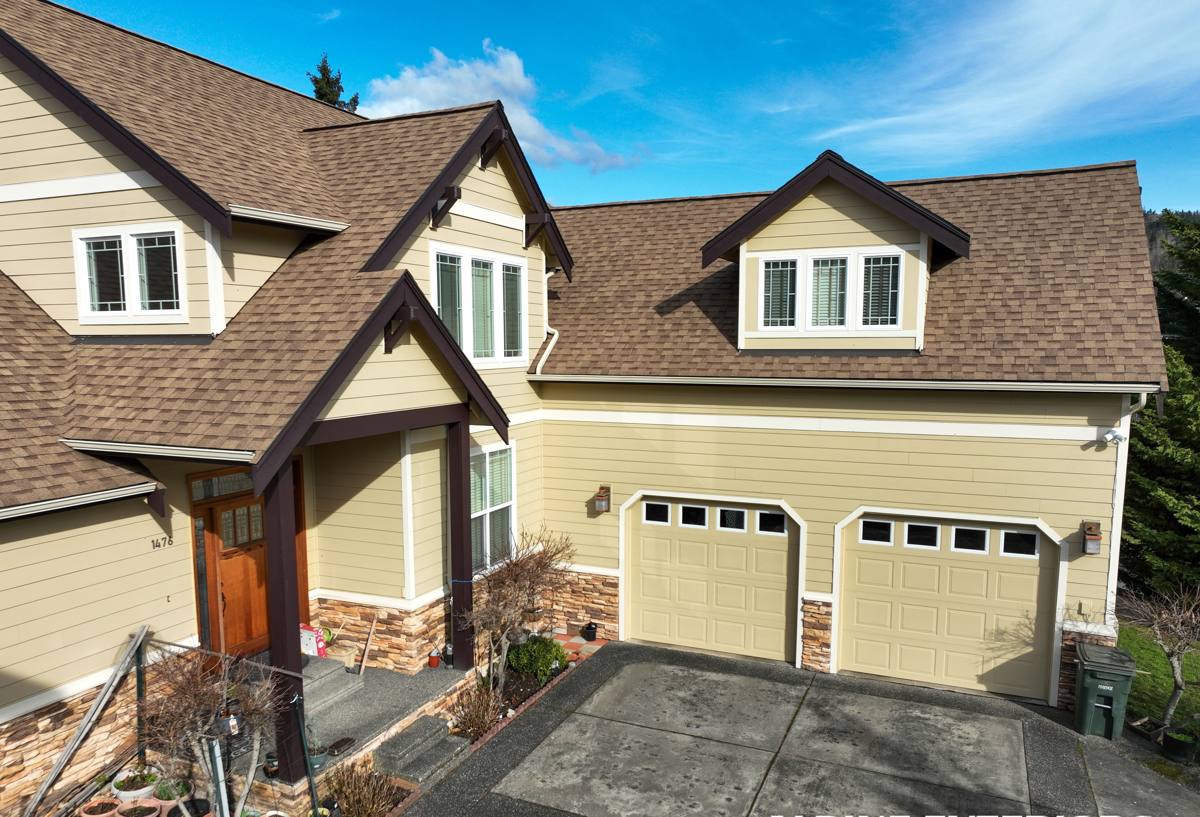
What's Actually Wearing Down Cordata Roofs
Moss and Organic Growth
Cordata's tree cover and marine-layer humidity give moss everything it needs. Moss doesn't just sit on a roof — it works underneath shingle edges and tabs, holding moisture against the roof deck and prying up the granule surface as it grows. Left alone through a few wet seasons, moss growth is one of the most common reasons we find soft decking and premature shingle failure on north- and east-facing slopes.
Salt Air and Metal Fatigue
Homes closer to the water pick up airborne salt that accelerates corrosion on exposed metal — flashing, fasteners, gutter hardware, and vent caps. Corroded flashing is a quiet leak source because the shingles around it can look fine while the metal underneath has already failed.
Driving Rain and Wind-Driven Water
Whatcom County storms don't just drop rain straight down — wind pushes it sideways, up under shingle tabs, and into any gap in flashing or fastening that a calm-weather inspection might miss. Repairs that don't account for wind-driven rain often leak again the next time a storm comes through at the wrong angle.
Temperature Swings and Material Fatigue
Freeze-thaw cycles are milder here than in the mountains, but they still happen enough over a shingle's lifespan to open small cracks and loosen fasteners, especially on older roofs that are already past their prime.
The Repairs We See Most Often in This Area
- Moss-damaged shingles and soft or spongy decking on shaded roof slopes
- Failed or corroded flashing around chimneys, skylights, and roof valleys
- Leaks at roof penetrations — vent pipes, exhaust caps, and satellite mounts
- Wind-lifted or missing shingles after a storm
- Clogged or damaged gutters contributing to fascia and edge rot
- Granule loss and premature aging on roofs installed with lower-grade shingles
What a Correct Repair Actually Involves
A roof repair that's done right is more than swapping out a few shingles. It starts with figuring out the actual source of the problem, which isn't always where the water is showing up inside the house — water travels along the underlayment and framing before it drips somewhere visible. A repair crew that stops at the visible symptom without tracing it back is setting the homeowner up for a repeat call.
A proper repair also means matching materials and technique to what's already on the roof, checking the condition of the decking underneath the damaged area (not just the shingles), and making sure flashing, underlayment, and fastening are all brought back to a standard that will actually shed water in Whatcom County's weather — not just look patched from the ground.
Our Repair Process
1. Inspection
We walk the roof (not just the ground) to look at decking condition, flashing, moss growth patterns, and fastening — the things a drive-by look or a photo from the ground can't tell you.
2. Diagnosis and Estimate
We tell you what's actually causing the problem, what it will take to fix it correctly, and give you a clear, honest estimate before any work starts. If a section of decking is soft or the damage is more extensive than a simple patch, we'll say so upfront rather than finding out mid-job.
3. The Repair
We replace damaged decking, shingles, and flashing as needed, matching materials to the existing roof where possible, and detail the work around valleys, penetrations, and edges — the spots most likely to leak again if rushed.
4. Cleanup and Follow-Up
We clear debris, magnet-sweep for stray fasteners, and walk you through what was done and what to watch for going forward.
Repair or Replace? How We Help You Decide
Not every roof problem in Cordata needs a full replacement, and not every leak is a one-and-done patch. The honest answer depends on the roof's age, how widespread the damage is, and whether the underlying decking is still sound.
| Situation | Repair Usually Makes Sense | Replacement Worth Considering |
|---|---|---|
| Roof age | Under 15–20 years, otherwise healthy | Near or past expected shingle lifespan |
| Damage extent | Isolated area — one slope, one flashing point | Multiple slopes or recurring leaks in different spots |
| Decking condition | Solid, dry decking under the damaged shingles | Widespread soft or rotted decking |
| Moss history | Light, manageable moss with good airflow | Heavy, long-term moss damage across the roof |
| Cost over time | One repair addresses the issue for years | Repeated repairs are costing more than replacement would |
We'll always give you our honest read on which side of that line your roof falls on — a repair that's likely to fail again within a season isn't a good use of anyone's money.
Materials and Methods
Most Cordata homes are roofed in asphalt shingle, with some cedar and a growing number of metal roofs. Our approach differs by material:
Asphalt Shingle
We replace damaged shingles with a matching profile and weight where possible, and always check the underlayment and decking beneath before closing the repair back up.
Cedar and Wood Shake
Wood roofing needs extra attention to moisture behavior in this climate — proper spacing and ventilation matter more here than in drier regions, since trapped moisture is what actually shortens a wood roof's life. We repair with an eye toward keeping airflow and drainage working the way they were designed to.
Metal Roofing
Repairs typically involve fastener replacement, seam resealing, or flashing correction — metal roofs are generally more resistant to moss and salt corrosion than exposed steel hardware on other roof types, which is one reason we point some homeowners toward it for long-term, low-maintenance performance.
Moss Treatment
Where moss is a contributing factor, we address the growth itself as part of the repair — not just the shingle damage it caused — so the same spot doesn't fail again next wet season.
What Affects the Cost of a Roof Repair
| Factor | Why It Matters |
|---|---|
| Extent of decking damage | Soft or rotted decking has to be replaced before new shingles go on — this is the biggest cost swing in most repairs |
| Roof pitch and access | Steeper slopes and harder-to-reach areas take more time and safety setup |
| Material match | Matching an older or discontinued shingle style can take more sourcing effort than a standard repair |
| Number of penetrations involved | Chimneys, skylights, and multiple vents each add flashing work |
| Moss remediation needed | Treating and preventing regrowth adds a step beyond the physical repair |
We don't publish flat repair prices because the range genuinely depends on these factors — a small flashing fix and a decking replacement are very different jobs. What we will always do is inspect first and give you a specific number before starting.
Keeping a Repair From Turning Into a Repeat Call
A well-done repair should last. What shortens its life in this area is almost always moisture and moss being left to build back up. A few habits go a long way:
- Keep gutters clear so water isn't backing up under the roof edge
- Trim back branches that shade the roof and keep it damp longer after rain
- Have moss growth addressed early, before it works under shingle tabs
- Walk the roofline visually after major windstorms for lifted or missing shingles
- Get an inspection every couple of years, even with no visible problems
Why It Matters to Hire a Crew That Already Works in Cordata
Roof repair isn't a one-size-fits-all trade. A crew that regularly works roofs in this part of Whatcom County has already seen how moss builds in these specific microclimates, how salt air treats flashing over time, and which repair shortcuts don't hold up against driving coastal rain. That local pattern recognition is what turns a repair from a guess into a fix that's built for what your roof is actually up against — not a generic patch job pulled from a national playbook.
If you're dealing with a leak, storm damage, or a roof that's showing its age in Cordata, we're happy to take a look. Reach out for a free, no-pressure estimate using the form below — we'll tell you honestly what's going on and what it'll take to fix it right.