 Ferndale Roofing
 Storm Damage Roof Repair Built for Cordata's Climate
Cordata sits close enough to Bellingham Bay and the Strait of Georgia that homes here deal with a mix most inland Washington roofs never see: salt-laden air off the water, wind-driven rain that comes in sideways during winter storms, and a moss season that can run eight months out of the year under the area's tree cover and marine cloud layer. Any one of those on its own is manageable. Together, they change what "storm damage" actually means for a Cordata roof, and they change what a correct repair looks like.
A lot of storm damage repair work in this region is done wrong — not out of dishonesty, but because a crew that mostly works drier, inland areas doesn't think about salt exposure or long-term moss recovery. They patch what blew off and move on. We work Whatcom County roofs year-round, and we repair storm damage with the next storm season in mind, not just the one that just happened.
What "Storm Damage" Covers Here
In Cordata, storm damage rarely means a single dramatic event. It's usually the accumulation of several smaller ones: a windstorm that lifts a run of shingles, followed by weeks of rain that get up under the lifted edge before anyone notices, followed by moss growth that holds moisture against the deck through the next dry spell. By the time a homeowner sees a stain on a ceiling, the damage has often been building for months.
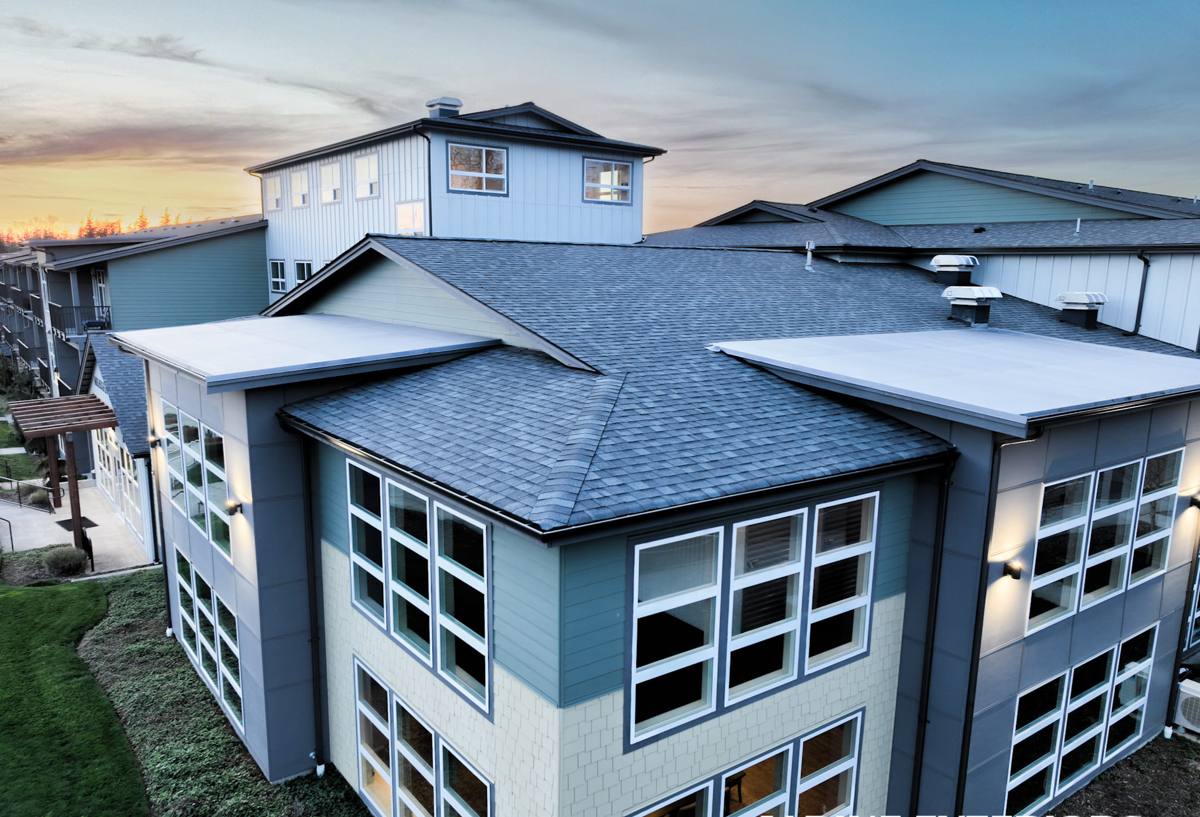
Why Whatcom County Weather Is Hard on Roofs
Salt Air
Proximity to the water means airborne salt settles on roofing surfaces, gutters, and any exposed metal — flashing, fasteners, vents. Salt accelerates corrosion on lower-grade metal components and can shorten the useful life of fasteners that aren't rated for coastal exposure. It's a slow effect, but it's a real one, and it's why we pay attention to what metal we're using on a Cordata roof, not just what shingle goes on top.
Driving Rain
Storms coming off the Strait don't just drop rain straight down — wind pushes it sideways and upward under laps, flashing edges, and ridge caps that would shed water fine in a calm rain. This is the single biggest reason storm-damaged roofs in this area leak in places that look untouched from the ground. The damage is at a seam or a flashing detail, not out in the open field of the roof.
Moss Season
Western Washington's wet, mild winters and shaded lots give moss a long runway to establish itself. Moss holds moisture against shingles and roof decking far longer than open sun and dry air would allow, softening the surface underneath and working into shingle laps and fastener lines. A storm that damages a moss-covered roof does more harm than the same storm would to a clean one, because the moss has already been holding water against vulnerable spots.
What a Correct Storm Damage Repair Actually Involves
A repair that only replaces the shingles you can see missing from the ground is not a complete repair. Here's what we check on every storm damage call in Cordata:
- Deck condition — soft, delaminated, or water-stained sheathing under the damaged area, not just the surface layer
- Underlayment integrity — whether wind-driven rain got past the shingles and into the underlayment before repair
- Flashing at penetrations — vents, chimneys, skylights, and wall transitions, which is where most driving-rain leaks actually originate
- Fastener condition — corrosion from salt exposure, especially on older or lower-grade metal
- Moss and organic buildup — around and under the repair area, since patching over active moss just seals in moisture
- Ventilation — whether trapped attic moisture is contributing to deck softness independent of the storm itself
Skip any of these and you get a repair that looks fine for a season and fails again at the next storm — often at the same spot.
Our Storm Damage Repair Process
1. Inspection and Documentation
We start with a full inspection, not just a look at the obvious damage. That includes checking the roof surface, the attic side of the deck where accessible, gutters, and flashing details. We document what we find with photos so you have a clear record, whether or not you're filing an insurance claim.
2. Honest Scope of Work
We tell you what actually needs to happen — spot repair, a larger section replacement, or in some cases a recommendation that repair isn't the right long-term answer. We're not going to talk you into more work than the roof needs, and we're not going to under-scope it just to win the job cheap.
3. Matching Materials Correctly
When we're tying a repair into existing roofing, we match shingle type, profile, and as close to color as the product line allows. On older roofs where an exact match isn't available, we'll tell you that up front and talk through the options rather than let you discover a mismatched patch later.
4. Weather-Appropriate Installation
Flashing and fastener choices account for the salt air and driving rain this area sees. That means corrosion-resistant fasteners where they matter and flashing details sealed for wind-driven water, not just gravity-fed rain.
5. Cleanup and Walkthrough
We clear debris, check gutters and downspouts for anything that fell during the storm or came off during the repair, and walk the work with you before we call it done.
Common Storm Damage Patterns We See in This Area
| Damage Type | Typical Cause | Why It Matters Here |
|---|---|---|
| Lifted or missing shingles | High wind gusts during winter storms | Exposes underlayment to driving rain almost immediately |
| Flashing separation | Wind flex plus age-weakened sealant | Leading cause of leaks that appear far from the visible damage |
| Soft or rotted decking | Prolonged moisture under moss or a lifted shingle | Common in shaded Cordata lots; often worse than it looks from above |
| Corroded fasteners or flashing | Long-term salt air exposure | Weakens holding power over time, especially on older metal |
| Gutter and downspout damage | Wind-driven debris, ice, or moss clogging | Backed-up water finds its way under roof edges during storms |
Repair vs. Replace: What Actually Drives the Decision
Not every storm-damaged roof needs a full replacement, and not every roof is a good candidate for another patch. The honest answer usually comes down to a few factors:
| Factor | Favors Repair | Favors Replacement |
|---|---|---|
| Roof age | Under 10-15 years, healthy elsewhere | Near or past expected shingle lifespan |
| Deck condition | Solid, no soft spots found | Widespread soft or delaminated decking |
| Damage extent | Localized to one section or slope | Multiple slopes or recurring problem areas |
| Moss history | Minimal, or recently treated | Long-term moss damage across large areas |
| Material availability | Matching shingle still available | Discontinued product, poor match likely |
General cost for storm damage repair work in this region tends to fall in a broad range depending on scope — a small flashing or shingle repair sits at the low end, while deck replacement under a damaged section costs more. We'll give you a specific number after inspection rather than a guess over the phone.
Insurance Claims and Storm Damage
Many storm damage repairs in Cordata are covered, in whole or part, by homeowners insurance, particularly when there's a documented wind or storm event. We provide the photo documentation and written scope of work that adjusters typically ask for, and we're glad to walk an adjuster through what we found on-site. We don't handle the claim itself — that's between you and your insurer — but we make sure you're not walking into that conversation without solid documentation of the actual damage.
Between-Storm Maintenance That Actually Helps
A lot of storm damage in this climate is made worse by moss and debris that had months to build up beforehand. A little seasonal attention goes a long way toward reducing how much damage the next storm does:
- Clear gutters and downspouts before the fall rains start, and again mid-winter if trees are nearby
- Have visible moss treated before it spreads into shingle laps and fastener lines
- Check attic ventilation isn't blocked by insulation, which affects how well decking dries between rain events
- Walk the roofline after any significant windstorm and look for lifted edges, not just missing shingles
- Have flashing around chimneys, skylights, and vents checked every couple of years, since sealant breaks down before shingles usually do
Why It Matters That We Already Work in Cordata
A crew that regularly works this specific area already knows which flashing details tend to fail first on local roof styles, how far moss typically progresses in a given season, and what salt-air corrosion looks like at different stages. That familiarity means fewer surprises during a repair and fewer repeat calls for the same underlying issue. It also means we're not learning Whatcom County's weather patterns on your roof — we already know them.
If your Cordata home has visible storm damage, or you're not sure whether what you're seeing is cosmetic or structural, we'll come take an honest look. The estimate is free, there's no pressure attached to it, and you'll get a straight answer about what your roof actually needs. Use the form below to get started.